Wu Xuechen, Liu Boxin, Deng Shi-Zhou, Xiong Tengteng, Dai Lin, Cheng Bo
Department of Stomatology, Zhongnan Hospital of Wuhan University, 169 Donghu Road, Wuhan, 430071, China.
Department of Blood Transfusion, Xi'an No.3 Hospital, The Affiliated Hospital of Northwest University, Xi'an, China.
BMC Oral Health. 2025 Feb 2;25(1):180. doi: 10.1186/s12903-024-05279-2.
Establishing a prognostic risk model based on immunological and disulfidptosis signatures enables precise prognosis prediction of oral squamous cell carcinoma (OSCC).
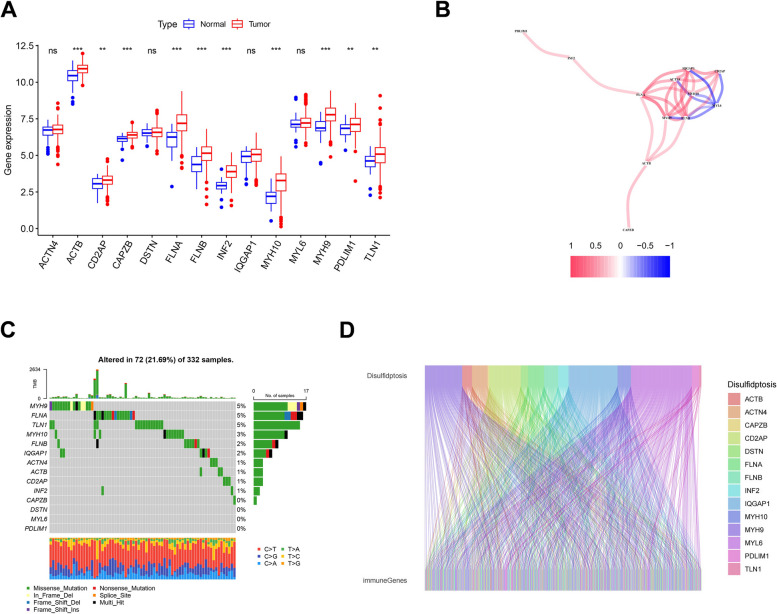
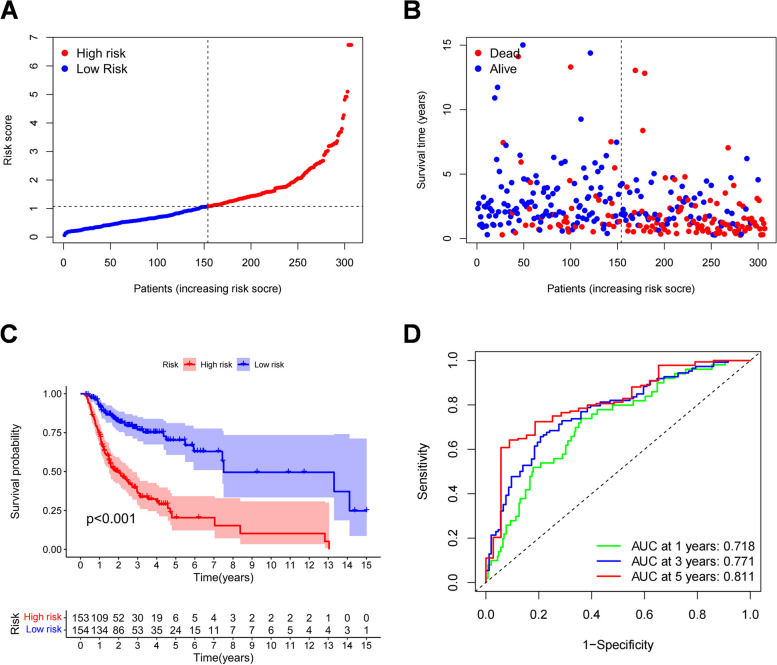
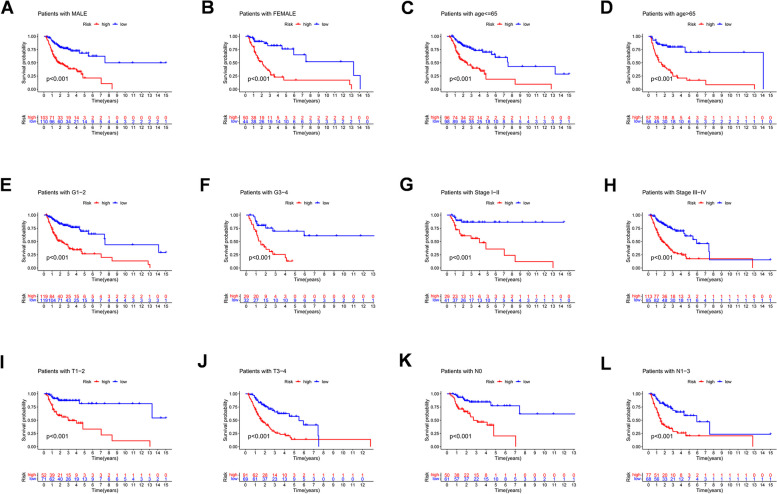
Differentially expressed immune and disulfidptosis genes were identified in OSCC and normal tissues. We examined the model's clinical applicability and its relationship to immune cell infiltration. Additionally, the risk score, ssGSEA, ESTIMATE, and CIBERSORT were used to evaluate the intrinsic molecular subtypes, immunological checkpoints, abundances of tumor-infiltrating immune cell types and proportions between the two risk groups. GO-KEGG and GSVA analyses were performed to identify enriched pathways.
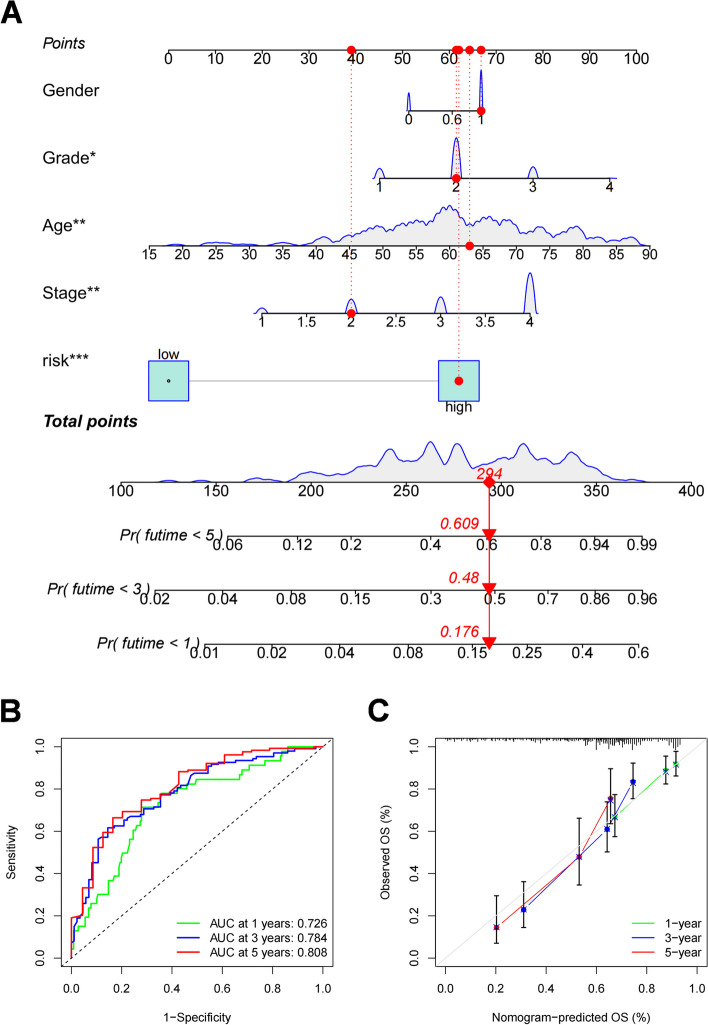
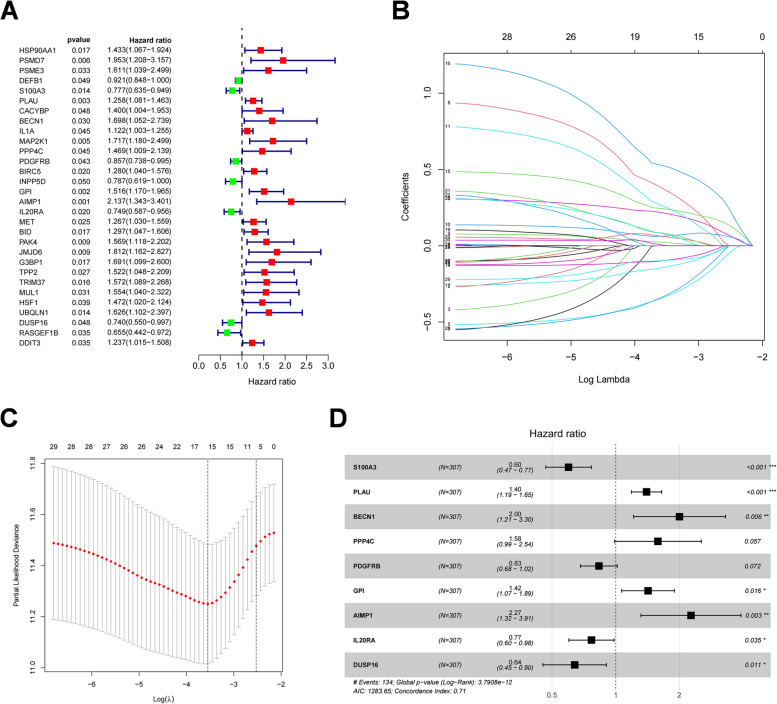
We analyzed the correlation immune genes based on the 14 disulfidptosis-related genes, and found 379 disulfidptosis-related immune genes (DRIGs). After univariate Cox regression we obtained 30 DRIGs and least absolute shrinkage and selection operator (LASSO) regression to reduce the number of genes to 16. Finally we created a nine-DRIGs risk model, of which four were upregulated and five were downregulated. The analysis results showed that disulfidptosis was tightly related to immune cells, immunological-related pathways, the tumor microenvironment (TME), immune checkpoints, human leukocyte antigen (HLA), and tumor mutational burden (TMB). The nomogram, integrating the risk score and clinical factors, accurately predicted overall survival.
This novel risk model highlights the role of disulfidptosis-related immune genes in OSCC prognosis. With this model, we can more accurately predict the prognosis of patients with OSCC, as well as assess the potential effects of their TME and immunotherapy.
基于免疫和二硫键焦亡特征建立预后风险模型,能够精确预测口腔鳞状细胞癌(OSCC)的预后。
在OSCC和正常组织中鉴定差异表达的免疫和二硫键焦亡基因。我们检验了该模型的临床适用性及其与免疫细胞浸润的关系。此外,使用风险评分、单样本基因集富集分析(ssGSEA)、肿瘤免疫估计(ESTIMATE)和CIBERSORT来评估内在分子亚型、免疫检查点、肿瘤浸润免疫细胞类型的丰度以及两个风险组之间的比例。进行基因本体论-京都基因与基因组百科全书(GO-KEGG)和基因集变异分析(GSVA)以识别富集通路。
我们基于14个二硫键焦亡相关基因分析了相关免疫基因,发现了379个二硫键焦亡相关免疫基因(DRIGs)。经过单变量Cox回归,我们获得了30个DRIGs,并通过最小绝对收缩和选择算子(LASSO)回归将基因数量减少到16个。最后,我们创建了一个包含9个DRIGs的风险模型,其中4个上调,5个下调。分析结果表明,二硫键焦亡与免疫细胞、免疫相关通路、肿瘤微环境(TME)、免疫检查点、人类白细胞抗原(HLA)和肿瘤突变负荷(TMB)密切相关。整合风险评分和临床因素的列线图准确预测了总生存期。
这个新的风险模型突出了二硫键焦亡相关免疫基因在OSCC预后中的作用。有了这个模型,我们可以更准确地预测OSCC患者的预后,以及评估其TME和免疫治疗的潜在效果。