Ryan-Keogh Thomas J, Tagliabue Alessandro, Thomalla Sandy J
Southern Ocean Carbon-Climate Observatory, CSIR, Cape Town, South Africa.
Department of Earth, Ocean and Ecological Sciences, School of Environmental Sciences, University of Liverpool, Liverpool, UK.
Commun Earth Environ. 2025;6(1):75. doi: 10.1038/s43247-025-02051-4. Epub 2025 Feb 1.
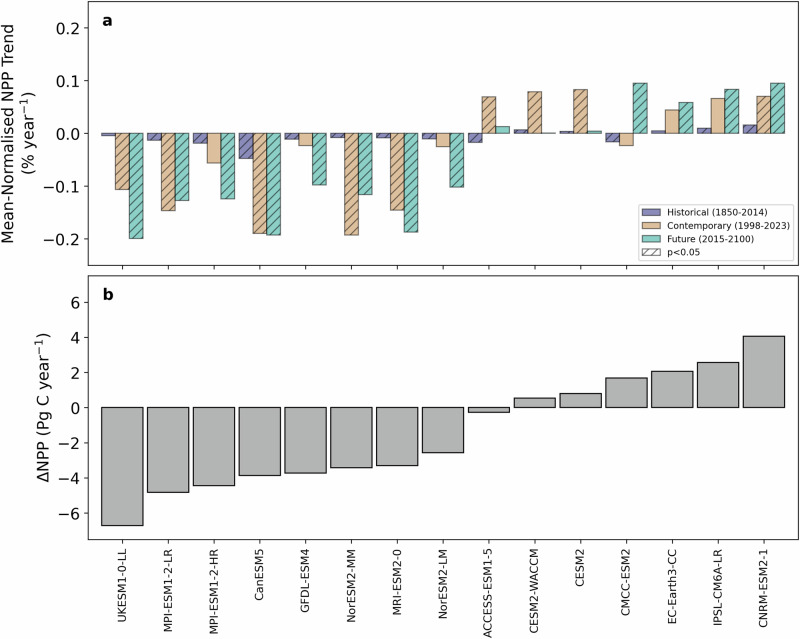
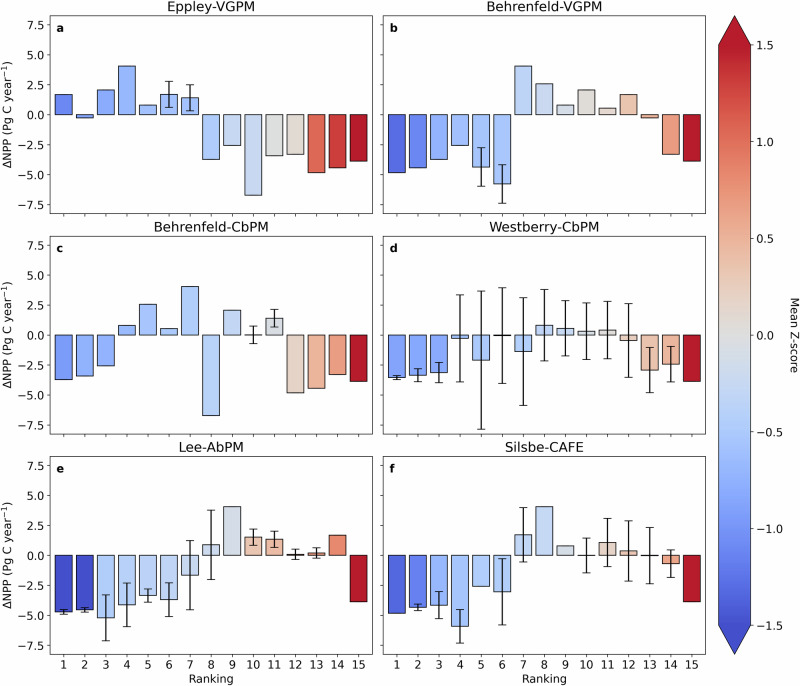
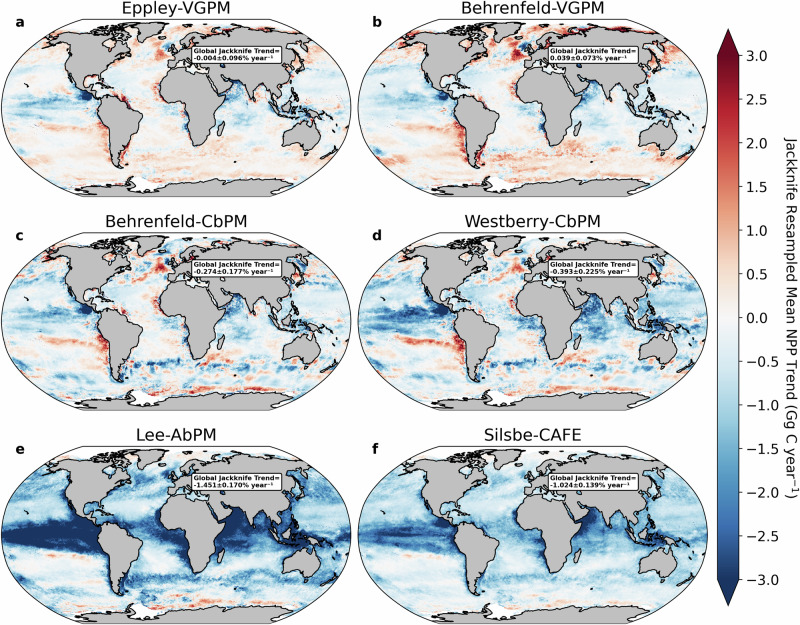
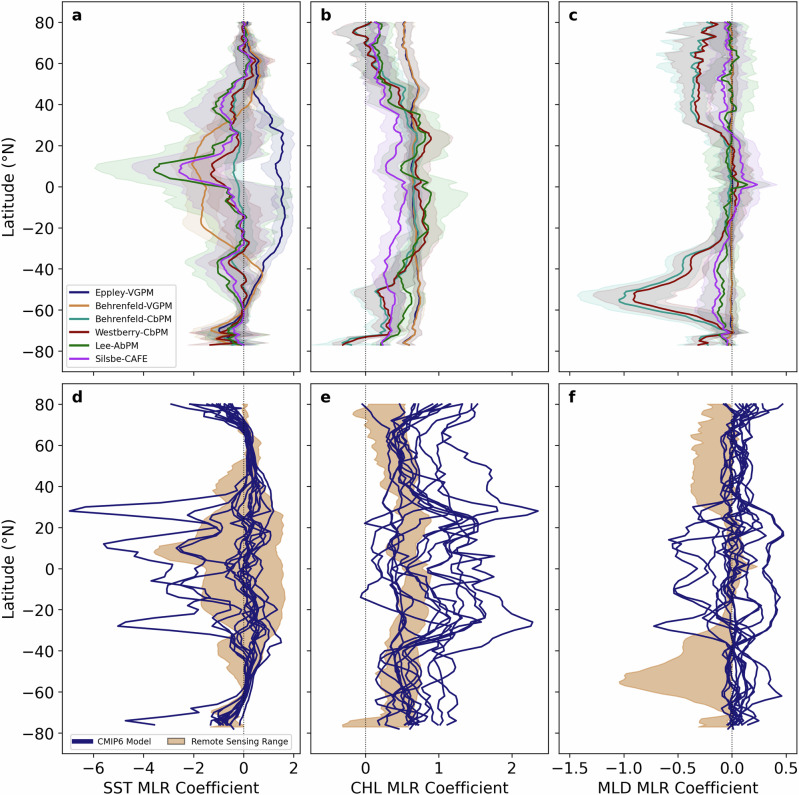
Marine net primary production supports critical ecosystem services and the carbon cycle. However, the lack of consensus in the direction and magnitude of projected change in net primary production from models undermines efforts to assess climate impacts on marine ecosystems with confidence. Here we use contemporary remote sensing net primary production trends (1998-2023) from six remote sensing algorithms to discriminate amongst fifteen divergent model projections. A model ranking scheme, based on the similarity of linear responses of net primary production to changes in sea surface temperature, chlorophyll- and the mixed layer, finds that future declines in net primary production are more likely than presently predicted. Even the best ranking models still underestimate the sensitivity of declines in net primary production to ocean warming, suggesting shortcomings remain. Reproducing this greater temperature sensitivity may lead to even larger declines in future net primary production than presently considered for impact assessment.
海洋净初级生产力支持着关键的生态系统服务和碳循环。然而,模型预测的净初级生产力变化方向和幅度缺乏共识,这削弱了我们自信地评估气候对海洋生态系统影响的努力。在这里,我们使用六种遥感算法得出的当代遥感净初级生产力趋势(1998 - 2023年)来区分十五种不同的模型预测。一种基于净初级生产力对海表面温度、叶绿素和混合层变化的线性响应相似性的模型排名方案发现,未来净初级生产力下降的可能性比目前预测的更大。即使是排名最佳的模型仍低估了净初级生产力下降对海洋变暖的敏感性,这表明仍存在缺陷。再现这种更高的温度敏感性可能导致未来净初级生产力下降幅度比目前影响评估中所考虑的更大。