Petkov V, Tsibranska S, Manoylov I, Kechidzhieva L, Ilieva K, Bradyanova S, Ralchev N, Mihaylova N, Denkov N, Tchorbanov A, Tcholakova S
Department of Chemical Engineering, Sofia University, Sofia, Bulgaria.
Department of Immunology, Institute of Microbiology, Bulgarian Academy of Sciences, Sofia, Bulgaria.
Heliyon. 2025 Jan 13;11(2):e41935. doi: 10.1016/j.heliyon.2025.e41935. eCollection 2025 Jan 30.
Nanotechnology provides the opportunity for construction of modern transport devices such as nanoparticles for a variety of applications in the field of medicine. A novel experimental protocol for the formation of saponin-cholesterol-phospholipid nanoparticles of vesicular structure has been developed and applied to prepare stable nanoparticles using escin or glycyrrhizin as saponins.
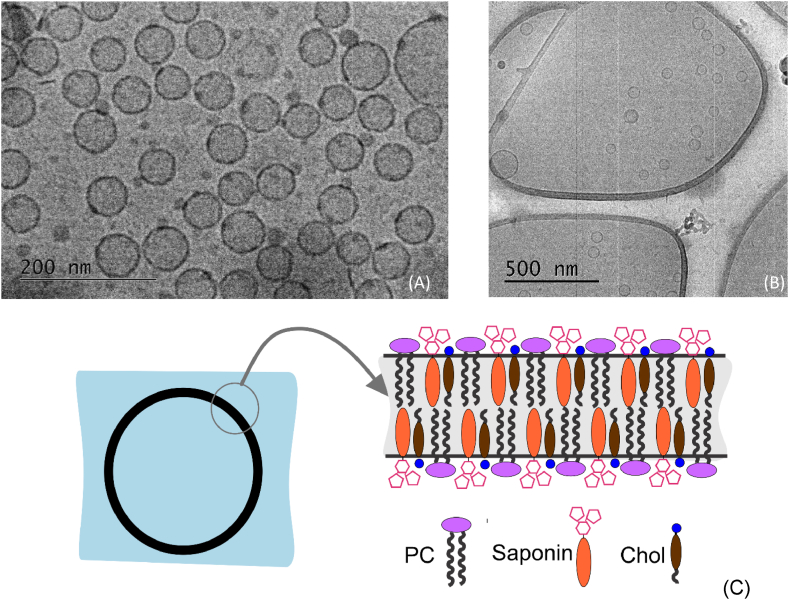
The methods for nanoparticle construction include a sonication at 90 °C of the initial mixture of components, followed by an additional sonication on the next day for incorporation of an additional amount of cholesterol, thus forming stable unilamellar vesicles. Tests and assays for cell viability, erythrocyte hemolysis, flow cytometry, and fluorescent microscopy analyses have been performed.
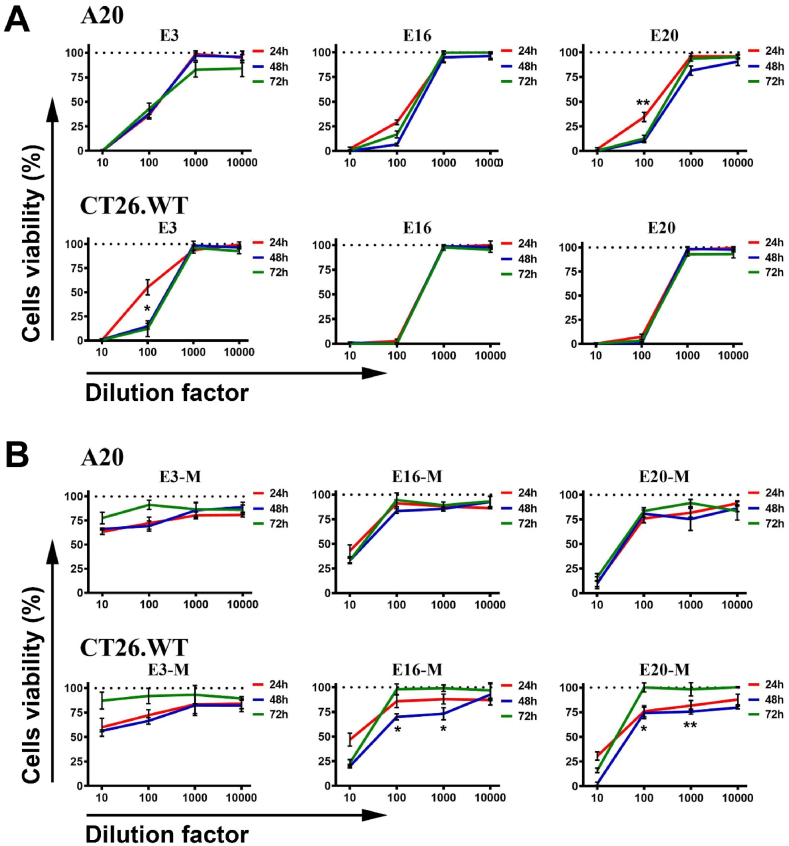
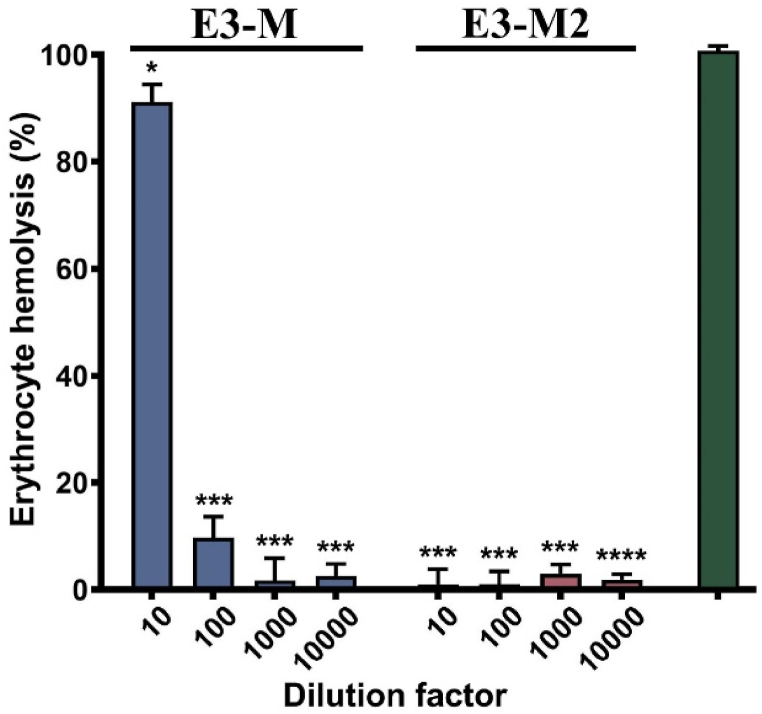
By selecting appropriate component ratios, stable and safe particles were formulated with respect to the tested bio-cells. The prepared nanoparticles have mean diameter between 70 and 130 nm, depending on their composition. The versatility of these nanoparticles allows for the encapsulation of various molecules, either within the vesicle interior for water-soluble components or within the vesicle walls for hydrophobic components. The saponin particles formed after cholesterol post-addition (E3-M2) are stable and 100 % of the cells remain viable even after 10-times dilution of the initial particle suspension. These particles are successful included into isolated mouse macrophages.
Among the variety of generated nanoparticles, the E3-M2 particles demonstrated properties of safe and efficient devices for future vaccine design and antigen targeting to immune system.
纳米技术为构建现代运输装置提供了契机,例如用于医学领域各种应用的纳米颗粒。一种用于形成具有囊泡结构的皂苷 - 胆固醇 - 磷脂纳米颗粒的新型实验方案已被开发出来,并应用于以七叶皂苷或甘草甜素作为皂苷来制备稳定的纳米颗粒。
纳米颗粒构建方法包括在90°C对各组分的初始混合物进行超声处理,然后在第二天再进行一次超声处理以加入额外量的胆固醇,从而形成稳定的单层囊泡。已进行细胞活力、红细胞溶血、流式细胞术和荧光显微镜分析的测试与测定。
通过选择合适的组分比例,针对所测试的生物细胞制备出了稳定且安全的颗粒。所制备的纳米颗粒平均直径在70至130纳米之间,具体取决于其组成。这些纳米颗粒的多功能性允许将各种分子进行包封,对于水溶性成分可包封在囊泡内部,对于疏水性成分可包封在囊泡壁内。胆固醇后添加后形成的皂苷颗粒(E3 - M2)是稳定的,即使在将初始颗粒悬液稀释10倍后,仍有100%的细胞保持活力。这些颗粒成功地被纳入分离的小鼠巨噬细胞中。
在各种生成的纳米颗粒中,E3 - M2颗粒展现出作为未来疫苗设计和针对免疫系统的抗原靶向的安全有效载体的特性。