Ng Krystal Lu Shin, Munisamy Murallitharan, Lim Joanne Bee Yin, Alshagga Mustafa
Division of Biomedical Sciences, Faculty of Science and Engineering, University of Nottingham Malaysia Campus, Semenyih, Malaysia.
National Cancer Society Malaysia, Kuala Lumpur, Malaysia.
JMIR Cancer. 2025 Feb 5;11:e50662. doi: 10.2196/50662.
Limited access to nutrition support among populations with cancer is a major barrier to sustainable and quality cancer care. Increasing use of mobile health in health care has raised concerns about its validity and health impacts.
This systematic review aimed to determine the effectiveness of commercial or cancer-specific nutritional mobile apps among people living with cancer.
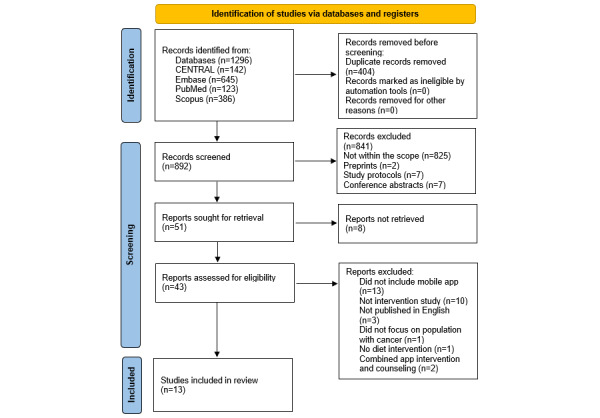
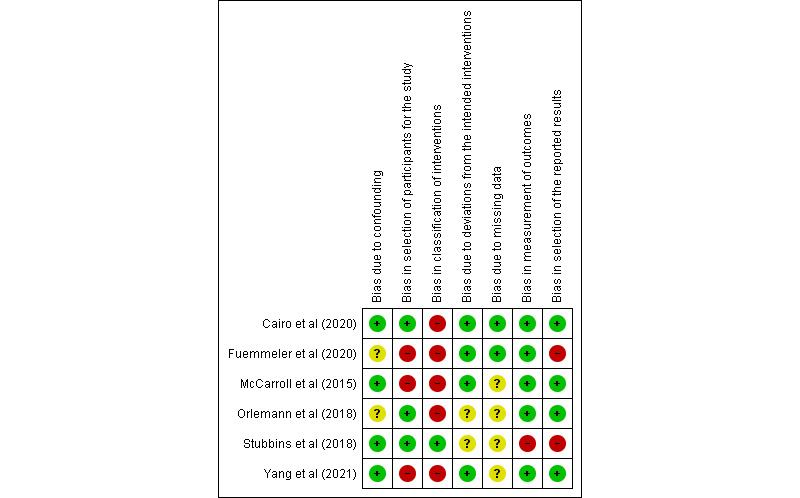
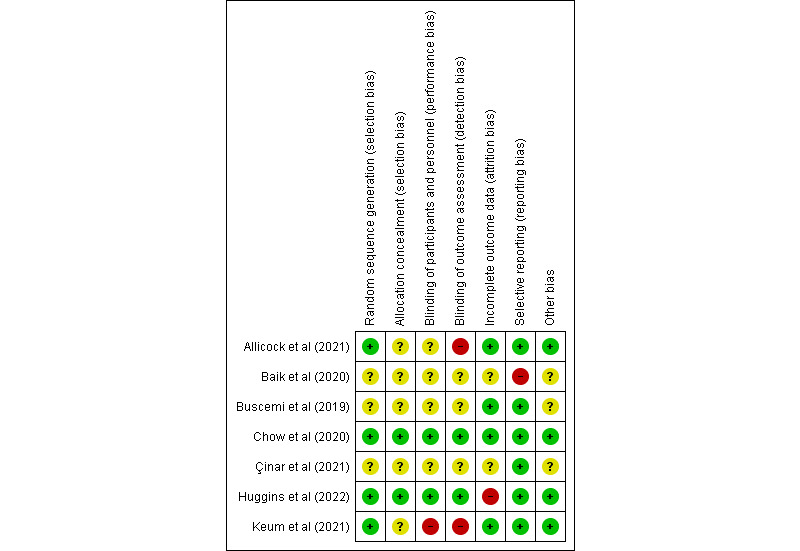
A systematic search of the CENTRAL, Embase, PubMed (MEDLINE), and Scopus databases was carried out in May 2024. All types of intervention studies were included, except observational studies, gray literature, and reference lists of key systematic reviews. Studies were eligible for inclusion if they involved (1) patients with or survivors of cancer and (2) nutrition-related mobile apps. Studies were excluded if the nutrition intervention was not delivered via mobile app or the app intervention was accompanied by dietary counseling. The review process was conducted based on the PRISMA (Preferred Reporting Items for Systematic Reviews and Meta-Analyses) guidelines. The Risk of Bias 2 and Risk of Bias in Nonrandomized Studies tools were used to assess the study quality. The Cochrane Review Manager (version 5.4) software was used to synthesize the results of the bias assessment.
A total of 13 interventions were included, comprising 783 adults or teenagers with cancer. Most studies focused on breast cancer (6/13, 46%), overweight (6/13, 46%), and survivors (9/13, 69%). Data on anthropometry and body composition (7/13, 54%; 387 participants), nutritional status (3/13, 23%; 249 participants), dietary intake (7/13, 54%; 352 participants), and quality of life (6/13, 46%; 384 participants) were gathered. Experimental groups were more likely to report significant improvements in body weight or composition, dietary compliance, nutritional status, and quality of life than control groups.
Although mobile app platforms are used to deliver nutrition interventions, the evidence for long-term efficacy, particularly in populations with cancer, remains elusive. More robust randomized controlled trials with larger sample sizes, as well as more homogeneous population characteristics and outcome measures, are warranted.
PROSPERO CRD42023330575; https://tinyurl.com/55v56yaj.
癌症患者获得营养支持的机会有限是可持续和高质量癌症护理的主要障碍。医疗保健中移动健康应用的使用增加引发了对其有效性和健康影响的担忧。
本系统评价旨在确定商业或癌症专用营养移动应用程序对癌症患者的有效性。
2024年5月对CENTRAL、Embase、PubMed(MEDLINE)和Scopus数据库进行了系统检索。纳入了所有类型的干预研究,但观察性研究、灰色文献和关键系统评价的参考文献列表除外。如果研究涉及(1)癌症患者或幸存者和(2)营养相关移动应用程序,则符合纳入条件。如果营养干预不是通过移动应用程序提供的,或者应用程序干预伴有饮食咨询,则排除该研究。审查过程按照PRISMA(系统评价和Meta分析的首选报告项目)指南进行。使用偏倚风险2和非随机研究中的偏倚风险工具评估研究质量。使用Cochrane Review Manager(5.4版)软件综合偏倚评估结果。
共纳入13项干预措施,涉及783名成年或青少年癌症患者。大多数研究聚焦于乳腺癌(6/13,46%)、超重(6/13,46%)和幸存者(9/13,69%)。收集了人体测量和身体成分(7/13,54%;387名参与者)、营养状况(3/13,23%;249名参与者)、饮食摄入量(7/13,54%;352名参与者)和生活质量(6/13,46%;384名参与者)的数据。与对照组相比,实验组更有可能报告体重或身体成分、饮食依从性、营养状况和生活质量有显著改善。
尽管移动应用程序平台用于提供营养干预,但长期疗效的证据,尤其是在癌症患者中的证据,仍然难以捉摸。需要进行更有力的随机对照试验,样本量更大,人群特征和结局指标更具同质性。
PROSPERO CRD42023330575;https://tinyurl.com/55v56yaj。