Department of Biological Sciences, University of Limerick, V94 T9PX Limerick, Ireland.
Department of Physical Education and Sports Science, University of Limerick, V94 T9PX Limerick, Ireland.
Nutrients. 2022 Jun 12;14(12):2437. doi: 10.3390/nu14122437.
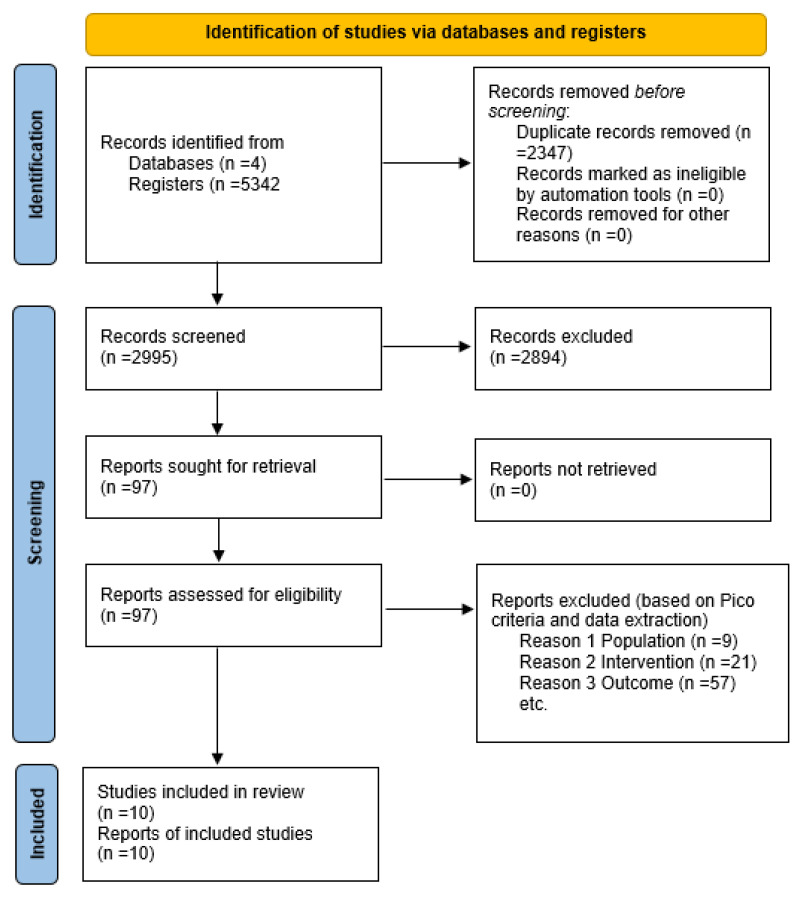
The use of mobile applications for dietary purposes has dramatically increased along with the consistent development of mobile technology. Assessing diet quality as a dietary pattern or an indicator across key food groups in comparison to those recommended by dietary guidelines is useful for identifying optimal nutrient intake. This systematic review aims to explore mobile applications and their impact on the diet quality of the user. The electronic databases of The Cumulative Index to Nursing and Allied Health Literature (Cinahl), The American Psychological Association's (APA Psycinfo), and PubMed were systematically searched for randomised and non-randomised controlled trials to retrieve papers from inception to November 2021. Ten studies with 1638 participants were included. A total of 5342 studies were retrieved from the database searches, with 10 articles eligible for final inclusion in the review. The sample sizes ranged from 27 to 732 participants across the included studies, with 1638 total participants. The ratio of female to male participants in the studies was 4:1. The majority of the mobile applications or M-health interventions were used to highlight dietary health changes (six studies), with the remainder used to reduce weight or blood sugar levels (four studies). Each study used a different measure to quantify diet quality. Studies were either assessed by diet quality scoring or individual dietary assessment, of the ten studies, six studies reported an improvement in diet quality following diet-related mobile application use. Mobile applications may be an effective way to improve diet quality in adults; however, there is a need for more targeted and longer-term studies that are expressly designed to investigate the impact using mobile applications has on diet quality.
随着移动技术的不断发展,人们越来越多地使用移动应用程序来改善饮食。与饮食指南推荐的关键食物组相比,评估饮食质量作为一种饮食模式或指标,对于确定最佳营养摄入非常有用。本系统评价旨在探讨移动应用程序及其对用户饮食质量的影响。系统检索了 Cumulative Index to Nursing and Allied Health Literature (Cinahl)、The American Psychological Association's (APA Psycinfo) 和 PubMed 电子数据库,以获取从成立到 2021 年 11 月的随机和非随机对照试验论文。共纳入 10 项研究,1638 名参与者。从数据库检索中检索到 5342 项研究,其中 10 篇文章符合最终纳入本综述的标准。纳入研究的样本量范围为 27 至 732 名参与者,总共有 1638 名参与者。研究中男女参与者的比例为 4:1。大多数移动应用程序或 M-health 干预措施用于强调饮食健康变化(六项研究),其余四项用于降低体重或血糖水平。每项研究都使用不同的措施来量化饮食质量。研究要么通过饮食质量评分进行评估,要么通过个体饮食评估进行评估,在这 10 项研究中,有 6 项研究报告称,使用与饮食相关的移动应用程序后,饮食质量有所改善。移动应用程序可能是改善成年人饮食质量的有效方法;然而,需要更多有针对性和长期的研究,专门调查使用移动应用程序对饮食质量的影响。