Ha Seojung, Kang Sung-Woo, Lee Sanghoon
Department of Acupuncture and Moxibustion Medicine, College of Korean Medicine, Sangji University, Wonju, Republic of Korea.
Department of Clinical Korean Medicine, Graduate School, Kyung Hee University, Seoul, Republic of Korea.
Integr Med Res. 2025 Mar;14(1):101114. doi: 10.1016/j.imr.2024.101114. Epub 2024 Dec 2.
Temporomandibular joint disorders (TMDs) cause pain and functional restrictions in the temporomandibular joint that interfere with daily activities. This study aimed to evaluate and compare the effectiveness and safety of various traditional East Asian medicine treatments, including acupuncture, electroacupuncture, moxibustion, and herbal medicine, in the management of TMD.
We included searches of MEDLINE, CENTRAL, EMBASE, AMED, CINAHL, OASIS, KISS, RISS, KMbase, KCI, CNKI, and CiNii from inception to November 12, 2023, for randomized controlled trials of traditional East Asian medicine treatments in patients with TMD. A network meta-analysis was performed using frequentist methods, and the Confidence In Network Meta-Analysis methodology were employed to assess evidence quality.
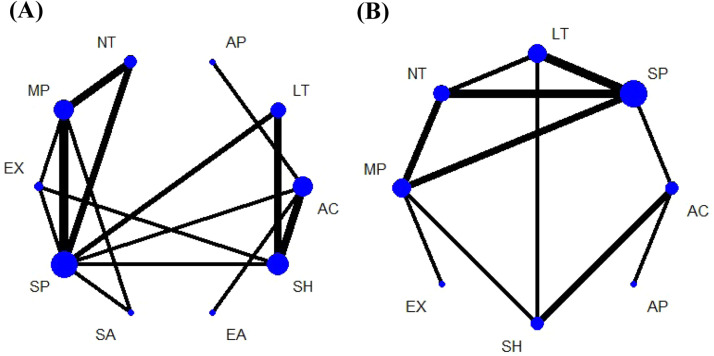
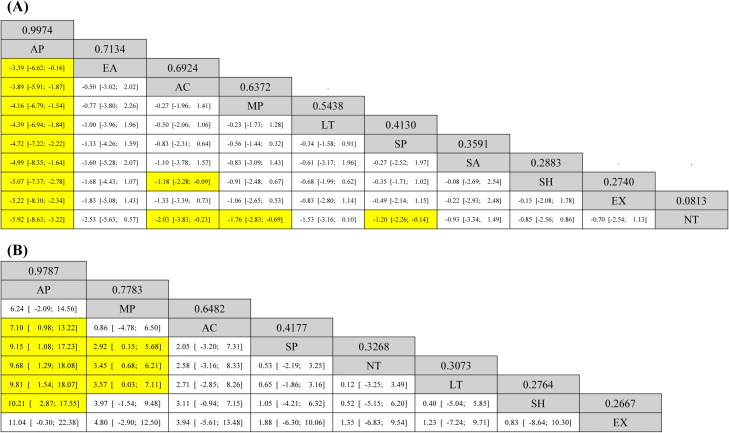
Forty-five studies with 2,211 participants were finally included. Acupotomy (Mean difference (MD) -5.07, 95 % Confidence interval (CI) -7.37 to -2.78) and acupuncture (MD -1.18, 95 % CI -2.28 to -0.09) showed statistically significant superiority in reducing pain intensity compared to sham treatment. According to the SUCRA rankings, acupotomy was considered the most effective treatment, followed by electroacupuncture, acupuncture, manipulation, laser therapy and occlusal splint. A total of 12 studies reported incidence of adverse events, and none were serious adverse events.
Acupotomy and acupuncture could be more beneficial than sham treatment in pain relief and might be a better option than occlusal splint. However, future rigorous, well-designed trials are needed to draw clear conclusions.
PROSPERO (CRD42023467340).
颞下颌关节紊乱病(TMDs)会导致颞下颌关节疼痛和功能受限,影响日常活动。本研究旨在评估和比较包括针灸、电针、艾灸和草药在内的各种东亚传统医学疗法在TMD管理中的有效性和安全性。
我们检索了MEDLINE、CENTRAL、EMBASE、AMED、CINAHL、OASIS、KISS、RISS、KMbase、KCI、CNKI和CiNii数据库,检索时间从建库至2023年11月12日,以查找东亚传统医学疗法治疗TMD患者的随机对照试验。采用频率学派方法进行网状Meta分析,并运用网状Meta分析的置信度方法评估证据质量。
最终纳入45项研究,共2211名参与者。与假治疗相比,针刀治疗(平均差(MD)-5.07,95%置信区间(CI)-7.37至-2.78)和针灸(MD -1.18,95% CI -2.28至-0.09)在减轻疼痛强度方面显示出统计学上的显著优势。根据累积排序曲线下面积(SUCRA)排名,针刀治疗被认为是最有效的治疗方法,其次是电针、针灸、手法治疗、激光治疗和咬合板。共有12项研究报告了不良事件的发生率,均无严重不良事件。
针刀治疗和针灸在缓解疼痛方面可能比假治疗更有益,并且可能是比咬合板更好的选择。然而,需要未来进行严格、设计良好的试验才能得出明确结论。
PROSPERO(CRD42023467340)