Han Jiwon, Choi Byungmin, Kim Jae Young, Lee Yeonjoon
Department of Applied Artificial Intelligence, Hanyang University, Seoul, 15588, Korea.
Department of Pediatrics, Ansan Hospital, College of Medicine, Korea University, Ansan, 15355, Republic of Korea.
Sci Rep. 2025 Feb 10;15(1):4931. doi: 10.1038/s41598-025-88451-0.
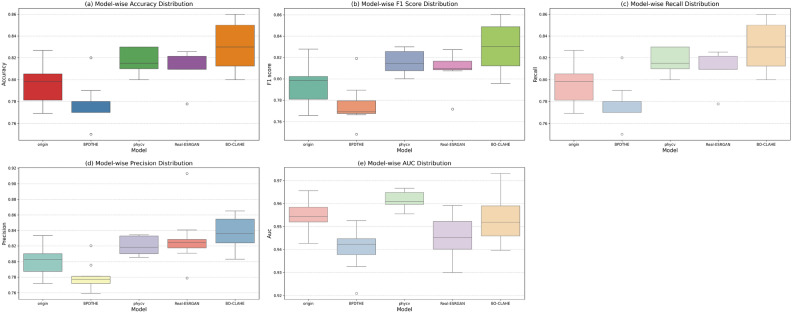
In the case of neonates, especially low birth weight preterm and high-risk infants, portable X-rays are frequently used. However, the image quality of portable X-rays is significantly lower compared to standard adult or pediatric X-rays, leading to considerable challenges in identifying abnormalities. Although attempts have been made to introduce deep learning to address these image quality issues, the poor quality of the images themselves hinders the training of deep learning models, further emphasizing the need for image enhancement. Additionally, since neonates have a high cell division rate and are highly sensitive to radiation, increasing radiation exposure to improve image quality is not a viable solution. Therefore, it is crucial to enhance image quality through preprocessing before training deep learning models. While various image enhancement methods have been proposed, Contrast Limited Adaptive Histogram Equalization (CLAHE) has been recognized as an effective technique for contrast-based image improvement. However, despite extensive research, the process of setting CLAHE's hyperparameters still relies on a brute force, manual approach, making it inefficient. To address this issue, we propose a method called Bayesian Optimization CLAHE(BO-CLAHE), which leverages Bayesian optimization to automatically select the optimal hyperparameters for X-ray images used in diagnosing lung diseases in preterm and high-risk neonates. The images enhanced by BO-CLAHE demonstrated superior performance across several classification models, with particularly notable improvements in diagnosing Transient Tachypnea of the Newborn (TTN). This approach not only reduces radiation exposure but also contributes to the development of AI-based diagnostic tools, playing a crucial role in the early diagnosis and treatment of preterm and high-risk neonates.
对于新生儿,尤其是低出生体重早产儿和高危婴儿,便携式X射线经常被使用。然而,与标准的成人或儿科X射线相比,便携式X射线的图像质量明显较低,这给识别异常带来了相当大的挑战。尽管已经尝试引入深度学习来解决这些图像质量问题,但图像本身的质量较差阻碍了深度学习模型的训练,进一步凸显了图像增强的必要性。此外,由于新生儿的细胞分裂率高且对辐射高度敏感,增加辐射暴露以提高图像质量不是一个可行的解决方案。因此,在训练深度学习模型之前通过预处理提高图像质量至关重要。虽然已经提出了各种图像增强方法,但对比度受限自适应直方图均衡化(CLAHE)已被公认为是一种基于对比度改善图像的有效技术。然而,尽管进行了广泛的研究,设置CLAHE超参数的过程仍然依赖于强力的手动方法,效率低下。为了解决这个问题,我们提出了一种名为贝叶斯优化CLAHE(BO-CLAHE)的方法,该方法利用贝叶斯优化自动为用于诊断早产儿和高危新生儿肺部疾病的X射线图像选择最佳超参数。通过BO-CLAHE增强的图像在多个分类模型中表现出卓越的性能,在诊断新生儿暂时性呼吸急促(TTN)方面有特别显著的改进。这种方法不仅减少了辐射暴露,还为基于人工智能的诊断工具的开发做出了贡献,在早产儿和高危新生儿的早期诊断和治疗中发挥着关键作用。