Rastogi Mahima, Sahu Khageswar, Majumder Shovan Kumar
Laser Biomedical Applications Division, Raja Ramanna Centre for Advanced Technology, Indore, Madhya Pradesh, 452013, India.
Homi Bhabha National Institute, Training School Complex, Anushakti Nagar, Mumbai, 400094, India.
Lasers Med Sci. 2025 Feb 12;40(1):83. doi: 10.1007/s10103-025-04339-5.
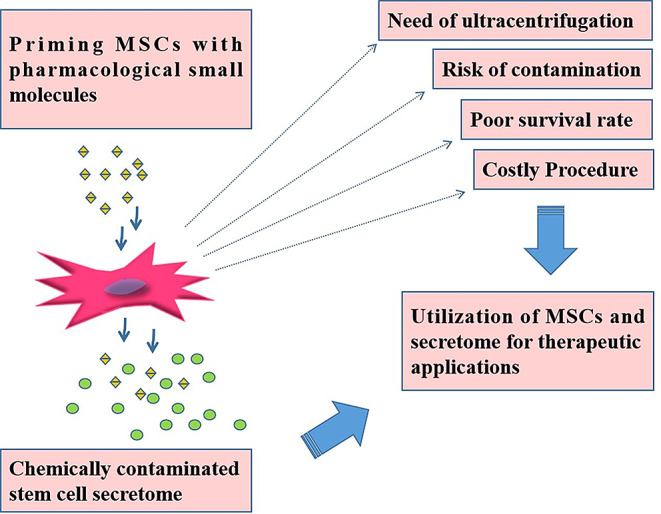
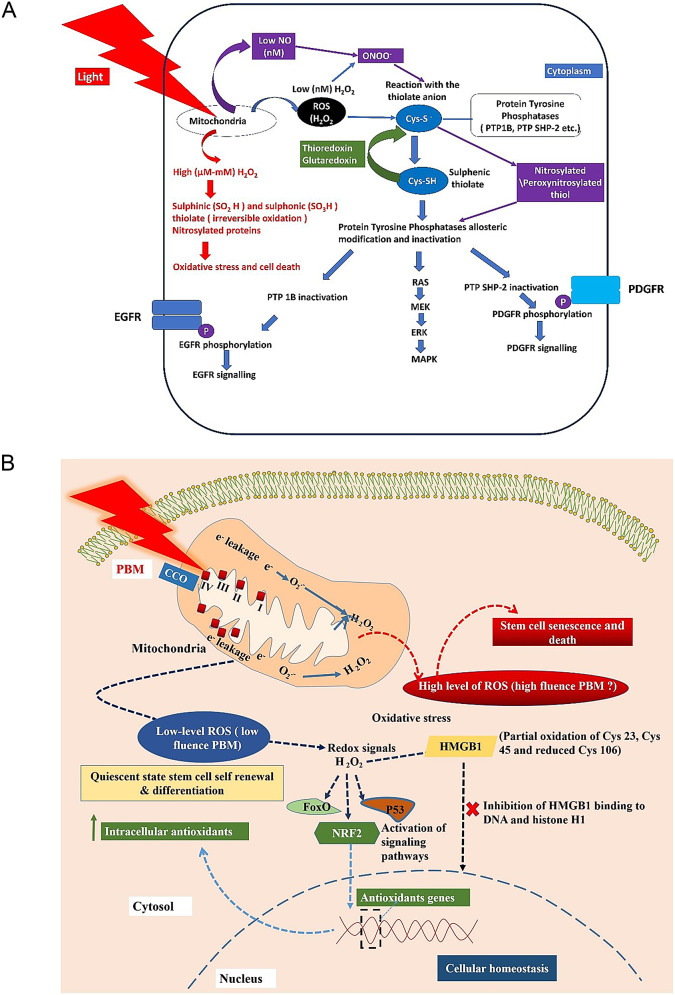
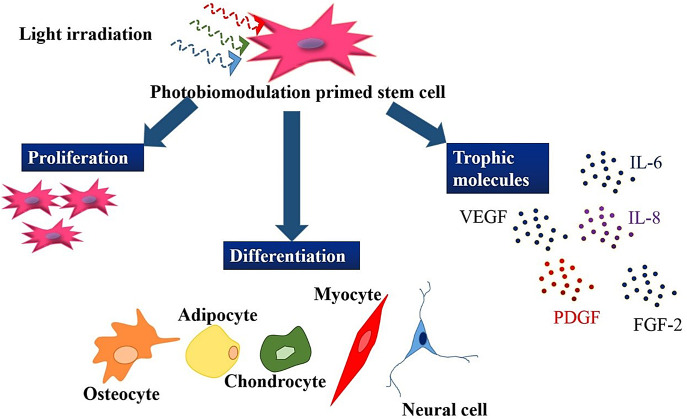
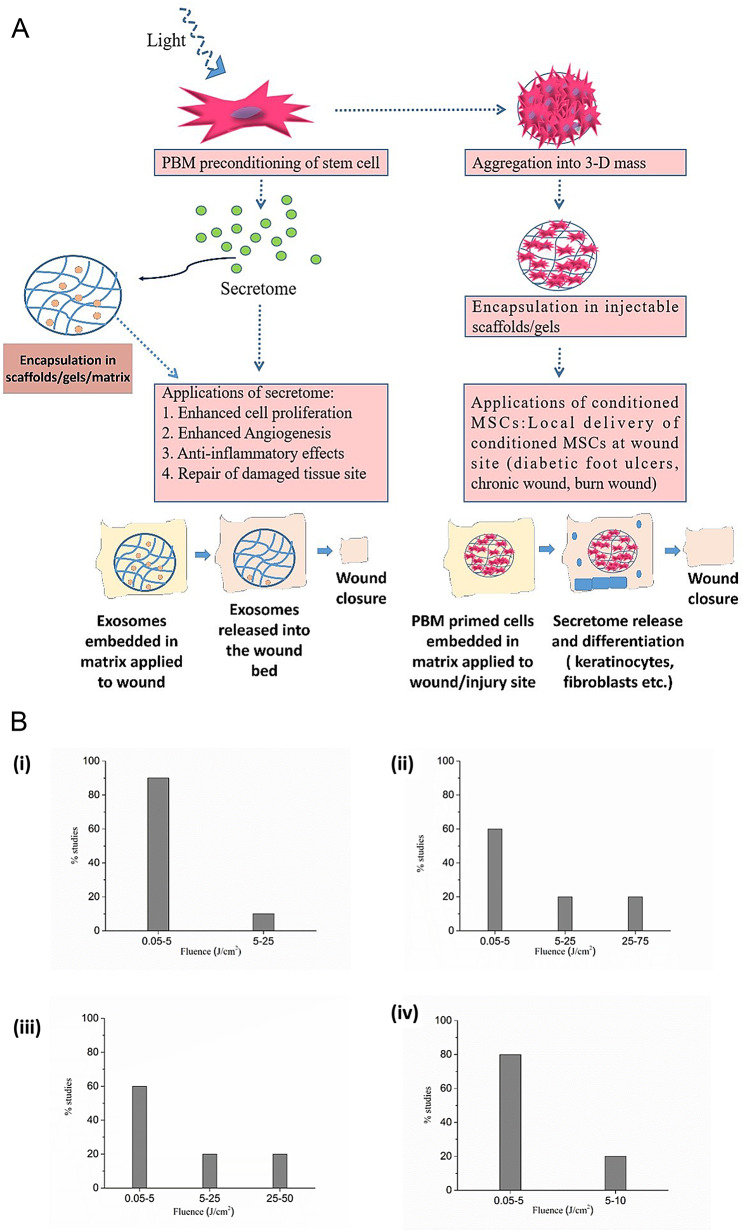
Stem cells (SC) based therapies are proving to be the mainstay of regenerative medicine. Despite the significant potential, direct grafting or implantation of SCs for regenerative therapy encounters various translational roadblocks such as paucity of implantable cells, decreased potency, cell death post-implantation, cell damage caused by the pre-existing inflammation and immune rejection. Hence, an emerging avenue is cell-free approach; use of SC secretome. Although priming approaches based on pharmacological molecules/chemicals, cytokines and growth factors are being explored to elicit enhanced secretome production, the potential concerns include the need for continuous replenishment and potential chemical contamination during secretome isolation. To alleviate these concerns, various non-pharmacological approaches for invigorating SCs are also being investigated and among these, use of photobiomodulation (PBM) has garnered considerable interest. Notwithstanding the positive outcomes, standardized parameters are yet to be established for reproducible results. Moreover, the mechanisms of PBM based SC stimulation and secretome production are poorly elucidated and significant knowledge gaps exist on influence of cell type, culture conditions on PBM. This review aims to provide insight into the current status of this emerging field emphasizing on novel avenues and potential challenges for clinical translation. We also summarize the studies on PBM based proliferation, differentiation and secretome production according to SC cell type and culture conditions. Further, as a fixed PBM based protocol for SC proliferation, differentiation and secretome is lacking, the knowledge on functional targets and pathways in PBM based SC stimulation needs upgradation. Consequently, putative mechanisms for PBM based SC secretome have been proposed.
基于干细胞(SC)的疗法正成为再生医学的中流砥柱。尽管具有巨大潜力,但直接移植或植入干细胞进行再生治疗会遇到各种转化障碍,如可植入细胞数量不足、效力下降、植入后细胞死亡、由既往炎症引起的细胞损伤以及免疫排斥反应。因此,一种新兴的途径是无细胞方法,即使用干细胞分泌组。尽管正在探索基于药理分子/化学物质、细胞因子和生长因子的预处理方法以提高分泌组产量,但潜在问题包括在分泌组分离过程中需要持续补充以及潜在的化学污染。为了缓解这些问题,也在研究各种用于激活干细胞的非药理方法,其中,光生物调节(PBM)的应用引起了相当大的关注。尽管取得了积极成果,但尚未建立标准化参数以获得可重复的结果。此外,基于PBM的干细胞刺激和分泌组产生的机制尚未得到充分阐明,关于细胞类型、培养条件对PBM的影响存在重大知识空白。本综述旨在深入了解这一新兴领域的现状,强调新途径以及临床转化面临的潜在挑战。我们还根据干细胞类型和培养条件总结了基于PBM的增殖、分化和分泌组产生的研究。此外,由于缺乏基于PBM的干细胞增殖、分化和分泌组的固定方案,基于PBM的干细胞刺激中功能靶点和途径的知识需要更新。因此,已经提出了基于PBM的干细胞分泌组的推测机制。