Godos Justyna, Guglielmetti Monica, Ferraris Cinzia, Frias-Toral Evelyn, Domínguez Azpíroz Irma, Lipari Vivian, Di Mauro Andrea, Furnari Fabrizio, Castellano Sabrina, Galvano Fabio, Iacoviello Licia, Bonaccio Marialaura, Grosso Giuseppe
Department of Biomedical and Biotechnological Sciences, University of Catania, 95123 Catania, Italy.
Center for Human Nutrition and Mediterranean Foods (NUTREA), University of Catania, 95123 Catania, Italy.
Nutrients. 2025 Feb 5;17(3):577. doi: 10.3390/nu17030577.
BACKGROUND/OBJECTIVES: With the increasing life expectancy and, as a result, the aging of the global population, there has been a rise in the prevalence of chronic conditions, which can significantly impact individuals' health-related quality of life, a multidimensional concept that comprises an individual's physical, mental, and social wellbeing. While a balanced, nutrient-dense diet, such as Mediterranean diet, is widely recognized for its role in chronic disease prevention, particularly in reducing the risk of cardiovascular diseases and certain cancers, its potential benefits extend beyond these well-known effects, showing promise in improving physical and mental wellbeing, and promoting health-related quality of life.
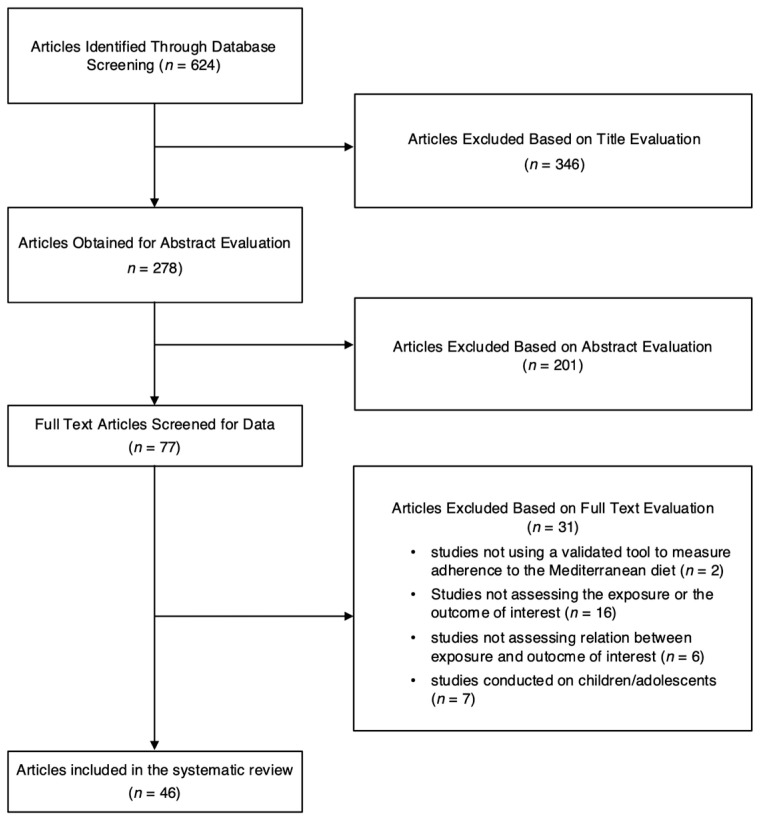
A systematic search of the scientific literature in electronic databases (Pubmed/Medline) was performed to identify potentially eligible studies reporting on the relation between adherence to the Mediterranean diet and health-related quality of life, published up to December 2024.
A total of 28 studies were included in this systematic review, comprising 13 studies conducted among the general population and 15 studies involving various types of patients. Overall, most studies showed a significant association between adherence to the Mediterranean diet and HRQoL, with the most significant results retrieved for physical domains of quality of life, suggesting that diet seems to play a relevant role in both the general population and people affected by chronic conditions with an inflammatory basis.
Adherence to the Mediterranean diet provides significant benefits in preventing and managing various chronic diseases commonly associated with aging populations. Furthermore, it enhances the overall health and quality of life of aging individuals, ultimately supporting more effective and less invasive treatment approaches for chronic diseases.
背景/目的:随着预期寿命的增加以及全球人口老龄化,慢性病的患病率有所上升,这会对个人与健康相关的生活质量产生重大影响,而与健康相关的生活质量是一个多维概念,包括个人的身体、心理和社会福祉。虽然均衡、营养丰富的饮食,如地中海饮食,因其在预防慢性病,特别是降低心血管疾病和某些癌症风险方面的作用而被广泛认可,但其潜在益处不止于这些众所周知的效果,在改善身心健康以及提高与健康相关的生活质量方面也显示出前景。
对电子数据库(PubMed/Medline)中的科学文献进行系统检索,以确定截至2024年12月发表的关于坚持地中海饮食与健康相关生活质量之间关系的潜在合格研究。
本系统评价共纳入28项研究,其中13项在普通人群中开展,15项涉及各类患者。总体而言,大多数研究表明坚持地中海饮食与健康相关生活质量之间存在显著关联,生活质量的身体领域得出的结果最为显著,这表明饮食似乎在普通人群和患有炎症性慢性病的人群中都发挥着重要作用。
坚持地中海饮食在预防和管理各种常见的与老龄人口相关的慢性病方面具有显著益处。此外,它能提高老年人的整体健康和生活质量,最终支持更有效、侵入性更小的慢性病治疗方法。