Barkay T, Fouts D L, Olson B H
Appl Environ Microbiol. 1985 Mar;49(3):686-92. doi: 10.1128/aem.49.3.686-692.1985.
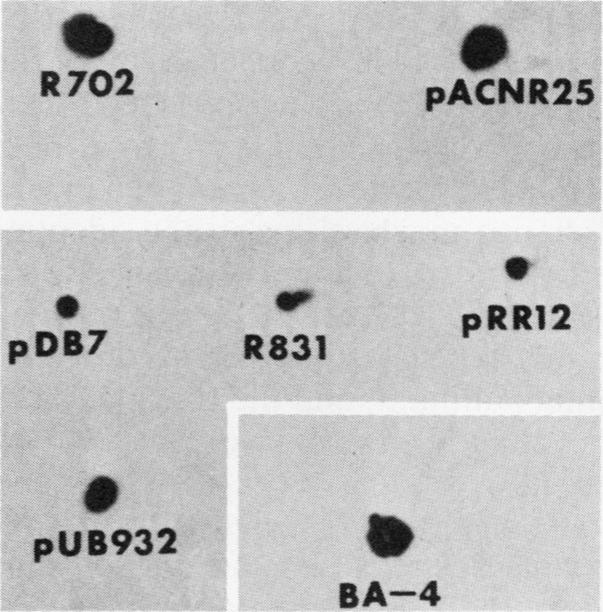
A DNA gene probe was prepared to study genetic change mechanisms responsible for adaptation to mercury in natural bacterial communities. The probe was constructed from a 2.6-kilobase NcoI-EcoRI DNA restriction fragment which spans the majority of the mercury resistance operon (mer) in the R-factor R100. The range of specificity of this gene probe was defined by hybridization to the DNA of a wide variety of mercury-resistant bacteria previously shown to possess the mercuric reductase enzyme. All of the tested gram-negative bacteria had DNA sequences homologous to the mer probe, whereas no such homologies were detected in DNA of the gram-positive strains. Thus, the mer probe can be utilized to study gene flow processes in gram-negative bacterial communities.
制备了一种DNA基因探针,用于研究自然细菌群落中负责适应汞的遗传变化机制。该探针由一个2.6千碱基的NcoI - EcoRI DNA限制性片段构建而成,该片段跨越了R因子R100中大部分汞抗性操纵子(mer)。通过与多种先前已证明具有汞还原酶的耐汞细菌的DNA杂交,确定了该基因探针的特异性范围。所有测试的革兰氏阴性细菌的DNA序列都与mer探针同源,而在革兰氏阳性菌株的DNA中未检测到此类同源性。因此,mer探针可用于研究革兰氏阴性细菌群落中的基因流动过程。