
工作中年龄刻板印象威胁的双重途径:对老年员工工作行为的影响。
Dual pathways of aging stereotype threat at work: impacts on work behaviors of older workers.
作者信息
Liu Lidan, Wang Zhongjun, Guo Xicheng, Li Sulei, Wu Xiaodi
机构信息
Department of Applied Psychology, Hubei University of Chinese Medicine, Wuhan, China.
School of Psychology, Central China Normal University, Wuhan, Hubei, China.
出版信息
Front Psychol. 2025 Jan 30;16:1486911. doi: 10.3389/fpsyg.2025.1486911. eCollection 2025.
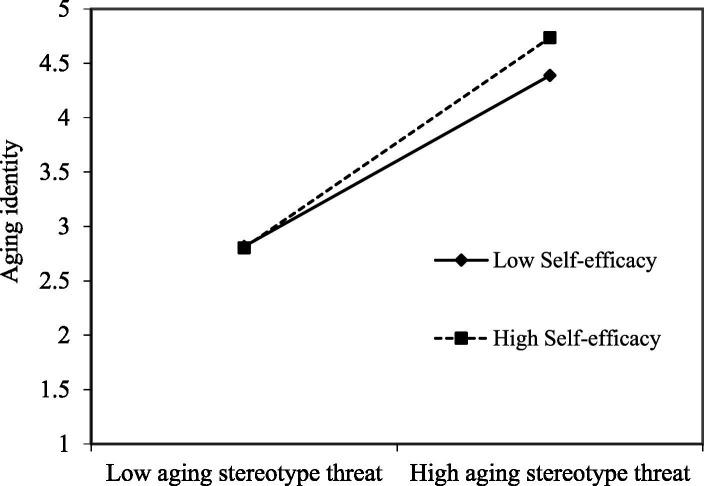
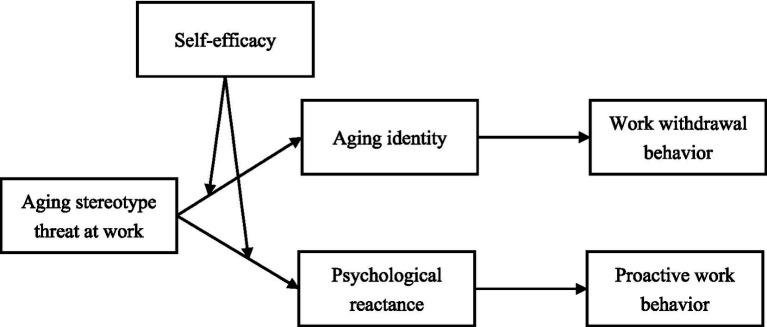
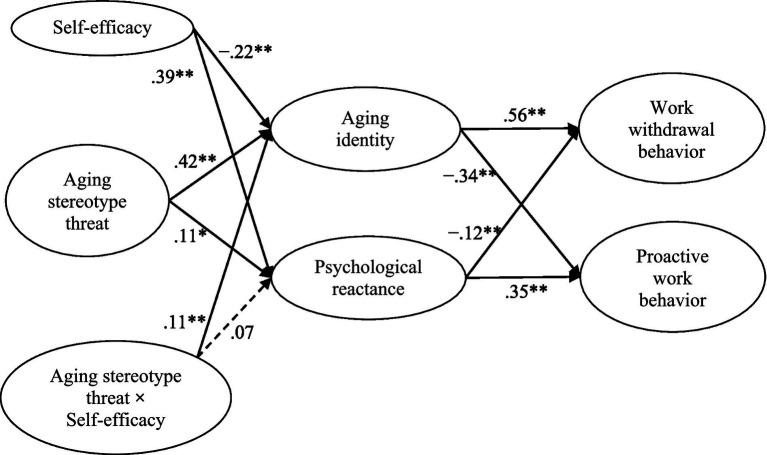
Aging stereotype threat is a significant issue in modern workplaces, affecting older workers' self-perceptions and work behaviors. Although research often highlights the negative impacts of aging stereotypes, the dual pathways by which these stereotypes influence negative and positive work behaviors remain underexplored. This study aims to address this gap by employing a dual mediation model, grounded in Uncertainty-Identity Theory and Psychological Reactance Theory, to explore the effects of aging stereotype threat on older workers' behaviors. Using structural equation modeling (SEM) with two-wave data from older employees in various industries, the study shows that aging stereotype threat significantly affects aging identity, which fully mediates its link to work withdrawal behaviors. In contrast, psychological reactance emerges as another mediator, leading to proactive work behaviors. The results also suggest that older workers with high self-efficacy exhibit a stronger relationship between stereotype threat and aging identity. This research adds to the literature by exploring how aging stereotype threat leads to both negative and positive behavioral outcomes. It provides valuable insights for organizations aiming to support older employees in the workplace.
衰老刻板印象威胁是现代职场中的一个重要问题,影响着老年员工的自我认知和工作行为。尽管研究常常强调衰老刻板印象的负面影响,但这些刻板印象影响消极和积极工作行为的双重途径仍未得到充分探索。本研究旨在通过运用基于不确定性认同理论和心理反抗理论的双重中介模型来填补这一空白,以探讨衰老刻板印象威胁对老年员工行为的影响。该研究使用结构方程模型(SEM)对来自不同行业老年员工的两波数据进行分析,结果表明,衰老刻板印象威胁显著影响衰老认同,而衰老认同完全中介了其与工作退缩行为的联系。相比之下,心理反抗成为另一个中介因素,导致积极的工作行为。研究结果还表明,自我效能感高的老年员工在刻板印象威胁和衰老认同之间表现出更强的关系。本研究通过探索衰老刻板印象威胁如何导致消极和积极的行为结果,为相关文献增添了内容。它为旨在支持职场老年员工的组织提供了有价值的见解。
 Zotero 插件