Mahanta Deepak Kumar, Komal J, Samal Ipsita, Bhoi Tanmaya Kumar, Kumar P V Dinesh, Mohapatra Swapnalisha, Athulya R, Majhi Prasanta Kumar, Mastinu Andrea
Forest Entomology Discipline, Forest Protection Division Indian Council of Forestry Research and Education (ICFRE)-Forest Research Institute (ICFRE-FRI) Dehradun Uttarakhand India.
Basic Seed Multiplication and Training Centre Central Silk Board Kharsawan Jharkhand India.
Plant Environ Interact. 2025 Feb 16;6(1):e70035. doi: 10.1002/pei3.70035. eCollection 2025 Feb.
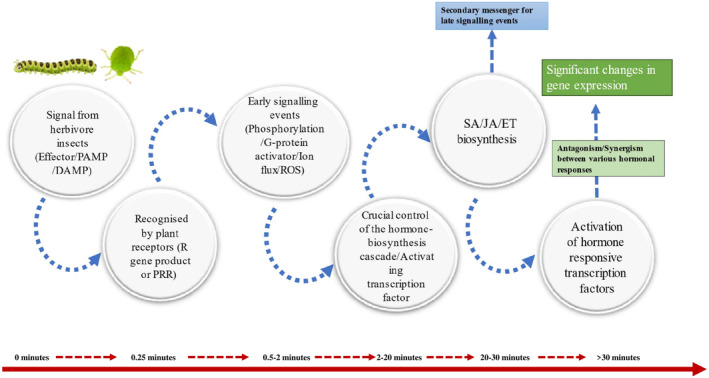
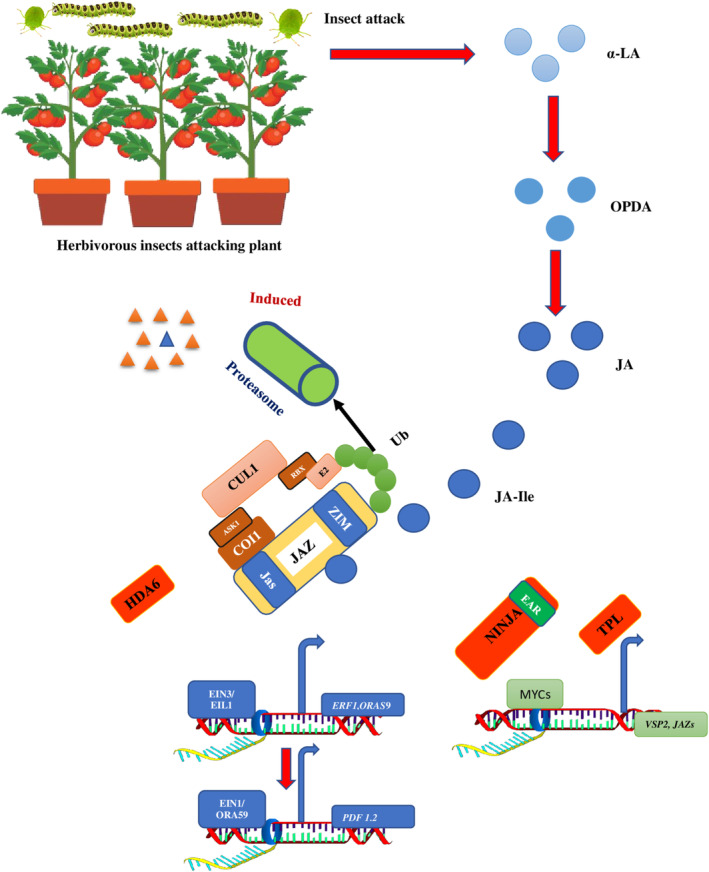
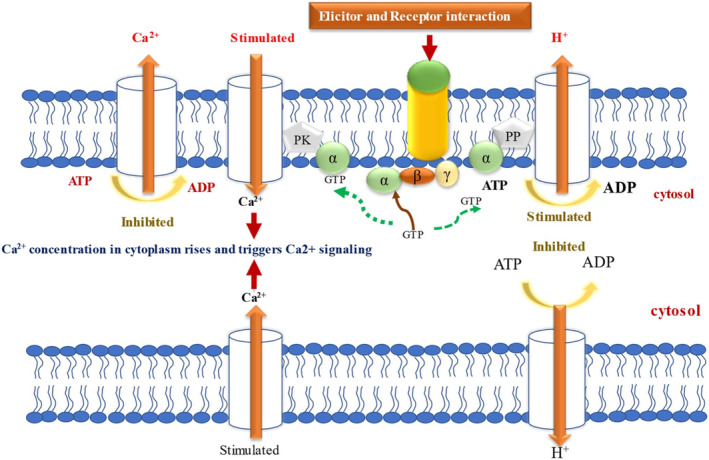
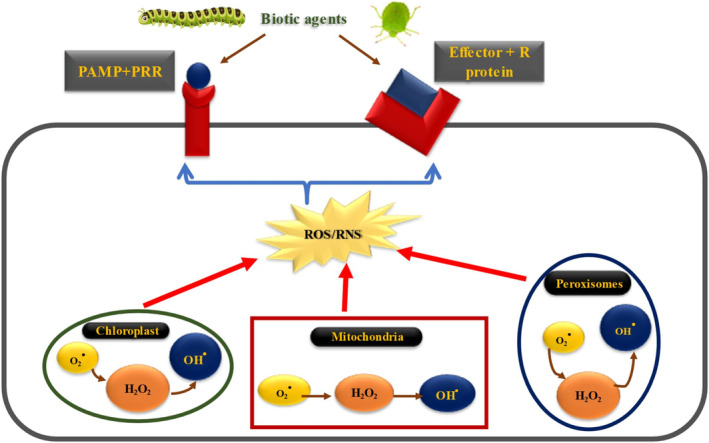
Over millions of years of interactions, plants have developed complex defense mechanisms to counteract diverse insect herbivory strategies. These defenses encompass morphological, biochemical, and molecular adaptations that mitigate the impacts of herbivore attacks. Physical barriers, such as spines, trichomes, and cuticle layers, deter herbivores, while biochemical defenses include the production of secondary metabolites and volatile organic compounds (VOCs). The initial step in the plant's defense involves sensing mechanical damage and chemical cues, including herbivore oral secretions and herbivore-induced VOCs. This triggers changes in plasma membrane potential driven by ion fluxes across plant cell membranes, activating complex signal transduction pathways. Key hormonal mediators, such as jasmonic acid, salicylic acid, and ethylene, orchestrate downstream defense responses, including VOC release and secondary metabolites biosynthesis. This review provides a comprehensive analysis of plant responses to herbivory, emphasizing early and late defense mechanisms, encompassing physical barriers, signal transduction cascades, secondary metabolites synthesis, phytohormone signaling, and epigenetic regulation.
在数百万年的相互作用中,植物已经发展出复杂的防御机制来对抗各种昆虫的食草策略。这些防御包括形态、生化和分子适应,以减轻食草动物攻击的影响。物理屏障,如刺、毛状体和角质层,可阻止食草动物,而生化防御包括次生代谢产物和挥发性有机化合物(VOCs)的产生。植物防御的第一步涉及感知机械损伤和化学信号,包括食草动物的口腔分泌物和食草动物诱导的VOCs。这会触发由跨植物细胞膜的离子通量驱动的质膜电位变化,激活复杂的信号转导途径。关键的激素介质,如茉莉酸、水杨酸和乙烯,协调下游防御反应,包括VOC释放和次生代谢产物生物合成。本综述对植物对食草作用的反应进行了全面分析,强调了早期和晚期防御机制,包括物理屏障、信号转导级联、次生代谢产物合成、植物激素信号传导和表观遗传调控。