Rout Madhusmita, Ramu Deepika, Mariana Mendez, Koshy Teena, Venkatesan Vettriselvi, Lopez-Alvarenga Juan C, Arya Rector, Ravichandran Umarani, Sharma Surendra K, Lodha Sailesh, Ponnala Amaresh Reddy, Sharma Krishna Kumar, Shaik Mahaboob Vali, Resendez Roy G, Venugopal Priyanka, R Parthasarathy, S Noelta, Ezeilo Juliet A, Almeida Marcio, Paralta Juan, Mummidi Srinivas, Natesan Chidambaram, Mehra Narinder K, Singh Jai Rup, Wander Gurpreet S, Ralhan Sarju, Blackett Piers R, Blangero John, Medicherla Krishna M, Thanikachalam Sadagopan, Panchatcharam Thyagarajan Sadras, K Dileep Kumar, Gupta Rajeev, Paul Solomon Franklin D, Ghosh Asish K, Aston Christopher E, Duggirala Ravindranath, Sanghera Dharambir K
Department of Pediatrics, College of Medicine, University of Oklahoma Health Sciences Center, Oklahoma City, OK, USA.
Department of Human Genetics, Sri Ramachandra Institute of Higher Education and Research (Deemed to be University), Chennai, India.
Commun Med (Lond). 2025 Feb 22;5(1):47. doi: 10.1038/s43856-025-00750-9.
Type 2 diabetes (T2D) etiology is highly complex due to its multiple roots of origin. Polygenic risk scores (PRS) based on genome-wide association studies (GWAS) can partially explain T2D risk. Asian Indian people have up to six times higher risk of developing T2D than European people, and underlying causes of this disparity are unknown.
We have performed targeted sequencing of ten T2D GWAS/candidate regions using endogamous Punjabi Sikh families and replication studies using unrelated Sikh people and families from three other Indian endogamous ethnic groups (EEGs).
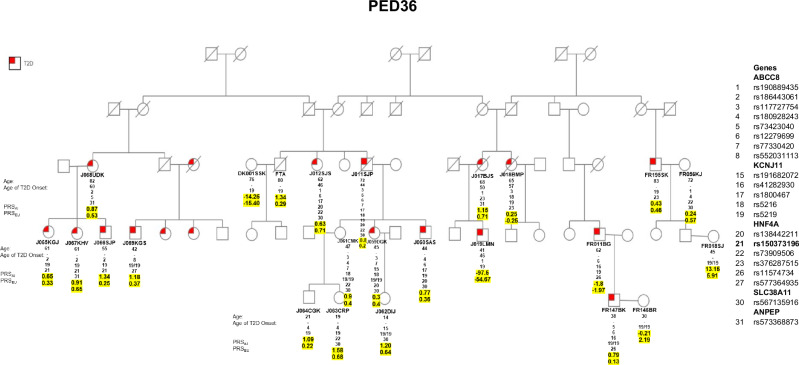
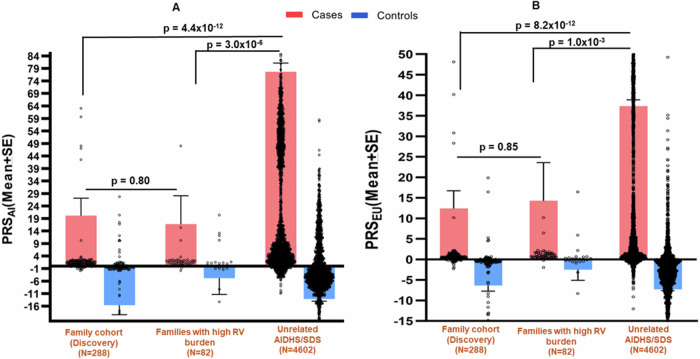
We detect rare and ultra-rare variants (RVs) in KCNJ11-ABCC8 and HNF4A (MODY genes) cosegregated with late-onset T2D. We also identify RV enrichment in two new genes, SLC38A11 and ANPEP, associated with T2D. Gene-burden analysis reveals the highest RV burden contributed by HNF4A (p = 0.0003), followed by KCNJ11/ABCC8 (p = 0.0061) and SLC38A11 (p = 0.03). Some RVs detected in Sikh people are also found in Agarwals from Jaipur, both from Northern India, but were monomorphic in other two EEGs from South Indian people. Despite carrying a high burden of T2D and RVs, most families have a significantly lower burden of PRS. Functional studies show that an intronic regulatory variant (RV) in ABCC8 affects the binding of Pax4 and NF-kB transcription factors, influencing downstream gene regulation.
The high burden of T2D in these families may stem from the enrichment of noncoding RVs in a small number of major known genes (including MODY genes) with oligogenic inheritance alongside RVs from genes associated with polygenic susceptibility. These findings highlight the need to conduct deeper evaluations of families from non-European ancestries to identify potential novel therapeutics and implement preventative strategies.
2型糖尿病(T2D)的病因高度复杂,源于多种因素。基于全基因组关联研究(GWAS)的多基因风险评分(PRS)可部分解释T2D风险。亚洲印度人患T2D的风险比欧洲人高多达六倍,这种差异的潜在原因尚不清楚。
我们使用内婚制旁遮普锡克教家庭对十个T2D GWAS/候选区域进行了靶向测序,并使用来自其他三个印度内婚制族群(EEGs)的无关锡克教人和家庭进行了复制研究。
我们在与晚发性T2D共分离的KCNJ11-ABCC8和HNF4A(MODY基因)中检测到罕见和超罕见变异(RVs)。我们还在与T2D相关的两个新基因SLC38A11和ANPEP中鉴定出RV富集。基因负担分析显示,HNF4A贡献的RV负担最高(p = 0.0003),其次是KCNJ11/ABCC8(p = 0.0061)和SLC38A11(p = 0.03)。在锡克教人群中检测到的一些RVs也在来自印度北部斋浦尔的阿加瓦尔人群中发现,但在来自南印度人群的其他两个EEGs中是单态的。尽管携带高负担的T2D和RVs,但大多数家庭的PRS负担显著较低。功能研究表明,ABCC8中的一个内含子调节变异(RV)影响Pax4和NF-κB转录因子的结合,影响下游基因调控。
这些家庭中T2D的高负担可能源于少数主要已知基因(包括MODY基因)中寡基因遗传的非编码RVs富集以及与多基因易感性相关基因的RVs。这些发现强调需要对非欧洲血统的家庭进行更深入的评估,以识别潜在的新型治疗方法并实施预防策略。