Dunlop Kristyn, Dillon Grace, Crowley Rachel K, Phillips Catherine, Twomey Patrick, McAuliffe Fionnuala M
UCD Perinatal Research Centre, School of Medicine, University College Dublin, National Maternity Hospital, Dublin, Ireland.
School of Medicine, University College Dublin, Dublin, Ireland.
Nutr Metab (Lond). 2025 Feb 25;22(1):15. doi: 10.1186/s12986-025-00908-1.
Non-communicable chronic disease is a major contributor to morbidity and mortality with potentially modifiable lifestyle factors. In women, the menopausal transition modifies women's risk of chronic disease, and pregnancy-related complications have been highlighted as female-specific risk factors. Later reproductive years, before onset of menopause, may represent a window of opportunity for promotion of lifestyle modifications. The aim of this scoping review is to investigate which interventions promoting lifestyle modifications in women of later reproductive years may influence cardiometabolic and bone disease.
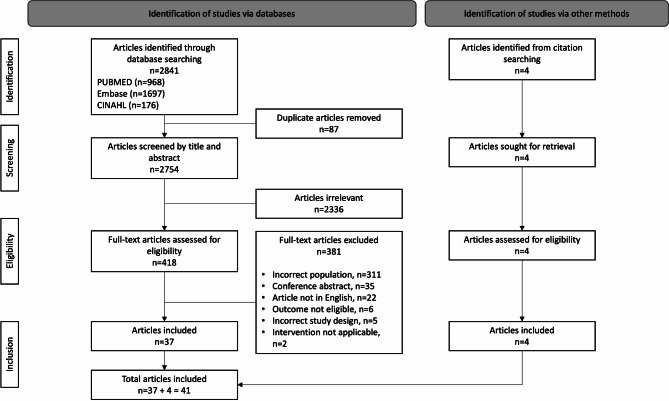
A search of three electronic databases (PubMed, Embase, CINAHL) in the English language was performed in January 2024. Eligible studies included women aged 40-55 participating in interventions focusing on lifestyle modification. Studies reporting outcomes related to cardiometabolic disease, bone disease or body composition were eligible for inclusion.
Improvements in body composition occurred following interventions focusing on aerobic physical activity. Interventions focusing on health promotion and education, incorporating both dietary and physical activity modifications, prevented weight gain and improved cardiometabolic outcomes. Interventions incorporating elements of behavioural theories enhanced patient-motivated lifestyle modifications, with effects on body composition and cardiometabolic outcomes.
Lifestyle modifications in later reproductive years have the potential to influence cardiometabolic and bone disease. Our findings reinforce the benefits of regular aerobic physical activity, as well as health education, for improving body composition and lipid profile. This information could contribute to the development of clinical guidelines for the prevention of chronic disease.
非传染性慢性病是导致发病和死亡的主要因素,生活方式因素可能对其产生影响。在女性中,绝经过渡会改变女性患慢性病的风险,与妊娠相关的并发症已被视为女性特有的风险因素。绝经前的晚育期可能是促进生活方式改变的一个机会窗口。本范围综述的目的是调查哪些促进晚育期女性生活方式改变的干预措施可能会影响心脏代谢疾病和骨骼疾病。
2024年1月对三个英文电子数据库(PubMed、Embase、CINAHL)进行了检索。符合条件的研究包括年龄在40 - 55岁之间参与以生活方式改变为重点的干预措施的女性。报告与心脏代谢疾病、骨骼疾病或身体成分相关结果的研究符合纳入标准。
以有氧体育活动为重点的干预措施后,身体成分得到改善。以健康促进和教育为重点、同时包括饮食和体育活动改变的干预措施可防止体重增加并改善心脏代谢结果。纳入行为理论要素的干预措施可增强患者自主的生活方式改变,对身体成分和心脏代谢结果产生影响。
晚育期的生活方式改变有可能影响心脏代谢疾病和骨骼疾病。我们的研究结果强化了规律有氧体育活动以及健康教育对改善身体成分和血脂水平的益处。这些信息有助于制定慢性病预防的临床指南。