Williams Harry, Baame Miranda, Lorenzetti Federico, Mangeni Judith, Nix Emily, Betang Emmanuel, Chartier Ryan, Sang Edna, Wilson Daniel, Tawiah Theresa, Quansah Reginald, Puzzolo Elisa, Menya Diana, Ngahane Bertrand Hugo Mbatchou, Pope Daniel, Asante Kwaku Poku, Shupler Matthew
Department of Public Health, Policy and Systems, University of Liverpool, Liverpool, UK.
Douala General Hospital, Douala, Cameroon.
Sci Rep. 2025 Feb 26;15(1):6856. doi: 10.1038/s41598-024-81413-y.
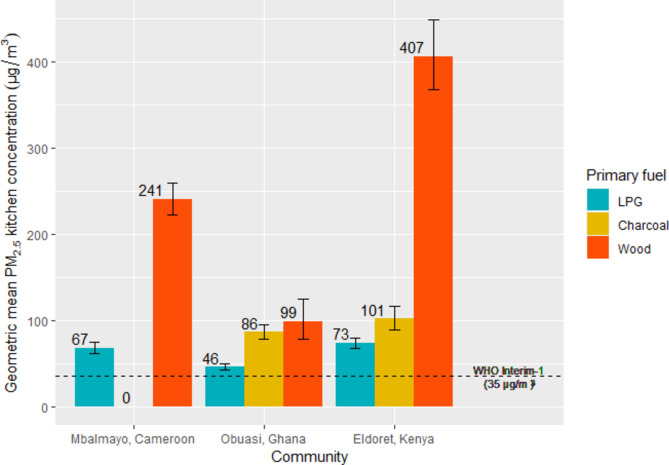
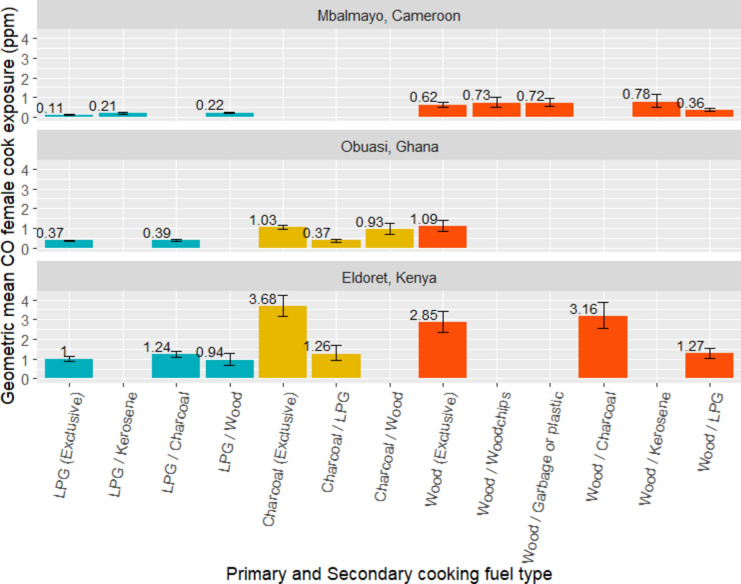
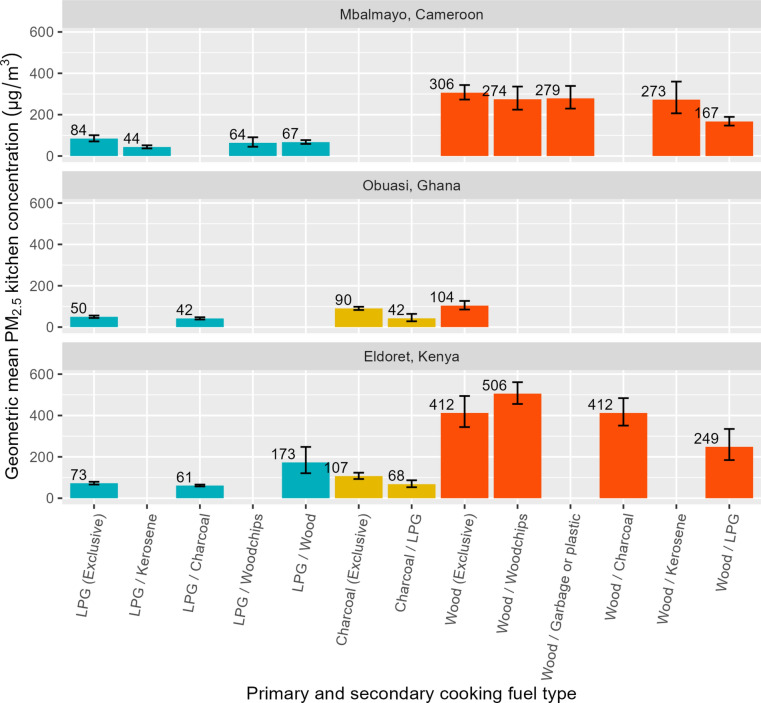
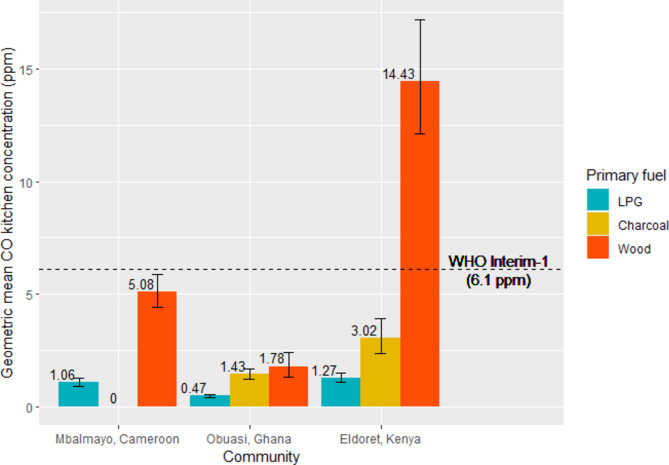
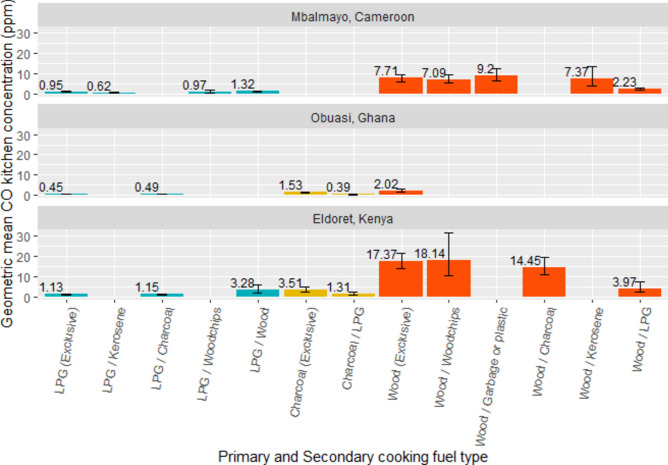
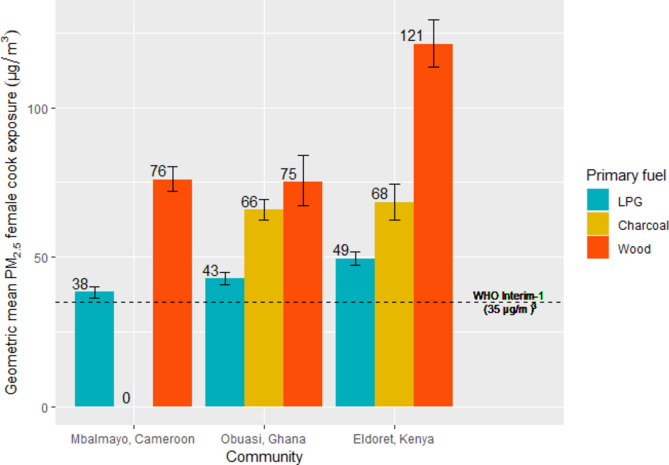
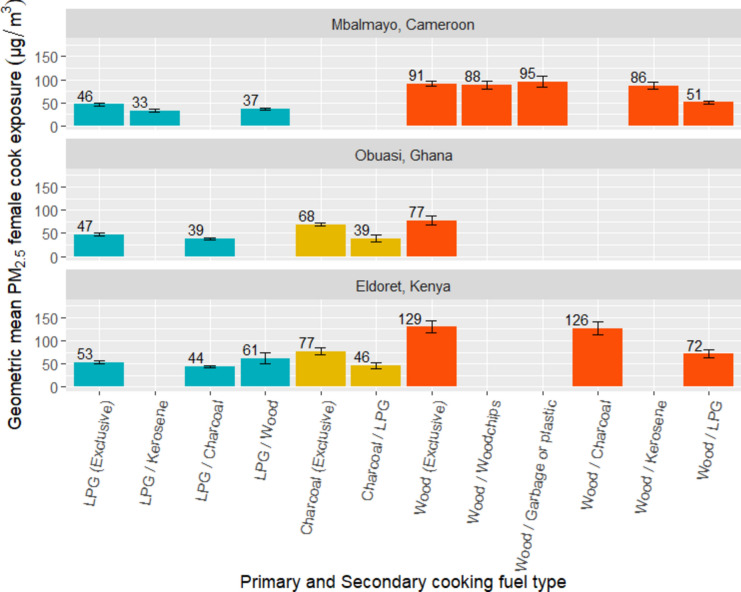
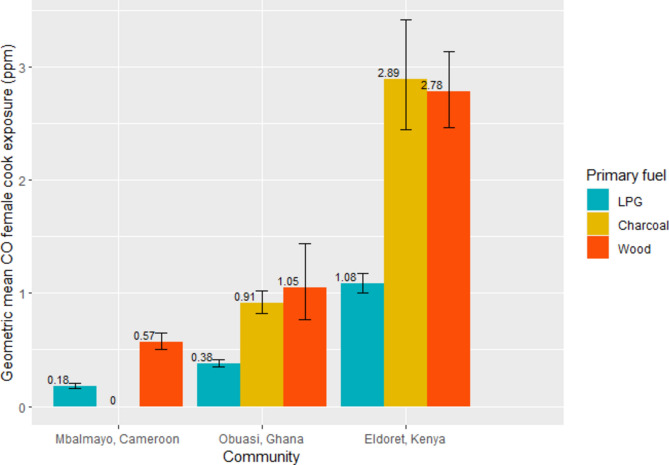
In sub-Saharan Africa, approximately 85% of the population uses polluting cooking fuels (e.g. wood, charcoal). Incomplete combustion of these fuels generates household air pollution (HAP), containing fine particulate matter (PM ) and carbon monoxide (CO). Due to large spatial variability, increased quantification of HAP levels is needed to improve exposure assessment in sub-Saharan Africa. The CLEAN-Air(Africa) study included 24-h monitoring of PM and CO kitchen concentrations (n = 248/n = 207) and female primary cook exposures (n = 245/n = 222) in peri-urban households in Obuasi (Ghana), Mbalmayo (Cameroon) and Eldoret (Kenya). HAP measurements were combined with survey data on cooking patterns, socioeconomic characteristics and ambient exposure proxies (e.g. walking time to nearest road) in separate PM and CO mixed-effect log-linear regression models. Model coefficients were applied to a larger study population (n = 937) with only survey data to quantitatively scale up PM and CO exposures. The final models moderately explained variation in mean 24-h PM (R = 0.40) and CO (R = 0.26) kitchen concentration measurements, and PM (R = 0.27) and CO (R = 0.14) female cook exposures. Primary/secondary cooking fuel type was the only significant predictor in all four models. Other significant predictors of PM and CO kitchen concentrations were cooking location and household size; household financial security and rental status were only predictive of PM concentrations. Cooking location, household financial security and proxies of ambient air pollution exposure were significant predictors of PM cook exposures. Including objective cooking time measurements (from temperature sensors) from (n = 143) households substantially improved (by 52%) the explained variability of the CO kitchen concentration model, but not the PM model. Socioeconomic characteristics and markers of ambient air pollution exposure were strongly associated with mean PM measurements, while cooking environment variables were more predictive of mean CO levels.
在撒哈拉以南非洲地区,约85%的人口使用有污染性的烹饪燃料(如木材、木炭)。这些燃料的不完全燃烧会产生家庭空气污染(HAP),其中含有细颗粒物(PM)和一氧化碳(CO)。由于空间变异性较大,需要对HAP水平进行更精确的量化,以改善撒哈拉以南非洲地区的暴露评估。“清洁空气(非洲)”研究对加纳奥布阿西、喀麦隆姆巴尔马约和肯尼亚埃尔多雷特城郊家庭的厨房PM和CO浓度进行了24小时监测(n = 248/n = 207),并对女性主要烹饪者的暴露情况进行了监测(n = 245/n = 222)。在单独的PM和CO混合效应对数线性回归模型中,将HAP测量结果与烹饪模式、社会经济特征及环境暴露指标(如到最近道路的步行时间)的调查数据相结合。将模型系数应用于仅有调查数据的更大研究人群(n = 937),以对PM和CO暴露进行定量放大。最终模型适度解释了24小时平均PM(R = 0.40)和CO(R = 0.26)厨房浓度测量值以及PM(R = 0.27)和CO(R = 0.14)女性烹饪者暴露情况的变化。在所有四个模型中,主要/次要烹饪燃料类型是唯一显著的预测因素。PM和CO厨房浓度的其他显著预测因素是烹饪地点和家庭规模;家庭经济安全状况和租赁状况仅能预测PM浓度。烹饪地点、家庭经济安全状况和环境空气污染暴露指标是PM烹饪者暴露情况的显著预测因素。纳入(n = 143)家庭的客观烹饪时间测量值(来自温度传感器)大幅改善(提高了52%)了CO厨房浓度模型的可解释变异性,但对PM模型没有效果。社会经济特征和环境空气污染暴露指标与平均PM测量值密切相关,而烹饪环境变量对平均CO水平的预测性更强。