Aboshady Omar A, Raffa Jess Z, Quinney Sara K, Tisdale James E, Overholser Brian R
Department of Pharmacy Practice, College of Pharmacy, Purdue University, West Lafayette, Indiana, USA.
Clinical Pharmacology Department, Faculty of Medicine, Menoufia University, Menoufia, Egypt.
Clin Pharmacol Ther. 2025 Jun;117(6):1650-1660. doi: 10.1002/cpt.3605. Epub 2025 Feb 27.
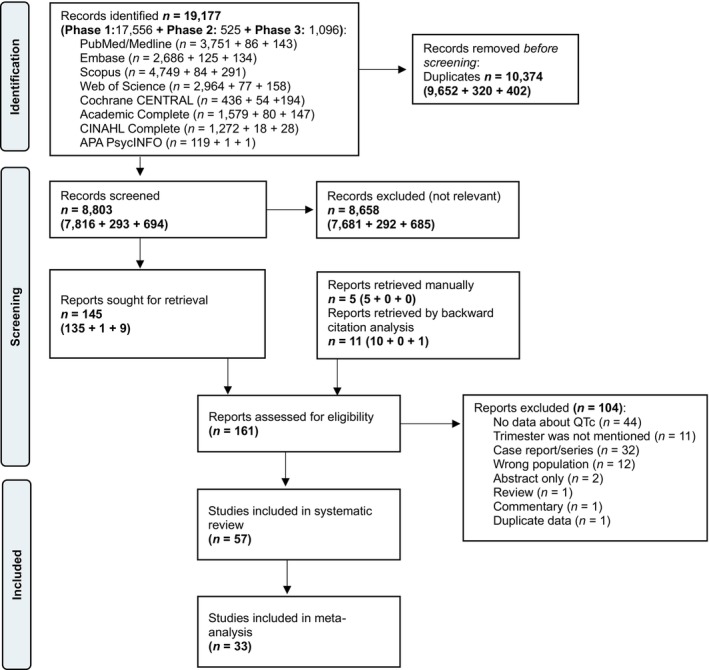
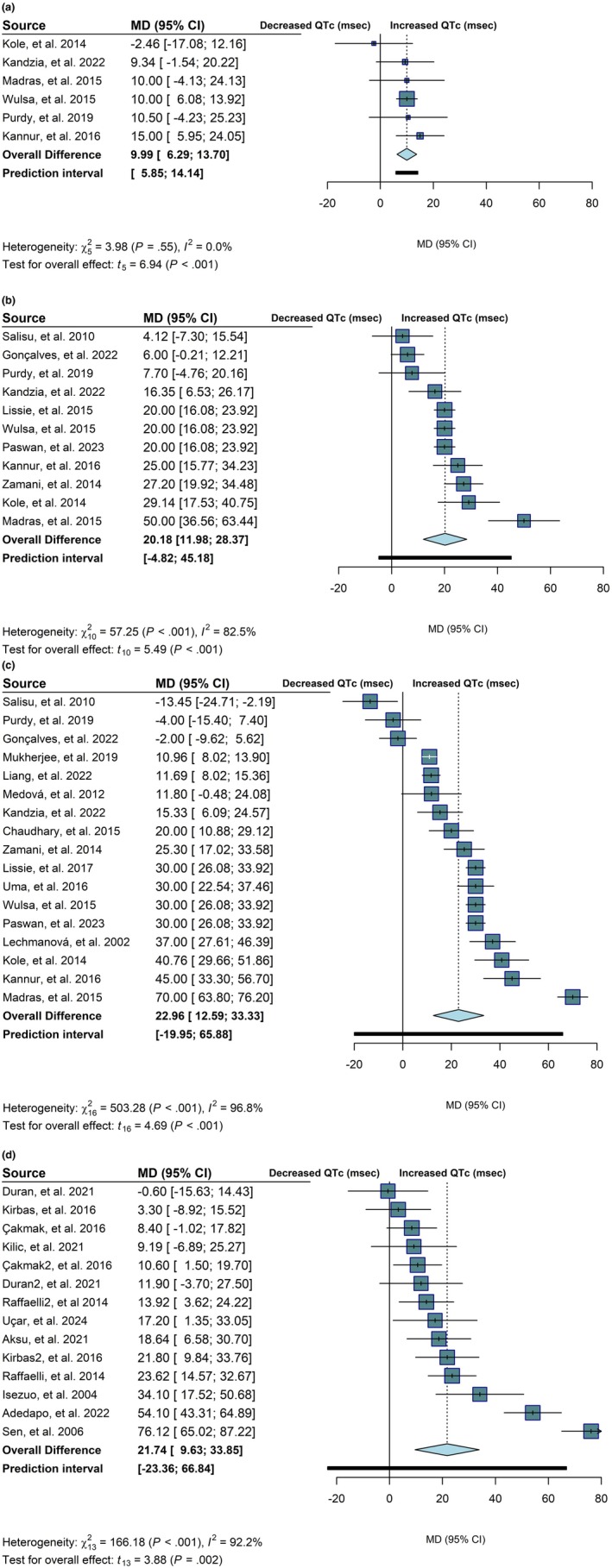
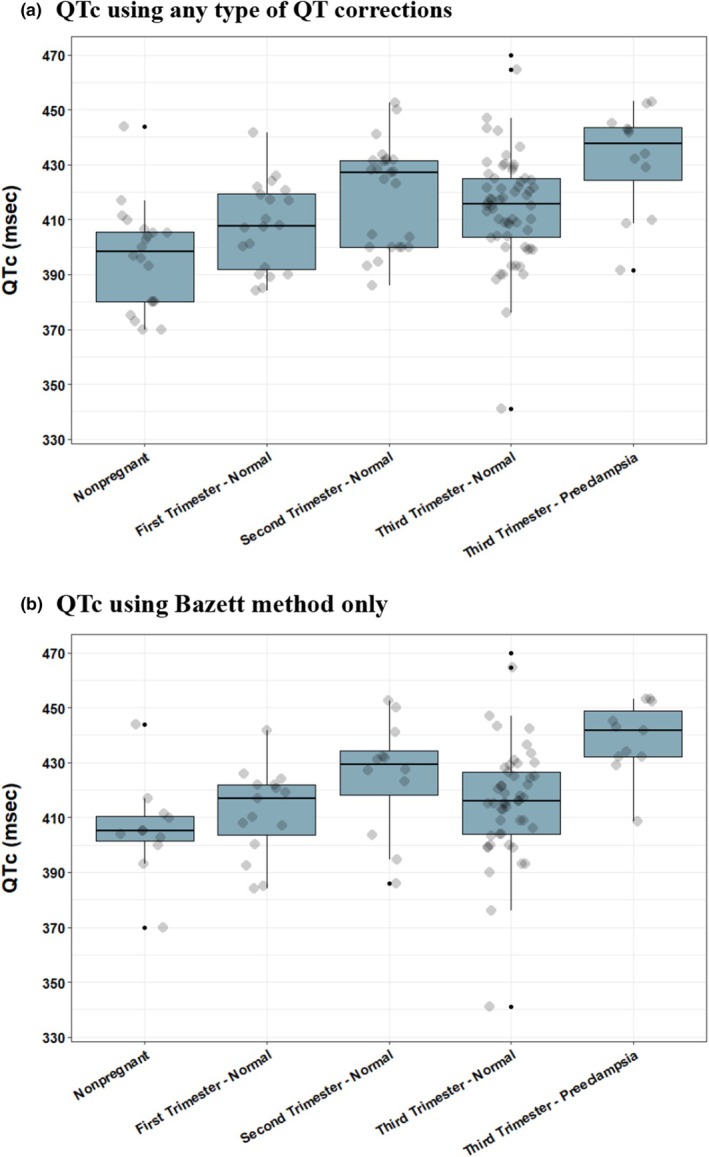
Pregnancy induces significant adaptations in the cardio-autonomic nervous system, with additional cardiac stress in preeclampsia potentially impacting ventricular repolarization. Despite the widespread use of QT-prolonging drugs during pregnancy, the extent of heart rate (HR)-corrected QT (QTc) interval changes during normal pregnancy and preeclampsia remains unclear. This study aimed to quantify changes in QTc interval across different trimesters of normal pregnancy and third-trimester preeclampsia. Eight databases were systematically searched from their inception to January 13, 2025. Any type of study design, except case reports/series, reporting QT interval and HR or RR interval, and/or QTc interval for at least one trimester were included. Those reporting at least two trimesters or one trimester with nonpregnant controls were pooled in meta-analyses using random-effect models to calculate pooled mean differences (MD) across trimesters. Data from 57 studies (6,686 participants) were included with 33 studies (5,153 participants) pooled in meta-analyses. Compared with nonpregnant individuals, QTc intervals increased across trimesters of normal pregnancy and in third-trimester preeclampsia. Meta-analyses revealed significant increases in QTc interval during first (MD = 10.0 msec), second (MD = 20.2 msec), and third trimesters (MD = 23.0 msec) compared with nonpregnant individuals. Furthermore, preeclampsia increased the QTc interval by 21.7 msec during the third trimester compared to normal pregnancy. No publication bias was detected, and the overall quality scores of most studies were fair (n = 23) or poor (n = 33). A significant QTc interval lengthening throughout normal pregnancy was identified, and to a greater extent during preeclampsia. The arrhythmogenicity in third-trimester preeclampsia with a known risk for QTc interval prolongation, especially with using QT-prolonging drugs, warrants further investigation.
妊娠会引起心脏自主神经系统的显著适应性变化,子痫前期额外的心脏应激可能会影响心室复极。尽管孕期广泛使用可延长QT间期的药物,但正常妊娠和子痫前期期间心率(HR)校正QT(QTc)间期的变化程度仍不清楚。本研究旨在量化正常妊娠不同孕周和孕晚期子痫前期QTc间期的变化。系统检索了8个数据库,检索时间从建库至2025年1月13日。纳入除病例报告/系列外的任何类型研究设计,这些研究报告了至少一个孕周的QT间期和HR或RR间期,和/或QTc间期。那些报告至少两个孕周或一个孕周并设有非孕对照的研究,在荟萃分析中采用随机效应模型进行合并,以计算各孕周的合并平均差异(MD)。纳入了57项研究(6686名参与者)的数据,其中33项研究(5153名参与者)纳入荟萃分析。与非孕个体相比,正常妊娠各孕周和孕晚期子痫前期的QTc间期均增加。荟萃分析显示,与非孕个体相比,孕早期(MD = 10.0毫秒)、孕中期(MD = 20.2毫秒)和孕晚期(MD = 23.0毫秒)的QTc间期显著增加。此外,与正常妊娠相比,子痫前期在孕晚期使QTc间期增加21.7毫秒。未检测到发表偏倚,大多数研究的总体质量评分中等(n = 23)或较差(n = 33)。研究发现,整个正常妊娠期间QTc间期均显著延长,子痫前期时延长程度更大。孕晚期子痫前期有致心律失常性,已知有QTc间期延长风险,尤其是在使用可延长QT间期的药物时,值得进一步研究。