Barlow Abby, Penington Sarah, Adams Ben
Department of Mathematical Sciences, The University of Bath, Claverton Down, Bath, BA2 7AY, UK.
Bull Math Biol. 2025 Feb 27;87(4):50. doi: 10.1007/s11538-025-01426-0.
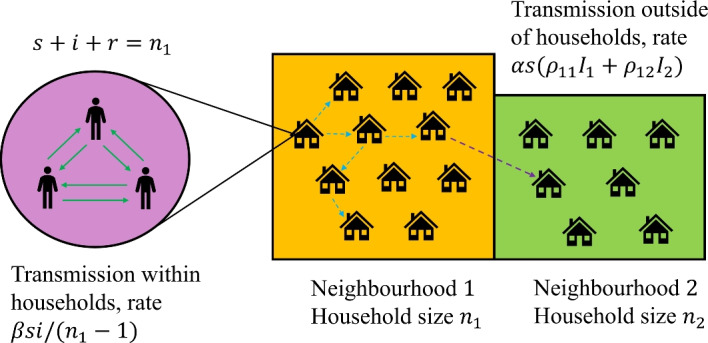
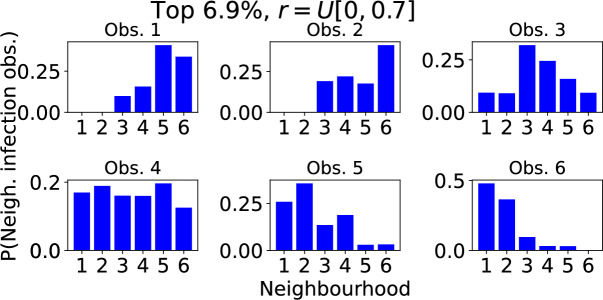
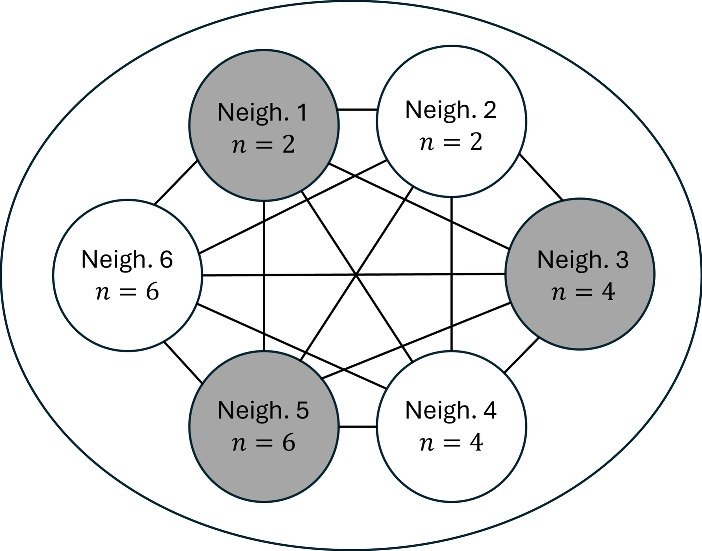
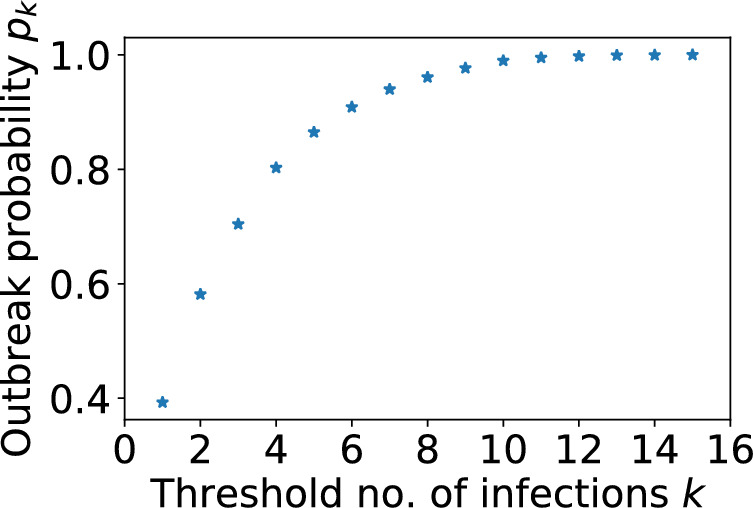
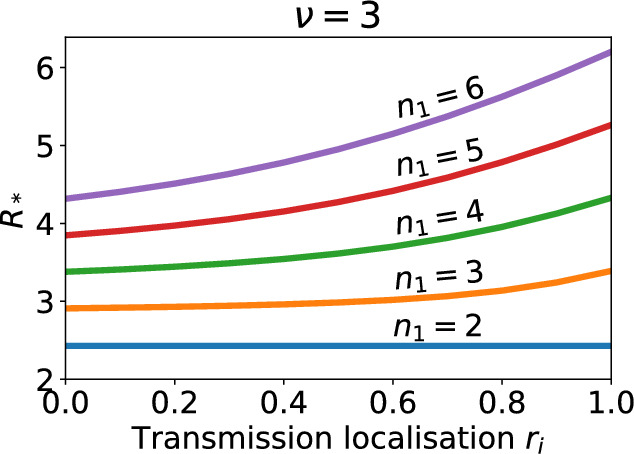
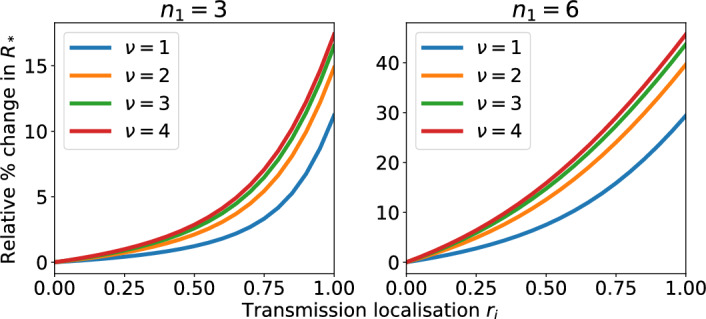
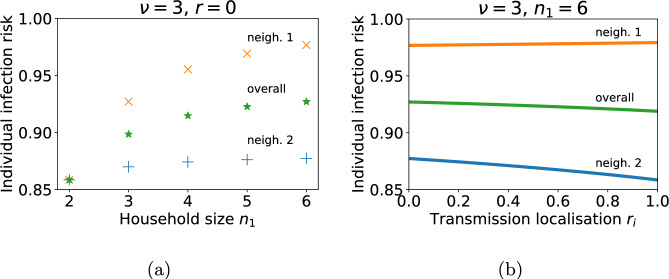
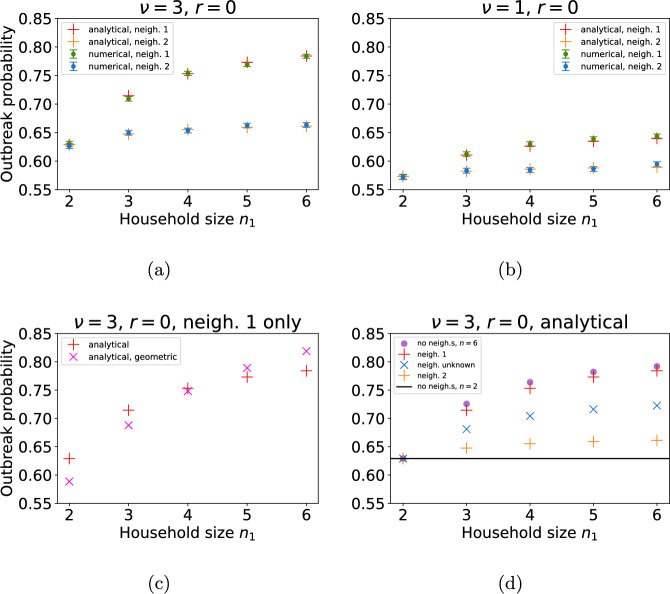
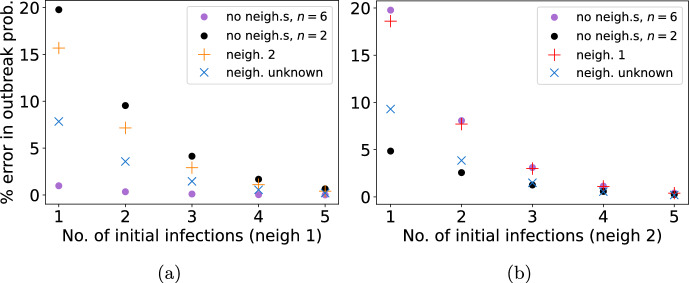
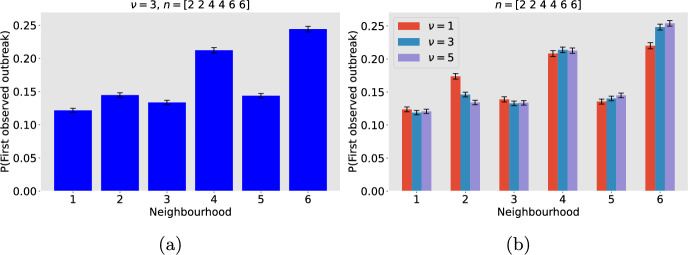
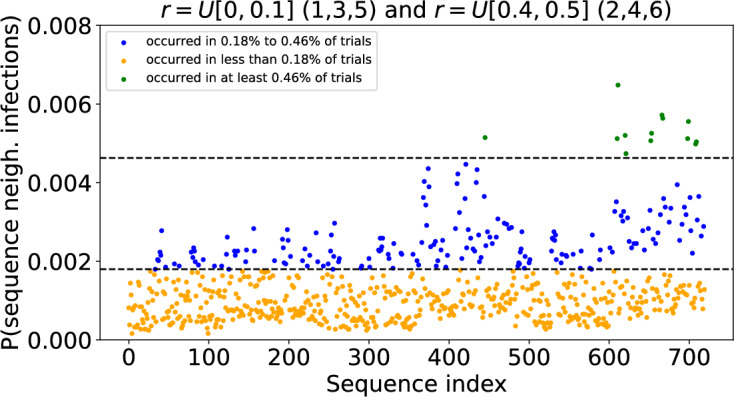
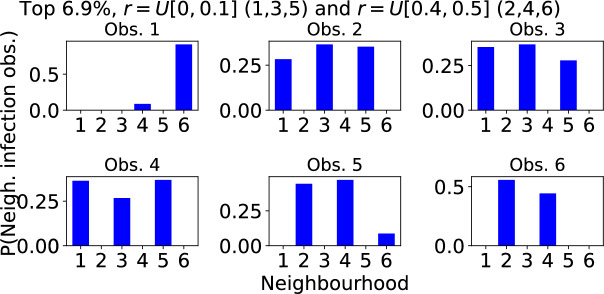
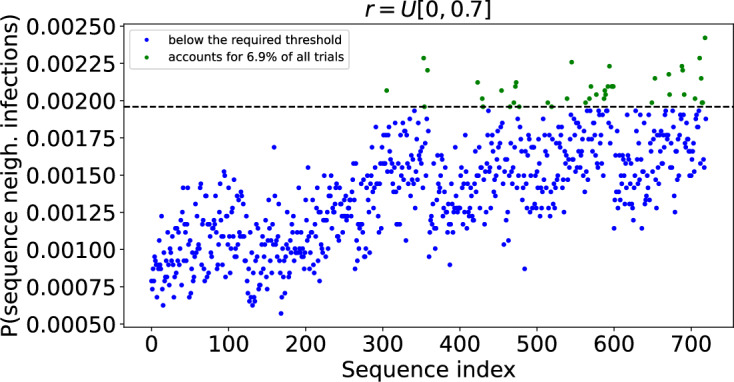
Epidemiological dynamics are affected by the spatial and demographic structure of the host population. Households and neighbourhoods are known to be important groupings but little is known about the epidemiological interplay between them. In order to explore the implications for infectious disease epidemiology of households with similar demographic structures clustered in space we develop a multi-scale epidemic model consisting of neighbourhoods of households. In our analysis we focus on key parameters which control household size, the importance of transmission within households relative to outside of them, and the degree to which the non-household transmission is localised within neighbourhoods. We construct the household reproduction number over all neighbourhoods and derive the analytic probability of an outbreak occurring from a single infected individual in a specific neighbourhood. We find that reduced localisation of transmission within neighbourhoods reduces when household size differs between neighbourhoods. This effect is amplified by larger differences between household sizes and larger divergence between transmission rates within households and outside of them. However, the impact of neighbourhoods with larger household sizes on an individual's risk of infection is mainly limited to the individuals that reside in those neighbourhoods. We consider various surveillance scenarios and show that household size information from the initial infectious cases is often more important than neighbourhood information while household size and neighbourhood localisation influences the sequence of neighbourhoods in which an outbreak is observed.
流行病学动态受到宿主种群的空间和人口结构的影响。已知家庭和邻里是重要的群体,但它们之间的流行病学相互作用却鲜为人知。为了探究空间上聚集的具有相似人口结构的家庭对传染病流行病学的影响,我们开发了一个由家庭邻里组成的多尺度流行病模型。在我们的分析中,我们关注控制家庭规模的关键参数、家庭内部传播相对于家庭外部传播的重要性,以及非家庭传播在邻里内局部化的程度。我们构建了所有邻里的家庭繁殖数,并推导了在特定邻里中单个感染个体引发疫情的分析概率。我们发现,当邻里间家庭规模不同时,邻里内传播的局部化程度降低会导致家庭繁殖数降低。家庭规模差异越大以及家庭内部和外部传播率差异越大,这种影响就越明显。然而,家庭规模较大的邻里对个体感染风险的影响主要局限于居住在这些邻里的个体。我们考虑了各种监测场景,并表明初始感染病例的家庭规模信息通常比邻里信息更重要,而家庭规模和邻里局部化会影响观察到疫情爆发的邻里顺序。