Cui Bai, Luo Huandong, He Bin, Liu Xinyu, Lv Dekang, Zhang Xiaoyu, Su Keyu, Zheng Sijia, Lu Jinxin, Wang Cenxin, Yang Yuqing, Zhao Zhuoran, Liu Xianxian, Wang Xu, Zhao Yingrui, Nie Xiaoshan, Jiang Yuanyuan, Zhang Ziyu, Liu Congcong, Chen Xinyi, Cai Anqi, Lv Zhumeng, Liu Zhihang, An Fan, Zhang Yunkun, Yan Qiulong, Kelley Keith W, Xu Guowang, Xu Lingzhi, Liu Quentin, Peng Fei
Institute of Cancer Stem Cell, Dalian Medical University, Dalian, China.
State Key Laboratory of Oncology in South China, Cancer Center, Sun Yat-sen University, Guangzhou, China.
Signal Transduct Target Ther. 2025 Mar 5;10(1):79. doi: 10.1038/s41392-025-02159-1.
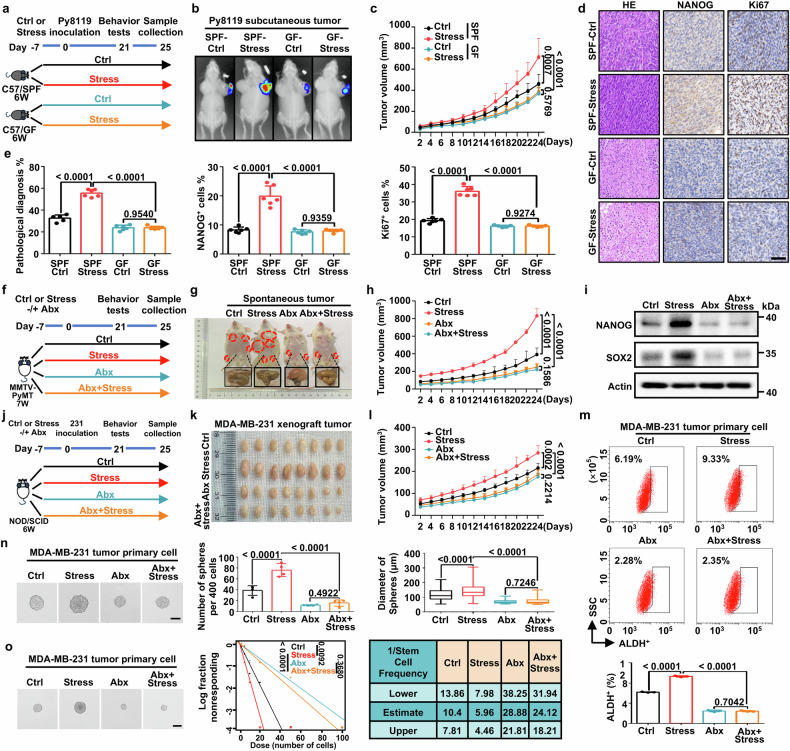
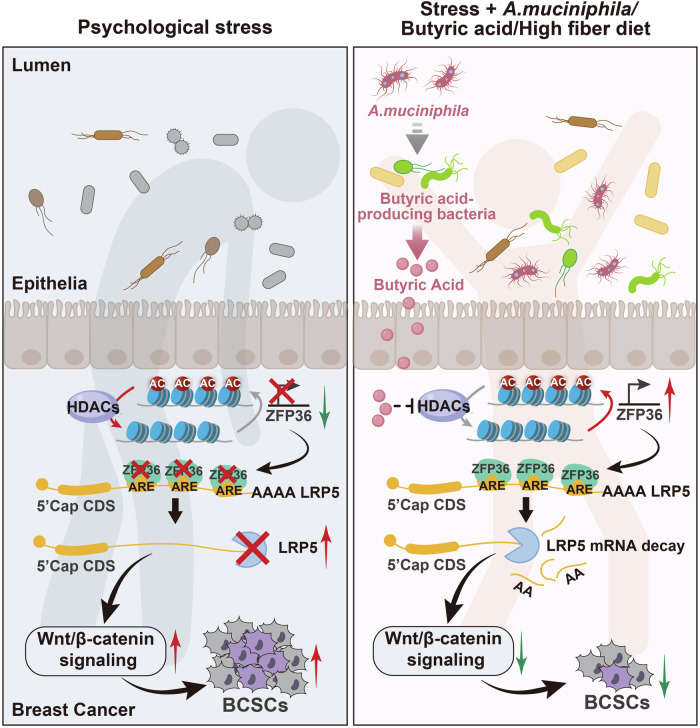
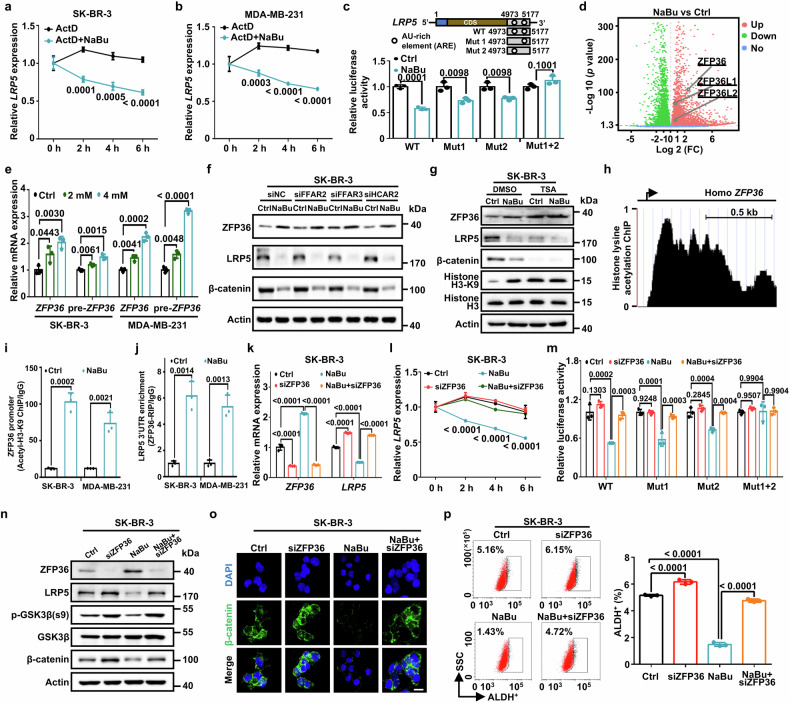
Psychological stress causes gut microbial dysbiosis and cancer progression, yet how gut microbiota determines psychological stress-induced tumor development remains unclear. Here we showed that psychological stress promotes breast tumor growth and cancer stemness, an outcome that depends on gut microbiota in germ-free and antibiotic-treated mice. Metagenomic and metabolomic analyses revealed that psychological stress markedly alters the composition and abundance of gut microbiota, especially Akkermansia muciniphila (A. muciniphila), and decreases short-chain fatty acid butyrate. Supplement of active A. muciniphila, butyrate or a butyrate-producing high fiber diet dramatically reversed the oncogenic property and anxiety-like behavior of psychological stress in a murine spontaneous tumor model or an orthotopic tumor model. Mechanistically, RNA sequencing analysis screened out that butyrate decreases LRP5 expression to block the activation of Wnt/β-catenin signaling pathway, dampening breast cancer stemness. Moreover, butyrate as a HDAC inhibitor elevated histone H3K9 acetylation level to transcriptionally activate ZFP36, which further accelerates LRP5 mRNA decay by binding adenine uridine-rich (AU-rich) elements of LRP5 transcript. Clinically, fecal A. muciniphila and serum butyrate were inversely correlated with tumoral LRP5/β-catenin expression, poor prognosis and negative mood in breast cancer patients. Altogether, our findings uncover a microbiota-dependent mechanism of psychological stress-triggered cancer stemness, and provide both clinical biomarkers and potential therapeutic avenues for cancer patients undergoing psychological stress.
心理应激会导致肠道微生物群失调和癌症进展,但肠道微生物群如何决定心理应激诱导的肿瘤发展仍不清楚。在这里,我们表明心理应激会促进乳腺肿瘤生长和癌症干细胞特性,这一结果在无菌和抗生素处理的小鼠中取决于肠道微生物群。宏基因组和代谢组分析表明,心理应激会显著改变肠道微生物群的组成和丰度,尤其是嗜黏蛋白阿克曼氏菌(A. muciniphila),并降低短链脂肪酸丁酸盐的含量。在小鼠自发肿瘤模型或原位肿瘤模型中,补充活性嗜黏蛋白阿克曼氏菌、丁酸盐或产丁酸盐的高纤维饮食可显著逆转心理应激的致癌特性和焦虑样行为。机制上,RNA测序分析筛选出丁酸盐会降低LRP5表达,从而阻断Wnt/β-连环蛋白信号通路的激活,抑制乳腺癌干细胞特性。此外,丁酸盐作为一种组蛋白去乙酰化酶抑制剂,可提高组蛋白H3K9乙酰化水平,从而转录激活ZFP36,ZFP36通过结合LRP5转录本富含腺嘌呤尿苷(AU-rich)的元件,进一步加速LRP5 mRNA的降解。在临床上,粪便嗜黏蛋白阿克曼氏菌和血清丁酸盐与乳腺癌患者肿瘤组织中LRP5/β-连环蛋白表达、预后不良和负面情绪呈负相关。总之,我们的研究结果揭示了心理应激引发癌症干细胞特性的微生物群依赖机制,并为承受心理应激的癌症患者提供了临床生物标志物和潜在的治疗途径。