Chen Kathy, Sundaram Swetha, Lo David F, Gawash Ahmed, Papachristou Charalampos, Raja Altamash E
Rowan-Virtua School of Osteopathic Medicine, Stratford, NJ, USA.
Rutgers New Jersey Medical School, 185 S Orange Ave, Newark, NJ, 07103, USA.
Discov Ment Health. 2025 Mar 5;5(1):29. doi: 10.1007/s44192-025-00154-0.
Sport climbing, officially added to the 2020 Summer Olympics, has grown rapidly, with U.S. climbing gyms increasing from 310 in 2013 to 591 in 2021. Over the past decade, European research has identified bouldering as a potential psychotherapeutic treatment for anxiety and depression. Randomized controlled trials have compared bouldering psychotherapy (BPT) to cognitive behavioral therapy (CBT), showing that BPT produces comparable results and positively impacts mental health.
There have been very few studies dedicated to the use of rock climbing as a therapy in the United States; further, there are few surveys that investigate whether American climbers would even consider climbing as beneficial towards mental health or not. With the ever-growing prevalence of mental health disorders and as climbing gains more traction, it is important to explore the potential of climbing as a therapeutic modality. It is hypothesized that rock climbing will be viewed as beneficial towards mental health amongst the population surveyed.
A prospective survey was conducted to assess rock climbing's impact on mental health, focusing on participants' climbing habits and perceptions of its therapeutic benefits. The protocol was approved by the Rowan-Virtua IRB (Reference #: PRO-2022-353) in accordance with the latest guidelines of the International Committee of Medical Journal Editors. Participants were recruited using flyers and posters at climbing gyms, an online climbing forum, and social media. The survey included individuals aged 18 years and older who engage in rock climbing at least once per week. No specific exclusion criteria was set in place, though participants were given the option to omit the mental health portion. The survey included questions on climbing frequency, mental health impact, and demographics. The survey was distributed online via Qualtrics Forms between February 2023 to June 2023, with informed consent obtained from participants, explaining both risks and data safeguards in place. Univariate graphs and bivariate analyses via chi square analysis were done using R Studio.
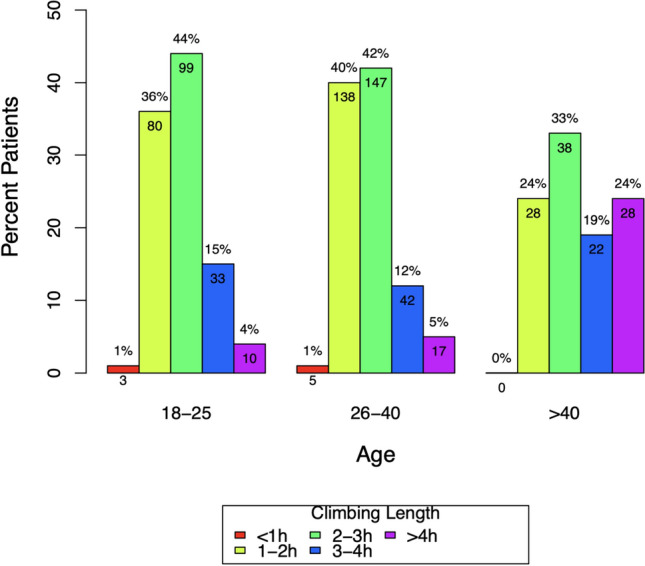
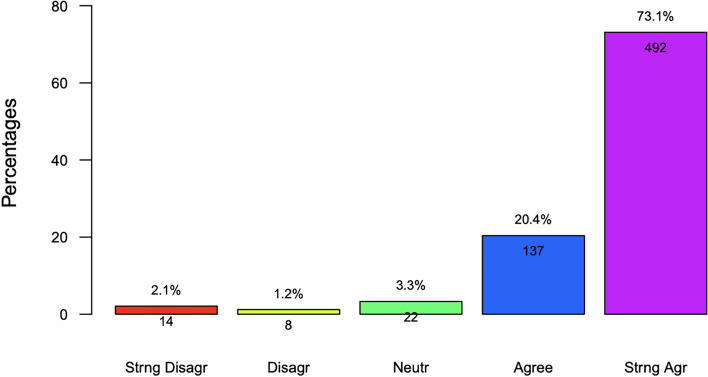
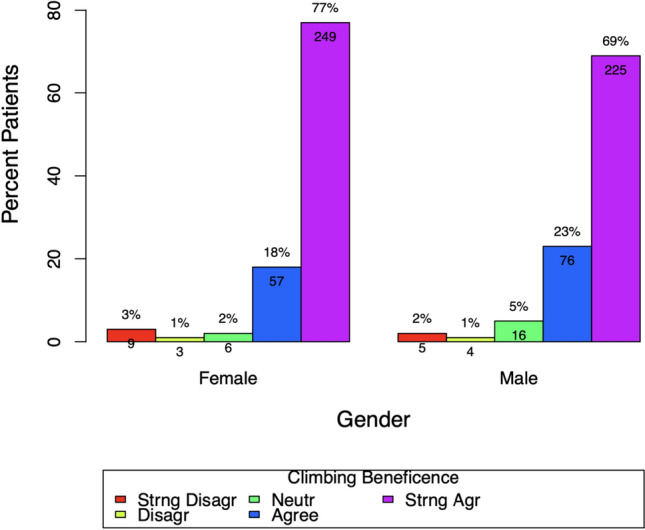
A total of 748 survey responses were received, with 50.4% of participants aged 26-40 years. Most were White Non-Hispanic (59.7%) and resided in the Mid-Atlantic/Tri-State Area. Climbing preferences showed indoor bouldering (24.9%) as the most popular, followed by indoor top rope (16.4%) and indoor lead climbing (12.4%). Outdoor climbing activities were less common, with traditional climbing at 10.1% and speed climbing at 0.2%. Significant associations were found between climbing frequency and age (p = 0.0045), session length and age (p = 8.2e-10), and climbing frequency by gender (p = 0.0024). Regarding social behavior, 46.8% identified as introverts and 37.1% as ambiverts. Mental health data revealed that 73.1% of climbers felt rock climbing positively impacted their mental health. Depression and anxiety were the most reported conditions. When compared to therapy and medications, 73.3% of participants found rock climbing more beneficial than medications, and 64.8% found it more beneficial than therapy. Gender and race were significantly associated with perceptions of climbing's mental health benefits (p = 0.0448 and p = 0.0422, respectively).
Survey results offered future focal points of interest and affirmed that BPT would be received well as a therapeutic modality in the United States. Further, survey participation of 748 completed responses illustrates the community's support and open communication regarding mental health, creating a promising field to continue exploring. Overall, rock climbing holds potential as a treatment modality for mental health disorders, further bridging the gap between physical and mental health.
竞技攀岩于2020年正式被纳入夏季奥运会项目,其发展迅速,美国的攀岩馆数量从2013年的310家增至2021年的591家。在过去十年中,欧洲的研究已确定抱石运动是治疗焦虑和抑郁的一种潜在心理疗法。随机对照试验已将抱石心理疗法(BPT)与认知行为疗法(CBT)进行了比较,结果表明BPT能产生类似的效果,并对心理健康产生积极影响。
在美国,专门研究将攀岩用作一种疗法的研究非常少;此外,几乎没有调查研究美国攀岩者是否会认为攀岩对心理健康有益。随着心理健康障碍的患病率不断上升,且攀岩越来越受欢迎,探索攀岩作为一种治疗方式的潜力很重要。据推测,在接受调查的人群中,攀岩将被视为对心理健康有益。
进行了一项前瞻性调查,以评估攀岩对心理健康的影响,重点关注参与者的攀岩习惯及其对攀岩治疗益处的看法。该方案已获得罗文 - 维鲁亚机构审查委员会(参考编号:PRO - 2022 - 353)的批准,符合《医学期刊编辑国际委员会》的最新指南。通过在攀岩馆、在线攀岩论坛和社交媒体上发放传单和张贴海报招募参与者。该调查涵盖年龄在18岁及以上、每周至少进行一次攀岩的个人。未设定具体的排除标准,不过参与者可选择不回答心理健康部分的问题。调查包括有关攀岩频率、心理健康影响和人口统计学的问题。该调查于2023年2月至2023年6月通过Qualtrics Forms在线发放,已获得参与者的知情同意,向他们解释了风险和数据保护措施。使用R Studio进行单变量图表分析和通过卡方分析进行双变量分析。
共收到748份调查回复,50.4%的参与者年龄在26 - 40岁之间。大多数是白人非西班牙裔(59.7%),居住在大西洋中部/三州地区。攀岩偏好显示室内抱石(24.9%)最受欢迎,其次是室内顶绳攀登(16.4%)和室内先锋攀登(12.4%)。户外攀岩活动不太常见,传统攀岩占10.1%,速度攀岩占0.2%。发现攀岩频率与年龄(p = 0.0045)、每次攀岩时长与年龄(p = 8.2e - 10)以及按性别划分的攀岩频率(p = 0.0024)之间存在显著关联。关于社交行为,46.8%的人认为自己是内向型,37.1%的人认为自己是中间型。心理健康数据显示,73.1%的攀岩者认为攀岩对他们的心理健康有积极影响。抑郁症和焦虑症是报告最多的病症。与治疗和药物相比,73.3%的参与者认为攀岩比药物更有益,64.8%的人认为攀岩比治疗更有益。性别和种族与对攀岩心理健康益处的看法显著相关(分别为p = 0.0448和p = 0.0422)。
调查结果提供了未来的关注焦点,并证实抱石心理疗法在美国作为一种治疗方式会受到欢迎。此外,748份完整回复的调查参与度表明了该群体对心理健康的支持和开放交流,为继续探索创造了一个有前景的领域。总体而言,攀岩作为心理健康障碍的一种治疗方式具有潜力,进一步弥合了身心健康之间的差距。