Yang Jie, Yamashita-Kanemaru Yumi, Morris Benjamin I, Contursi Annalisa, Trajkovski Daniel, Xu Jingru, Patrascan Ilinca, Benson Jayme, Evans Alexander C, Conti Alberto G, Al-Deka Aws, Dahmani Layla, Avdic-Belltheus Adnan, Zhang Baojie, Okkenhaug Hanneke, Whiteside Sarah K, Imianowski Charlotte J, Wesolowski Alexander J, Webb Louise V, Puccio Simone, Tacconelli Stefania, Bruno Annalisa, Di Berardino Sara, De Michele Alessandra, Welch Heidi C E, Yu I-Shing, Lin Shu-Wha, Mitra Suman, Lugli Enrico, van der Weyden Louise, Okkenhaug Klaus, Saeb-Parsy Kourosh, Patrignani Paola, Adams David J, Roychoudhuri Rahul
Department of Pathology, University of Cambridge, Cambridge, UK.
Systems Pharmacology and Translational Therapeutics Laboratory, Center for Advanced Studies and Technology (CAST), "G. d'Annunzio" University of Chieti-Pescara, Chieti, Italy.
Nature. 2025 Apr;640(8060):1052-1061. doi: 10.1038/s41586-025-08626-7. Epub 2025 Mar 5.
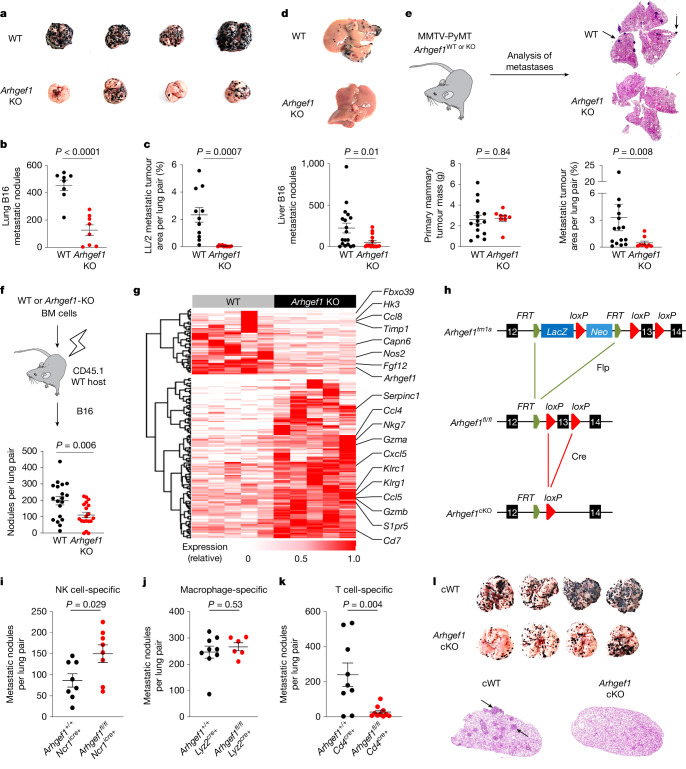
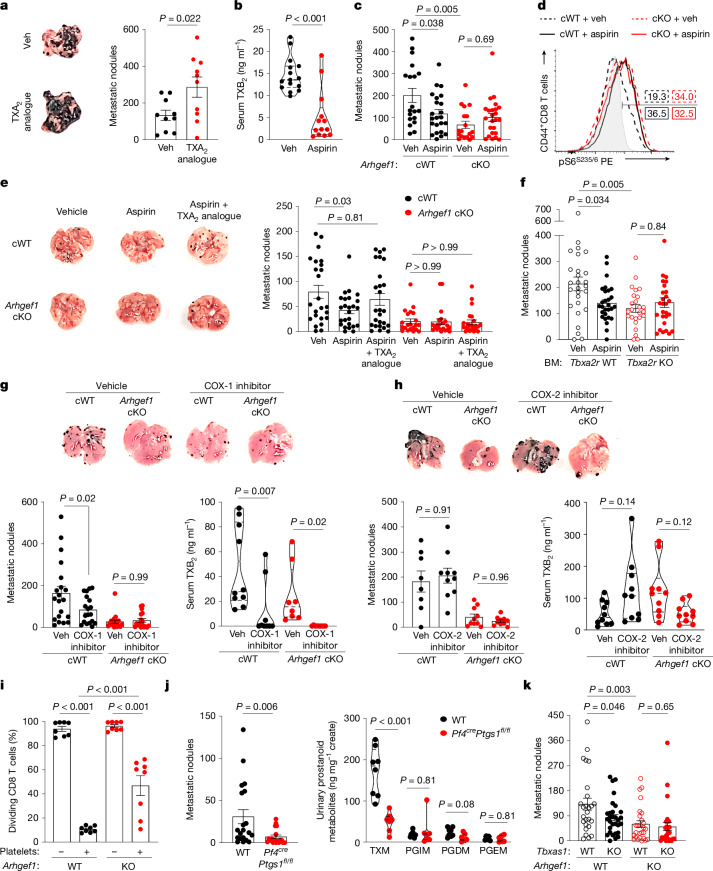
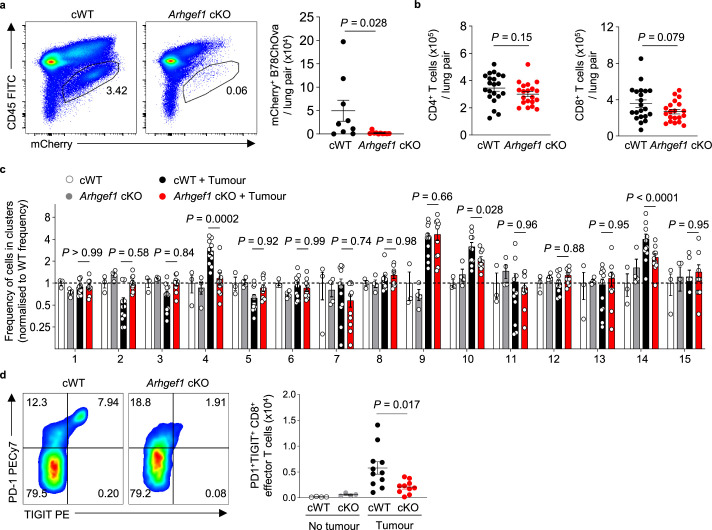
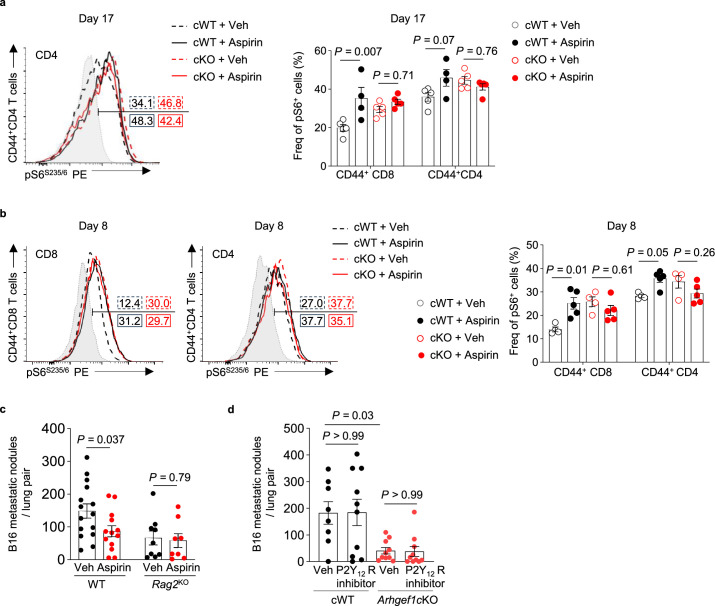
Metastasis is the spread of cancer cells from primary tumours to distant organs and is the cause of 90% of cancer deaths globally. Metastasizing cancer cells are uniquely vulnerable to immune attack, as they are initially deprived of the immunosuppressive microenvironment found within established tumours. There is interest in therapeutically exploiting this immune vulnerability to prevent recurrence in patients with early cancer at risk of metastasis. Here we show that inhibitors of cyclooxygenase 1 (COX-1), including aspirin, enhance immunity to cancer metastasis by releasing T cells from suppression by platelet-derived thromboxane A (TXA). TXA acts on T cells to trigger an immunosuppressive pathway that is dependent on the guanine exchange factor ARHGEF1, suppressing T cell receptor-driven kinase signalling, proliferation and effector functions. T cell-specific conditional deletion of Arhgef1 in mice increases T cell activation at the metastatic site, provoking immune-mediated rejection of lung and liver metastases. Consequently, restricting the availability of TXA using aspirin, selective COX-1 inhibitors or platelet-specific deletion of COX-1 reduces the rate of metastasis in a manner that is dependent on T cell-intrinsic expression of ARHGEF1 and signalling by TXA in vivo. These findings reveal a novel immunosuppressive pathway that limits T cell immunity to cancer metastasis, providing mechanistic insights into the anti-metastatic activity of aspirin and paving the way for more effective anti-metastatic immunotherapies.
转移是癌细胞从原发性肿瘤扩散到远处器官的过程,是全球90%癌症死亡的原因。转移的癌细胞特别容易受到免疫攻击,因为它们最初缺乏已形成肿瘤内存在的免疫抑制微环境。人们有兴趣通过治疗手段利用这种免疫脆弱性来预防有转移风险的早期癌症患者的复发。在这里,我们表明,包括阿司匹林在内的环氧合酶1(COX-1)抑制剂通过使T细胞从血小板衍生的血栓素A(TXA)的抑制中释放出来,增强对癌症转移的免疫力。TXA作用于T细胞,触发一条依赖于鸟嘌呤交换因子ARHGEF1的免疫抑制途径,抑制T细胞受体驱动的激酶信号传导、增殖和效应功能。小鼠中T细胞特异性条件性缺失Arhgef1会增加转移部位的T细胞活化,引发对肺和肝转移的免疫介导排斥反应。因此,使用阿司匹林、选择性COX-1抑制剂或COX-1的血小板特异性缺失来限制TXA的可用性,会以一种依赖于ARHGEF1的T细胞内在表达和体内TXA信号传导的方式降低转移率。这些发现揭示了一条限制T细胞对癌症转移免疫的新型免疫抑制途径,为阿司匹林的抗转移活性提供了机制见解,并为更有效的抗转移免疫疗法铺平了道路。