Axelsen Tina Birkeskov, Sørensen Charlotte Arp, Lindelof Anders, Ludvigsen Mette Spliid
Hospital Pharmacy, Central Denmark Region, Palle Juul-Jensens Boulevard 240, Aarhus N, 8200, Denmark.
Regional Psychiatry Randers, Central Denmark Region, Randers, Denmark.
BMC Psychiatry. 2025 Mar 6;25(1):209. doi: 10.1186/s12888-025-06653-2.
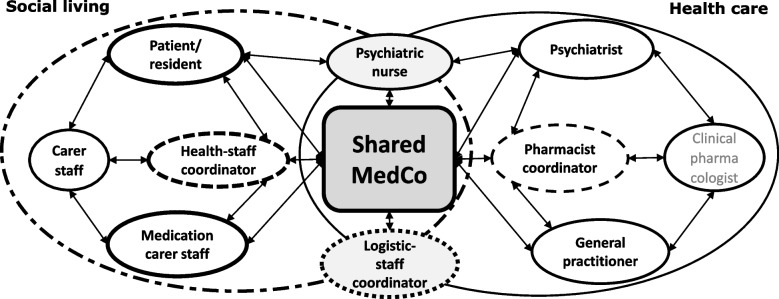
Shared medication coordination (MedCo) is vital yet difficult to manage for residents living with severe mental disorders in residential care, where multidisciplinary teams provide support. A successful Shared MedCo model in one residence included three core components: "shared decision-making," "patient involvement" and "MedCo". This model was effective but transfer to other residential settings needed implementation adaptation. The aim of this study was to meet local MedCo requirements by achieving a good fit between a Shared MedCo intervention core components and a social psychiatric residential context.
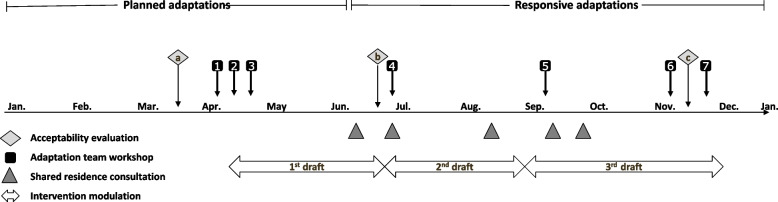
The methodology was guided by a complex intervention adaptation framework involving co-creation with stakeholders to gather iterative feedback. The intervention was adapted through a systematic four-phase process and tested through shared consultations. Ten residents took part in the test, and the intervention's feasibility and acceptability were assessed.
The adaptation process ensured a good fit between the intervention's core components and the new context. Stakeholder input provided crucial content and contextual insights, while planned adaptations laid the foundation for modulating the individual residence Shared MedCo model. Iterative adaptations during the test phase refined the intervention, leading to near-routine performance by the tenth consultation. Residents gained a stronger voice in their healthcare, and all ten had their medication coordinated and optimised. The intervention was found feasible and acceptable.
For effective implementation, complex multidisciplinary Shared MedCo interventions require contextual adaptation and active stakeholder involvement. The shared MedCo intervention offers a guideline for achieving a good fit between the intervention core components and diverse residential contexts, ensuring successful medication coordination for residents living with severe mental disorders.
对于在提供支持的多学科团队的寄宿护理机构中患有严重精神障碍的居民而言,共享药物协调(MedCo)至关重要但却难以管理。某一寄宿机构中一个成功的共享MedCo模式包含三个核心要素:“共同决策”“患者参与”和“MedCo”。该模式行之有效,但要推广到其他寄宿环境则需要对实施方式进行调整。本研究的目的是通过使共享MedCo干预的核心要素与社会精神病寄宿环境实现良好匹配,以满足当地的MedCo要求。
该方法以一个复杂的干预调整框架为指导,该框架涉及与利益相关者共同创造以收集迭代反馈。通过系统的四个阶段过程对干预措施进行调整,并通过共享协商进行测试。十名居民参与了测试,并对干预措施的可行性和可接受性进行了评估。
调整过程确保了干预措施的核心要素与新环境之间的良好匹配。利益相关者的投入提供了关键的内容和背景见解,而计划中的调整为调整各个寄宿机构的共享MedCo模式奠定了基础。测试阶段的迭代调整对干预措施进行了完善,到第十次协商时已接近常规操作。居民在其医疗保健方面有了更强的话语权,所有十名居民的药物治疗都得到了协调和优化。该干预措施被认为是可行且可接受的。
为有效实施,复杂的多学科共享MedCo干预措施需要根据具体情况进行调整,并让利益相关者积极参与。共享MedCo干预措施为使干预核心要素与不同的寄宿环境实现良好匹配提供了指导方针,确保为患有严重精神障碍的居民成功进行药物协调。