Brao Alejandro, Sánchez Ángela, Rodríguez Irina, Rey Javier Del, Lope-Piedrafita Silvia, Prat Esther, Nunes Virginia, Chillón Miguel, Estévez Raúl, Bosch Assumpció
Department of Biochemistry and Molecular Biology, Universitat Autònoma de Barcelona, 08193 Bellaterra, Spain; Institute of Neurosciences, Universitat Autònoma de Barcelona, 08193 Bellaterra, Spain; UAB-VHIR Joint Unit, Vall d'Hebron Institut de Recerca, 08035 Barcelona, Spain.
Institute of Neurosciences, Universitat Autònoma de Barcelona, 08193 Bellaterra, Spain; UAB-VHIR Joint Unit, Vall d'Hebron Institut de Recerca, 08035 Barcelona, Spain; Department of Cell Biology, Physiology and Immunology, Universitat Autònoma de Barcelona, 08193 Bellaterra, Spain.
Mol Ther. 2025 Apr 2;33(4):1434-1448. doi: 10.1016/j.ymthe.2025.02.046. Epub 2025 Mar 5.
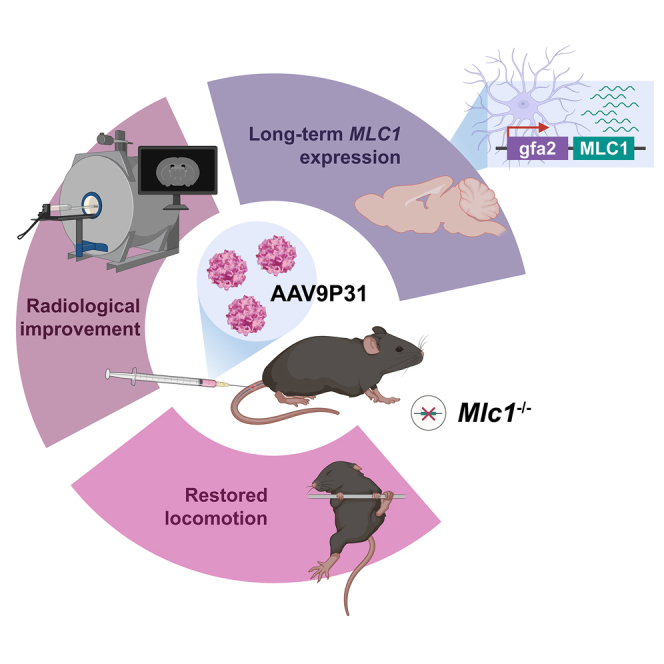
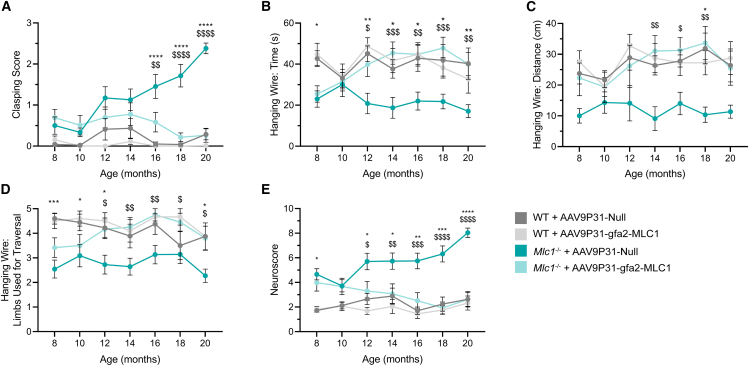
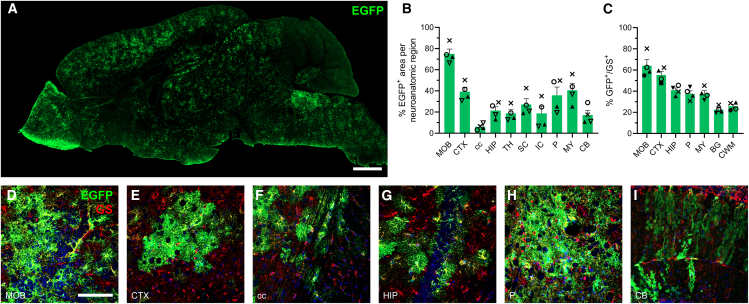
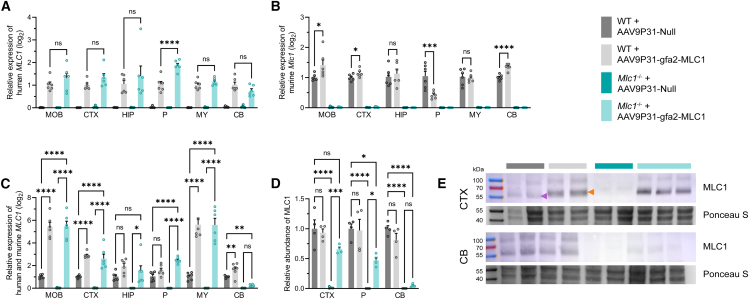
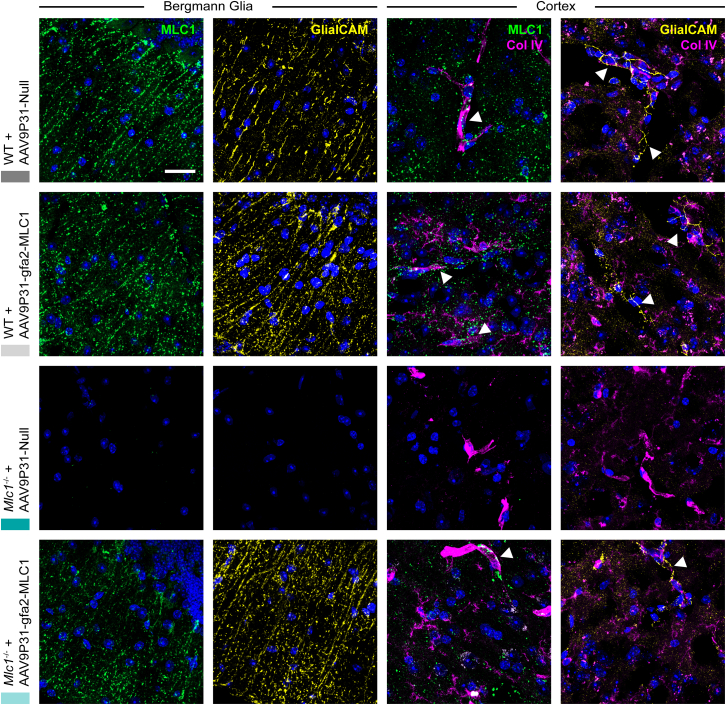
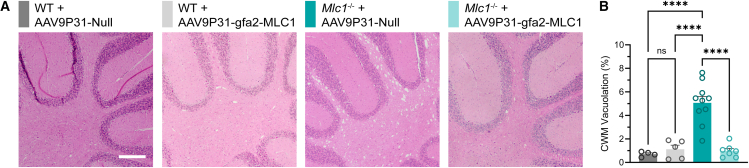
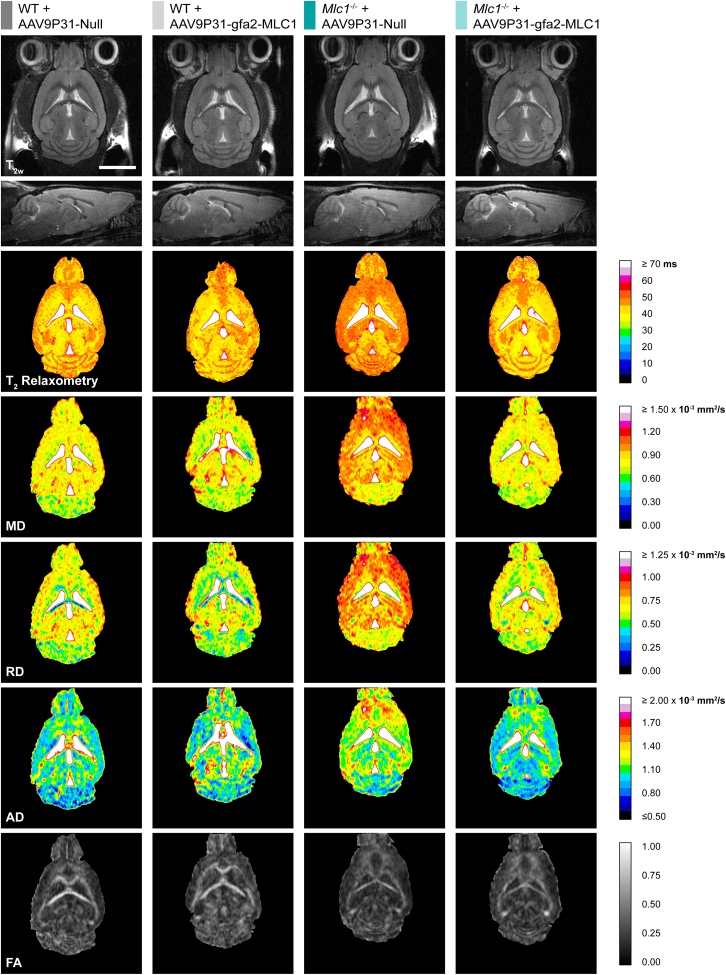
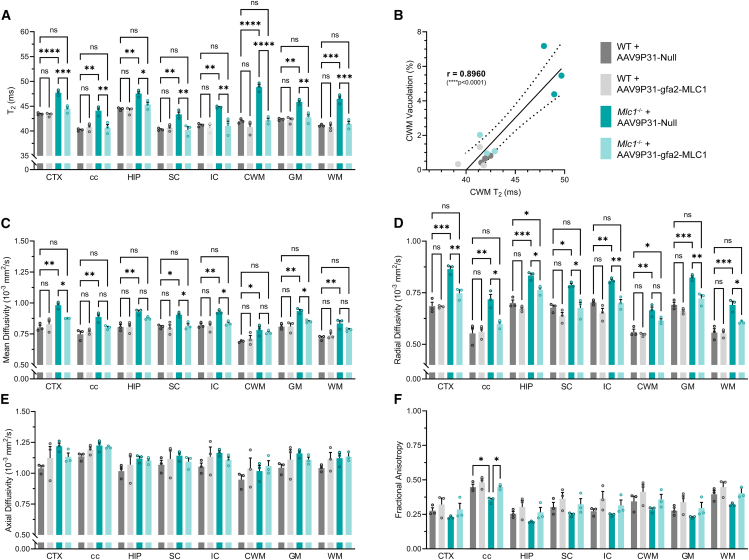
Megalencephalic leukoencephalopathy with subcortical cysts (MLC) is an ultrarare, infantile-onset leukodystrophy characterized by white matter edema for which there is no treatment. More than 75% of diagnosed cases result from biallelic loss-of-function mutations in the astrocyte-specific gene MLC1, leading to early-onset macrocephaly, cerebellar ataxia, epilepsy, and mild cognitive decline. To develop a gene therapy for MLC, we administered an adeno-associated viral vector capable of crossing the murine blood-brain barrier, delivering the human MLC1 cDNA under the control of a human astrocyte-specific promoter, to 10-month-old Mlc1 mice. We observed long-term astrocyte-driven expression of MLC1 up to 1 year after viral vector administration in all brain areas analyzed. Despite the late-stage intervention, in vivo magnetic resonance imaging revealed normalization of water accumulation. Notably, our therapy successfully reversed locomotor deficits in Mlc1 mice, as evidenced by improved performance in motor tests assessing cerebellar ataxia-like behaviors. Collectively, these findings not only demonstrate the sustained efficacy of our gene therapy but also highlight the reversibility of vacuolation and motor impairments in Mlc1 mice, suggesting that MLC patients could benefit from treatment even after symptom onset.
伴有皮质下囊肿的巨脑性白质脑病(MLC)是一种极为罕见的婴儿期起病的白质营养不良,其特征为白质水肿,目前尚无治疗方法。超过75%的确诊病例是由星形胶质细胞特异性基因MLC1的双等位基因功能丧失突变引起的,导致早发性巨头畸形、小脑共济失调、癫痫和轻度认知衰退。为了开发针对MLC的基因疗法,我们给10月龄的Mlc1小鼠注射了一种能够穿越小鼠血脑屏障的腺相关病毒载体,该载体在人星形胶质细胞特异性启动子的控制下递送人MLC1 cDNA。在分析的所有脑区中,我们观察到病毒载体给药后长达1年的时间里,星形胶质细胞驱动的MLC1长期表达。尽管是晚期干预,但体内磁共振成像显示积水恢复正常。值得注意的是,我们的疗法成功逆转了Mlc1小鼠的运动缺陷,这在评估小脑共济失调样行为的运动测试中表现改善得到了证实。总的来说,这些发现不仅证明了我们基因疗法的持续疗效,还突出了Mlc1小鼠空泡化和运动障碍的可逆性,表明MLC患者即使在症状出现后也可能从治疗中受益。