Carino Marylin, Nguyen Jonathan, New Ru Hui, Kirkham Renae, Maple-Brown Louise, Mack Shiree, MacKay Diana, Titmuss Angela
Wellbeing and Preventable Chronic Diseases Division, Menzies School of Health Research, Charles Darwin University, Darwin, Northern Territory, Australia.
Department of Paediatrics, Division of Women, Children and Youth, Royal Darwin Hospital, Darwin, Northern Territory, Australia.
Pediatr Obes. 2025 Jun;20(6):e70009. doi: 10.1111/ijpo.70009. Epub 2025 Mar 10.
There is a high prevalence of type 2 diabetes (T2D) in First Nations populations worldwide, increasingly at younger ages. This review aims to identify interventions for the prevention of T2D in First Nations children and young people aged 4-25 years.
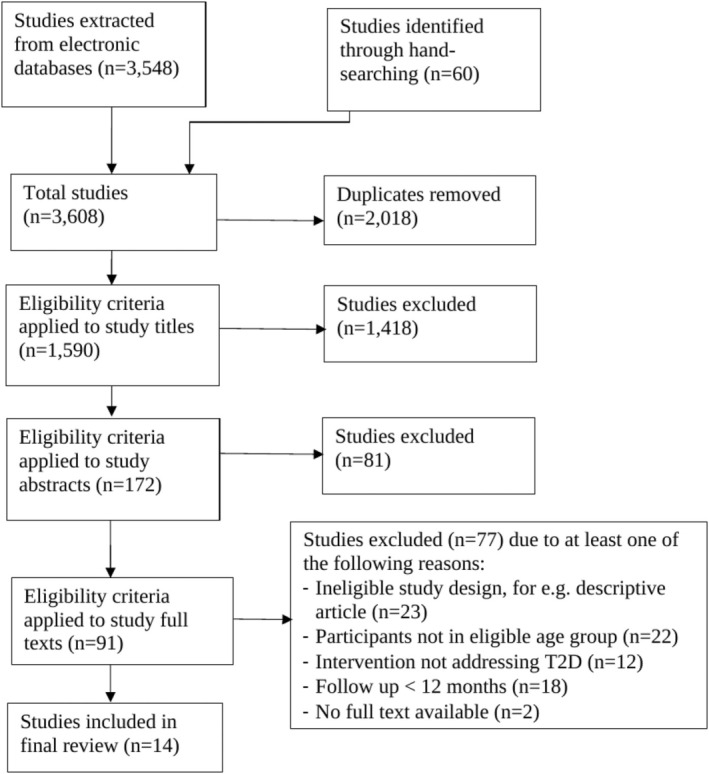
A systematic search of both published and unpublished literature until March 2024 was performed using 15 electronic databases, including MEDLINE, CINAHL, EMBASE, Scopus, Cochrane Library, ATSIHealth, OpenGrey and specific First Nations databases. Eligible studies included First Nations participants aged 4-25 years without T2D, exploring interventions to prevent T2D. Outcomes included knowledge of diabetes, anthropometry and physiology, diet and nutrition, physical activity, glycemic indicators and psychosocial indicators.
Fourteen pre-post exposure non-controlled studies were included, evaluating nine programs. Programs were culturally adapted and primarily school-based, focusing on individual-level behaviour modification in nutrition and physical activity. Most studies assessing knowledge outcomes reported improvement. There were inconsistent findings regarding impacts on dietary intake and glycemia. One home-based program achieved improvements across a range of outcomes, including body mass index, physical activity and psychosocial scores.
Despite the increasing prevalence of T2D in First Nations children and young people, evidence of effective preventive strategies within these populations remains limited.
全球原住民人群中2型糖尿病(T2D)的患病率很高,且发病年龄越来越小。本综述旨在确定针对4至25岁原住民儿童和青少年预防T2D的干预措施。
使用15个电子数据库对截至2024年3月的已发表和未发表文献进行系统检索,包括MEDLINE、CINAHL、EMBASE、Scopus、Cochrane图书馆、ATSIHealth、OpenGrey以及特定的原住民数据库。符合条件的研究包括年龄在4至25岁、无T2D的原住民参与者,探讨预防T2D的干预措施。结果包括糖尿病知识、人体测量学和生理学、饮食与营养、身体活动、血糖指标和心理社会指标。
纳入了14项前后暴露非对照研究,评估了9个项目。这些项目经过文化调适,主要以学校为基础,侧重于营养和身体活动方面个人层面的行为改变。大多数评估知识结果的研究报告有改善。关于对饮食摄入和血糖的影响,研究结果不一致。一个家庭干预项目在一系列结果上取得了改善,包括体重指数、身体活动和心理社会评分。
尽管原住民儿童和青少年中T2D的患病率不断上升,但这些人群中有效预防策略的证据仍然有限。