Francisco Marcos, Grau Roberto
Departamento de Microbiología, Facultad de Ciencias Bioquímicas y Farmacéuticas, Universidad Nacional de Rosario, CONICET-Argentina, Kyojin Laboratories S.A. Castellanos 1335, 2000, Rosario, Santa Fe, Argentina.
Sci Rep. 2025 Mar 21;15(1):9864. doi: 10.1038/s41598-025-93737-4.
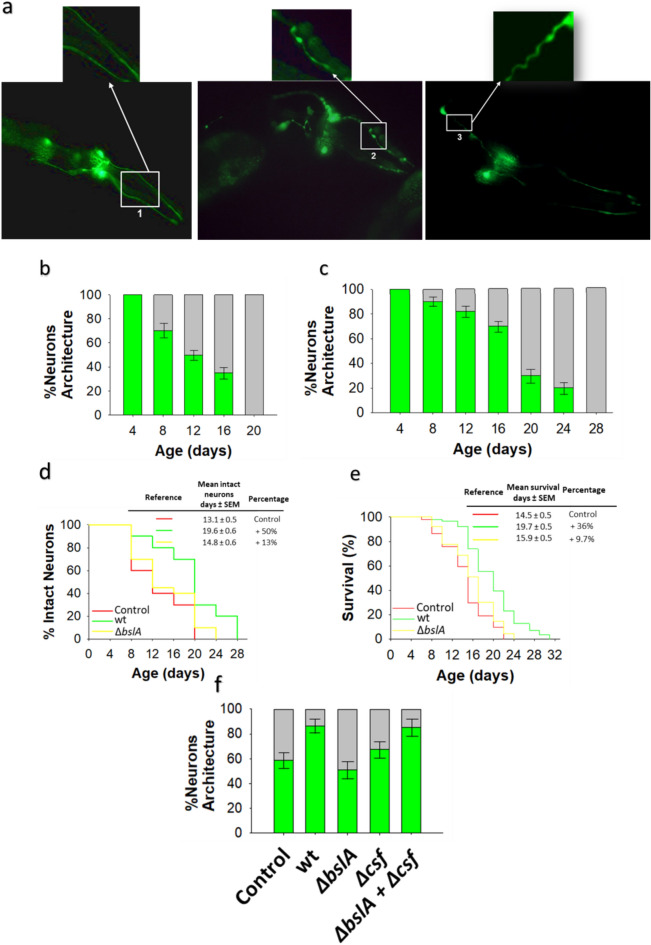
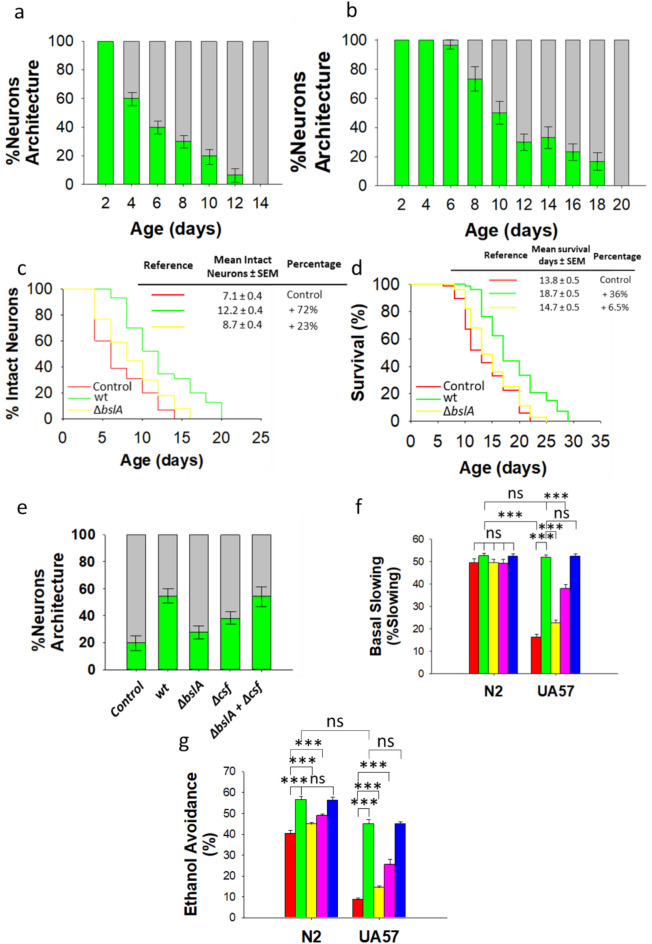
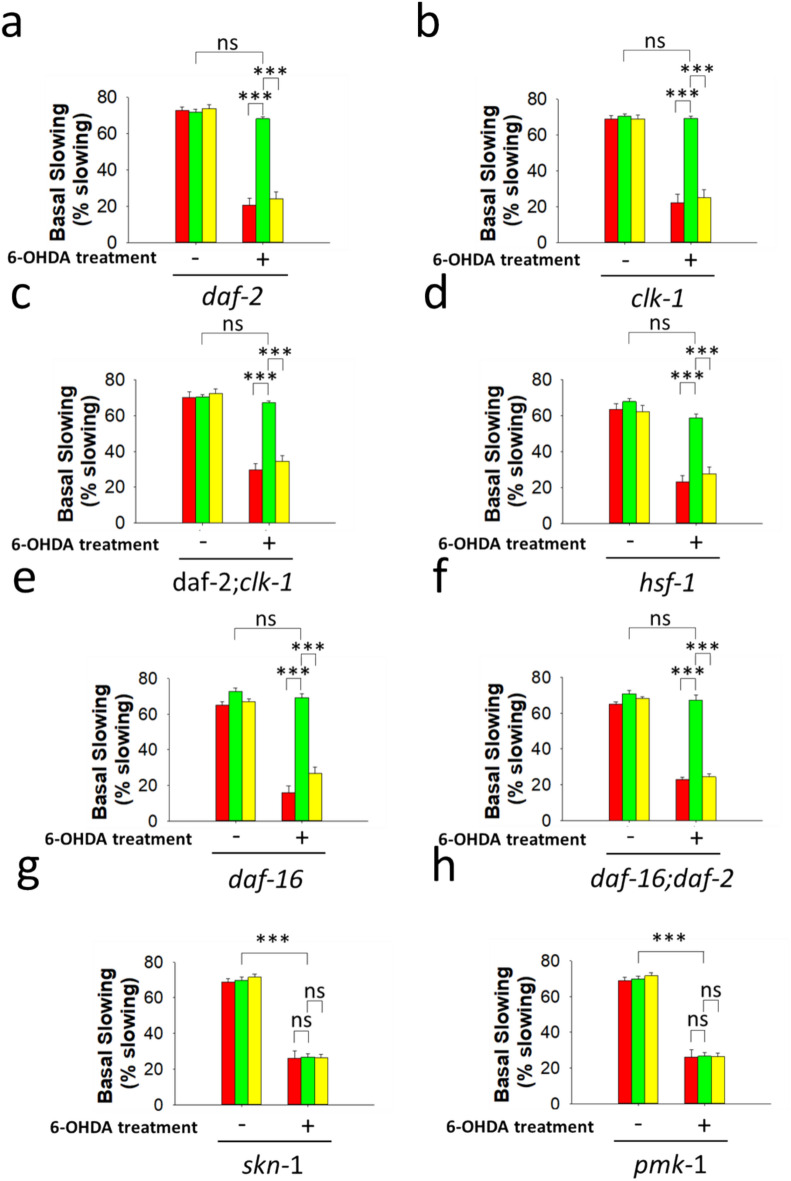
Parkinson's disease (PD) is a no-curable neurodegenerative disease of pandemic distribution for which only palliative treatments are available. A hallmark of PD is injury to dopaminergic neurons in the substantia nigra pars compacta. Here, we report that Caenorhabditis elegans colonized by biofilm-forming Bacillus subtilis is resistant to injury of dopaminergic neurons caused by treatment with the PD-related neurotoxin 6-hydroxydopamine (6-OHDA). Biofilm-forming B. subtilis-colonized C. elegans display dopamine-dependent behaviors indistinguishable from those of 6-OHDA-untreated worms colonized by gut commensal E. coli OP50. In C. elegans PD model strains with early dopaminergic neuron decay or overexpressing human alpha-synuclein, biofilm-forming B. subtilis colonization had neuroprotective effects and prevents alpha-synulcein aggregation, respectively. The B. subtilis-controlled insulin/IGF-1 signaling (ILS), whose downregulation prevents aging-related PD, is not involved in protecting against 6-OHDA-related injury. We demonstrate that biofilm-forming B. subtilis activates PMK-1 (p38 MAPK)/SKN-1 (Nrf2) signaling, which protects C. elegans from 6-OHDA-induced dopaminergic neuron injury.
帕金森病(PD)是一种无法治愈的神经退行性疾病,在全球广泛分布,目前仅有姑息治疗方法。PD的一个标志是黑质致密部多巴胺能神经元受损。在此,我们报告,被形成生物膜的枯草芽孢杆菌定殖的秀丽隐杆线虫对由帕金森病相关神经毒素6-羟基多巴胺(6-OHDA)处理引起的多巴胺能神经元损伤具有抗性。被形成生物膜的枯草芽孢杆菌定殖的秀丽隐杆线虫表现出与由肠道共生菌大肠杆菌OP50定殖的未用6-OHDA处理的线虫无法区分的多巴胺依赖性行为。在具有早期多巴胺能神经元衰退或过表达人α-突触核蛋白的秀丽隐杆线虫PD模型菌株中,形成生物膜的枯草芽孢杆菌定殖分别具有神经保护作用并防止α-突触核蛋白聚集。枯草芽孢杆菌控制的胰岛素/胰岛素样生长因子-1信号通路(ILS),其下调可预防与衰老相关的帕金森病,但不参与抵御6-OHDA相关损伤。我们证明,形成生物膜的枯草芽孢杆菌激活PMK-1(p38丝裂原活化蛋白激酶)/SKN-1(核因子E2相关因子2)信号通路,从而保护秀丽隐杆线虫免受6-OHDA诱导的多巴胺能神经元损伤。