Li Feiyun, Chen Mingjue, Zhang Mengrui, Chen Sheng, Qu Minghao, He Shuangshuang, Wang Lin, Wu Xiaohao, Xiao Guozhi
Department of Biochemistry, School of Medicine, Shenzhen Key Laboratory of Cell Microenvironment, Guangdong Provincial Key Laboratory of Cell Microenvironment and Disease Research, Southern University of Science and Technology, Shenzhen, 518055, China.
Quantitative Sciences Unit, Department of Medicine, Stanford University, Stanford, CA, USA.
J Orthop Translat. 2025 Mar 8;51:145-158. doi: 10.1016/j.jot.2025.01.006. eCollection 2025 Mar.
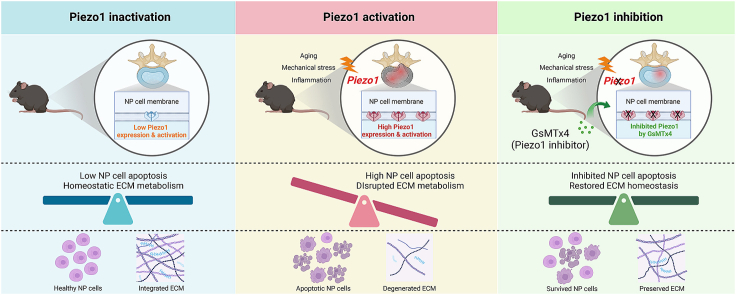
Low back pain impacts over 600 million people worldwide, predominantly due to intervertebral disc degeneration. This study focuses on the role of Piezo1, a crucial mechanosensitive ion channel protein, in the pathology and potential treatment of disc degeneration.
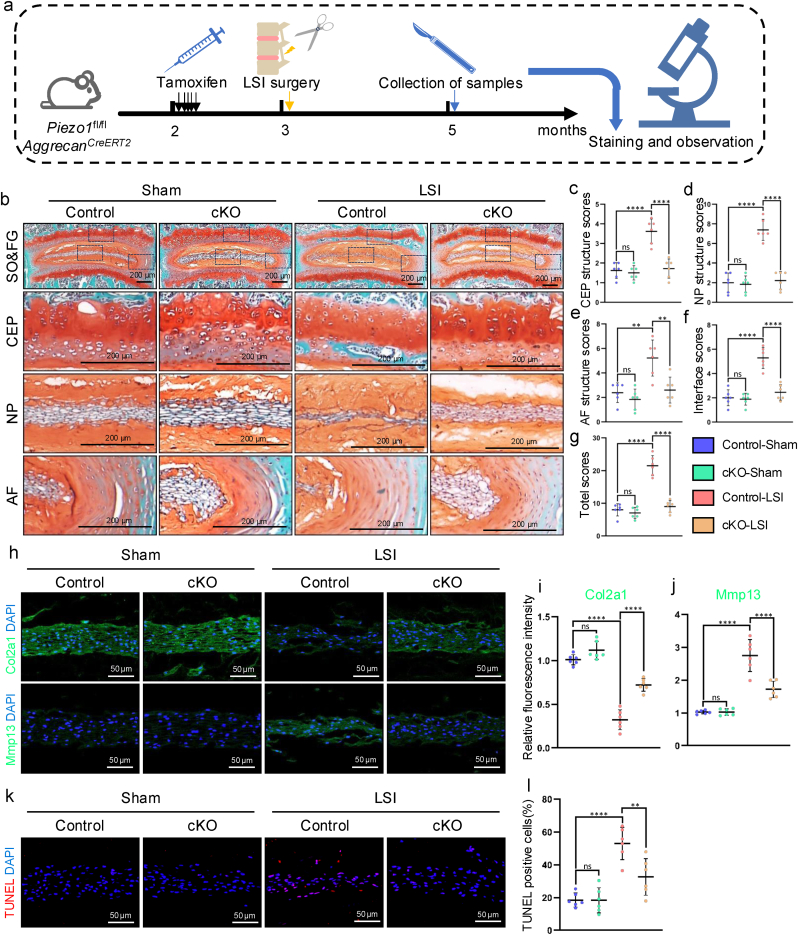
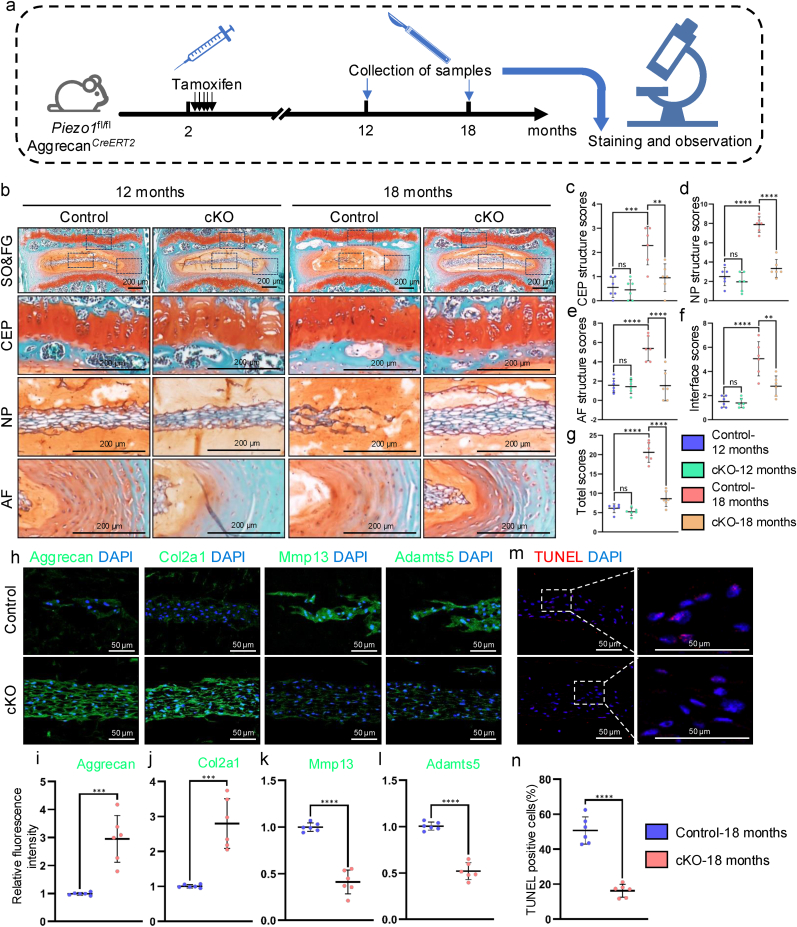
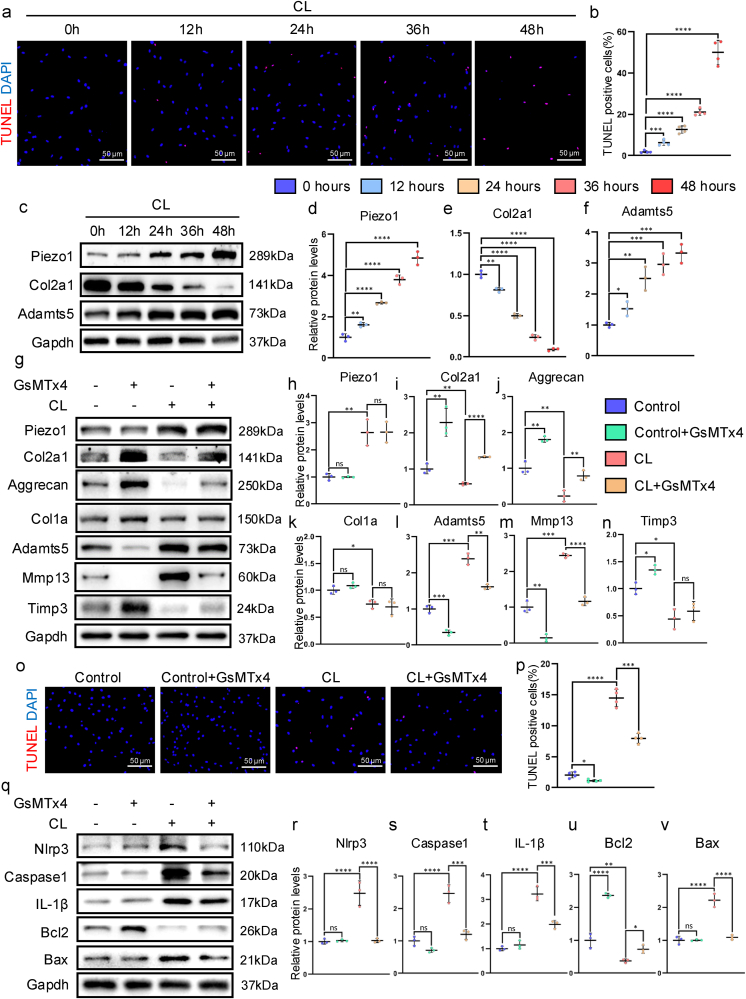
To investigate the effects of disc-specific Piezo1 deletion, we generated mice and examined both lumbar spine instability (LSI)- and aging-induced disc degeneration. Additionally, the effect of pharmacological inhibition of Piezo1 was evaluated using GsMTx4, a potent Piezo1 antagonist, in an ex vivo model stimulated with IL-1β to induce disc degeneration. Assessments included histological examinations, immunofluorescence, and western blot analyses to thoroughly characterize the alterations in the intervertebral discs.
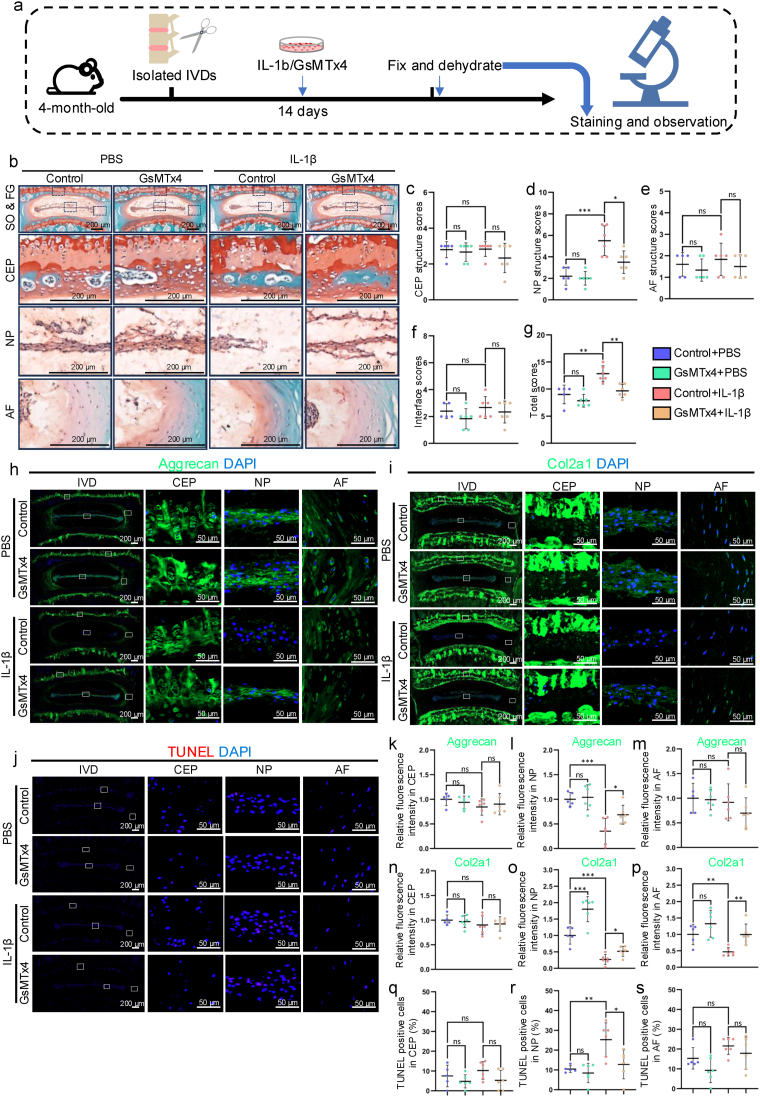
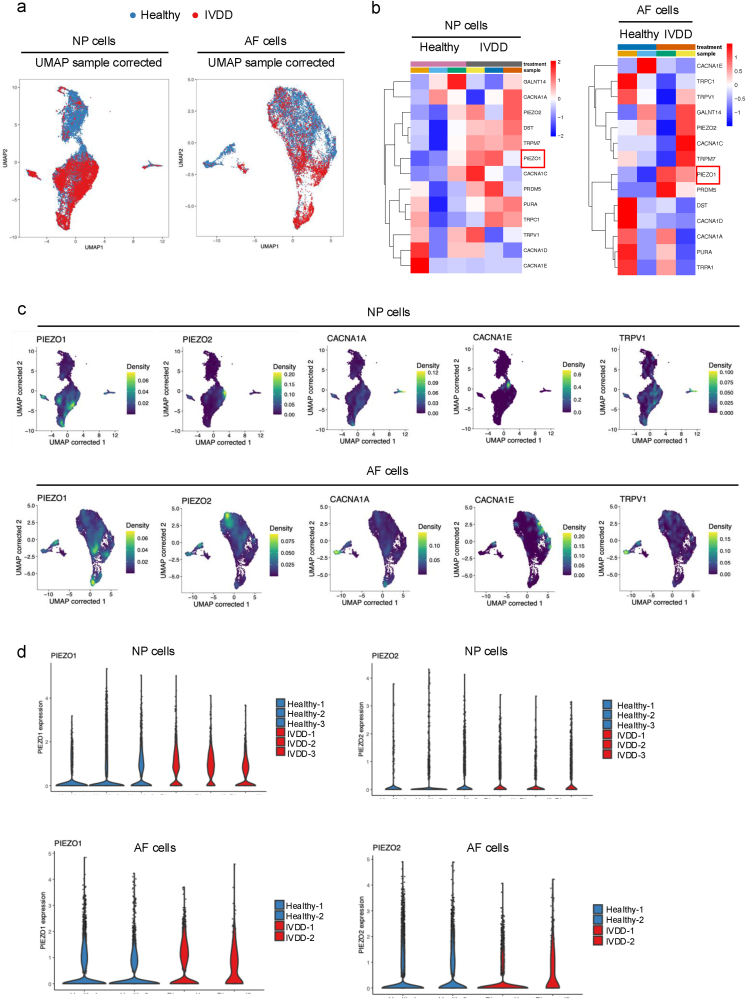
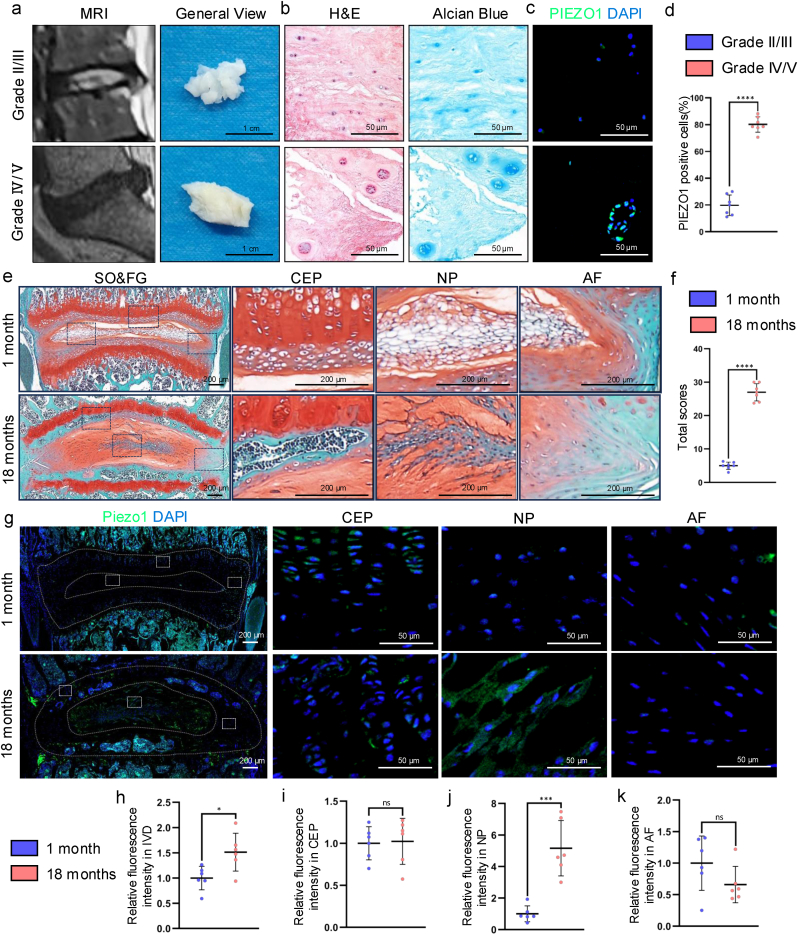
Elevated expression of Piezo1 was detected in the nucleus pulposus (NP) of intervertebral discs with advanced disc degeneration in both aged mice and human patients. Inducible deletion of Piezo1 expression in aggrecan-expressing disc cells significantly reduced lumbar disc degeneration, decreased extracellular matrix (ECM) degradation, and lowered apoptosis in NP cells, observed in both aged mice and those undergoing LSI surgery. Excessive compression loading (CL) upregulated Piezo1 expression, induced ECM disruption, and increased apoptosis in NP cells, whereas inhibition of Piezo1 with GsMTx4 effectively mitigated these pathological changes. Furthermore, in ex vivo cultured mouse discs, GsMTx4 treatment significantly alleviated IL-1β-induced degenerative damages, restored ECM anabolism, and reduced apoptosis.
The findings suggest that Piezo1 plays a critical role in the development of disc degeneration and highlight its potential as a therapeutic target. Inhibiting Piezo1 could offer a novel strategy for treating or preventing this critical disease.
This research highlights the involvement of Piezo1 in the development of intervertebral disc degeneration and emphasizes the potential for targeting Piezo1 as a therapeutic strategy to delay or reverse this condition.
腰痛影响着全球超过6亿人,主要原因是椎间盘退变。本研究聚焦于Piezo1(一种关键的机械敏感离子通道蛋白)在椎间盘退变的病理过程及潜在治疗中的作用。
为研究椎间盘特异性Piezo1缺失的影响,我们构建了小鼠模型,并检测了腰椎不稳(LSI)和衰老诱导的椎间盘退变情况。此外,在白细胞介素-1β刺激诱导椎间盘退变的体外模型中,使用强效Piezo1拮抗剂GsMTx4评估了Piezo1的药理学抑制作用。评估包括组织学检查、免疫荧光和蛋白质印迹分析,以全面表征椎间盘的变化。
在老年小鼠和人类患者中,晚期椎间盘退变的椎间盘中,髓核(NP)中Piezo1的表达均升高。在表达聚集蛋白聚糖的椎间盘细胞中诱导性缺失Piezo1表达,可显著降低老年小鼠和接受LSI手术小鼠的腰椎间盘退变,减少细胞外基质(ECM)降解,并降低NP细胞的凋亡。过度压缩负荷(CL)上调Piezo1表达,诱导ECM破坏,并增加NP细胞凋亡,而用GsMTx4抑制Piezo1可有效减轻这些病理变化。此外,在体外培养的小鼠椎间盘中,GsMTx4处理显著减轻了白细胞介素-1β诱导的退行性损伤,恢复了ECM合成代谢,并减少了细胞凋亡。
研究结果表明,Piezo1在椎间盘退变的发展中起关键作用,并突出了其作为治疗靶点的潜力。抑制Piezo1可为治疗或预防这种关键疾病提供一种新策略。
本研究突出了Piezo1在椎间盘退变发展中的作用,并强调了将Piezo1作为延缓或逆转这种状况的治疗策略的潜力。