Hu Yaohua, Lu You, Dong Jiagui, Xia Delin, Li Jin, Wang Hong, Rao Min, Wang Chenxing, Tong Wanning
Department of Respiratory and Critical Care Medicine, Naval Medical Center of People's Liberation Army, Shanghai, China.
Department of Respiratory Medicine, Shanghai Tenth People's Hospital, Shanghai, China.
Front Med (Lausanne). 2025 Mar 10;12:1464274. doi: 10.3389/fmed.2025.1464274. eCollection 2025.
The global impact of SARS-CoV-2 and its associated coronavirus disease (COVID-19) has necessitated urgent characterization of prognostic biomarkers. This study aimed to delineate the epidemiological and clinical predictors of mortality among hospitalized COVID-19 patients.
A retrospective cohort study was conducted on 123 patients with laboratory-confirmed COVID-19 admitted to Huoshenshan Hospital (Wuhan, China) from 1 February 2020 to 30 April 2020. Kaplan-Meier curve and multivariate Cox regression were used to assess the independent factors with survival time. Statistical significance was set at a -value of <0.05.
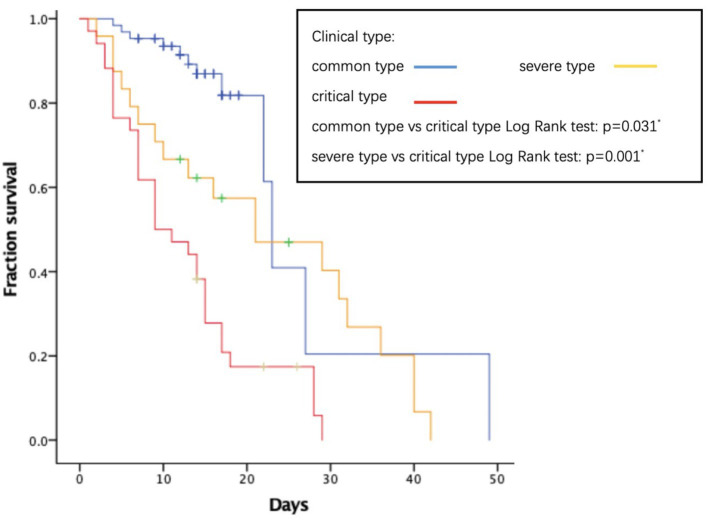
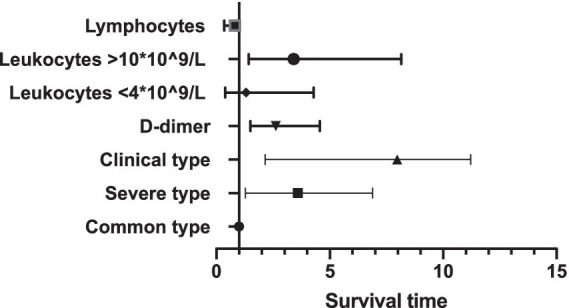
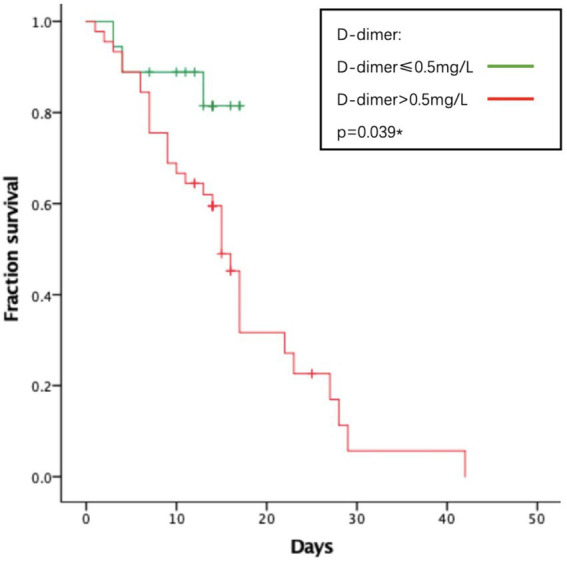
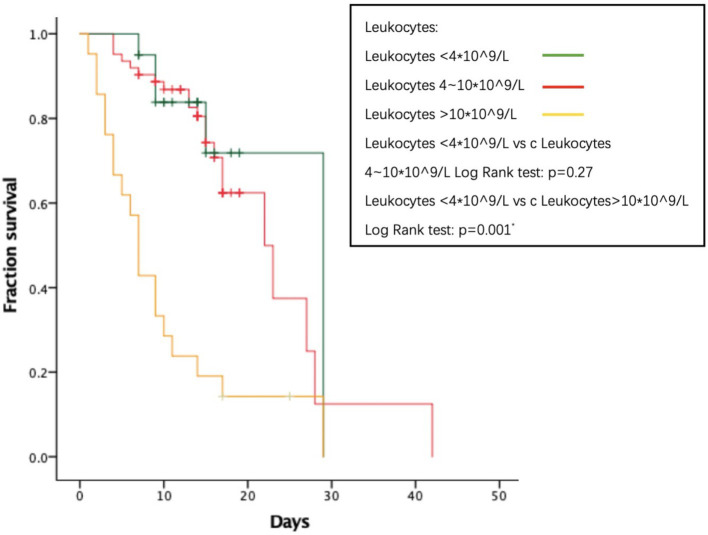
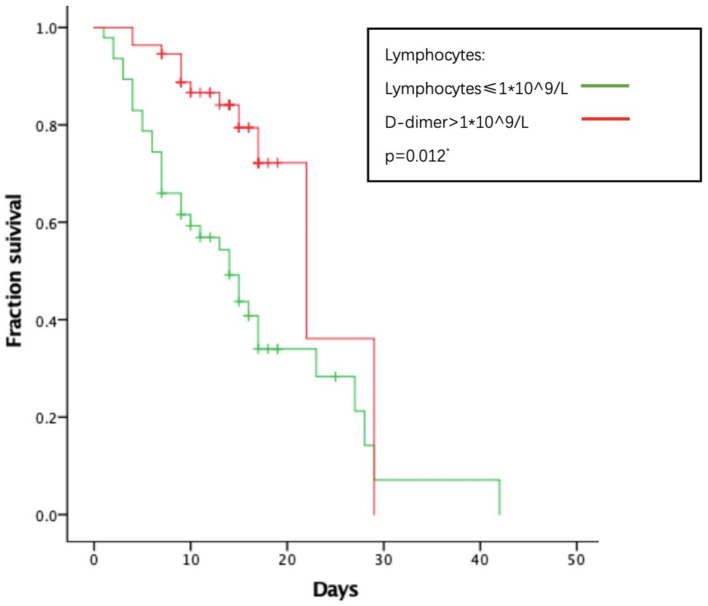
The cohort exhibited a mortality rate of 49.6% (61/123), with the critical clinical type (HR = 7.970, = 0.009), leukocytosis (HR = 3.408, = 0.006), and lymphopenia (HR = 0.817, = 0.038) emerging as independent predictors of reduced survival. Critical-type patients demonstrated significantly elevated inflammatory markers (neutrophils: 10.41 ± 6.23 × 10/L; CRP: 104.47 ± 29.18 mg/L) and coagulopathy (D-dimer: 5.21 ± 2.34 μg/ml) compared to non-critical cases. Deceased patients exhibited pronounced metabolic derangements, including hyperglycemia (9.81 ± 2.07 mmol/L) and hepatic dysfunction (ALP: 174.03 ± 30.13 U/L).
We revealed the epidemiological and clinical features of different clinical types of SARS-CoV-2 as summarized in this paper. We found that critical type, leukocyte, and lymphocyte are risk factors that affect survival time, which could be an early and helpful marker to improve management of COVID-19 patients.
严重急性呼吸综合征冠状病毒2(SARS-CoV-2)及其相关的冠状病毒病(COVID-19)的全球影响使得迫切需要对预后生物标志物进行特征描述。本研究旨在确定住院COVID-19患者死亡率的流行病学和临床预测因素。
对2020年2月1日至2020年4月30日期间收治于武汉火神山医院的123例实验室确诊的COVID-19患者进行回顾性队列研究。采用Kaplan-Meier曲线和多变量Cox回归分析评估影响生存时间的独立因素。统计学显著性设定为P值<0.05。
该队列的死亡率为49.6%(61/123),危重型临床类型(HR = 7.970,P = 0.009)、白细胞增多(HR = 3.408,P = 0.006)和淋巴细胞减少(HR = 0.817,P = 0.038)是生存时间缩短的独立预测因素。与非危重型患者相比,危重型患者的炎症标志物(中性粒细胞:10.41±6.23×10⁹/L;C反应蛋白:104.47±29.18mg/L)和凝血病(D-二聚体:5.21±2.34μg/ml)显著升高。死亡患者表现出明显的代谢紊乱,包括高血糖(9.81±2.07mmol/L)和肝功能障碍(碱性磷酸酶:174.03±30.13U/L)。
我们总结了本文中不同临床类型SARS-CoV-2的流行病学和临床特征。我们发现危重型、白细胞和淋巴细胞是影响生存时间的危险因素,这可能是改善COVID-19患者管理的早期且有用的指标。