Fung Darlene, Razi Aida, Pandos Michael, Velez Benjamin, Fermin Perez Erignacio, Adams Lea, Rawson Shaun, Walsh Richard M, Hanna John
Department of Pathology, Harvard Medical School and Brigham and Women's Hospital, Boston, MA, USA.
Harvard Cryo-Electron Microscopy Center for Structural Biology, Harvard Medical School, Boston, MA, USA.
Nat Commun. 2025 Mar 26;16(1):2949. doi: 10.1038/s41467-025-58077-x.
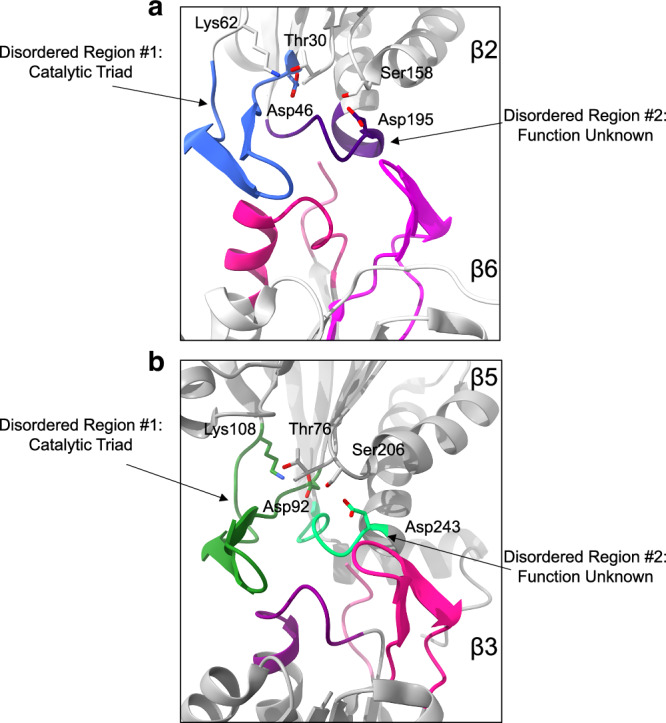
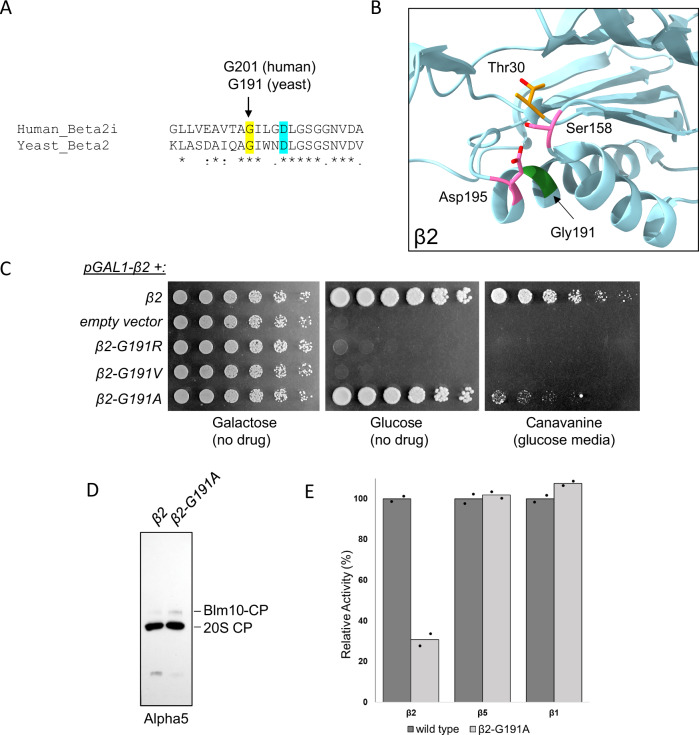
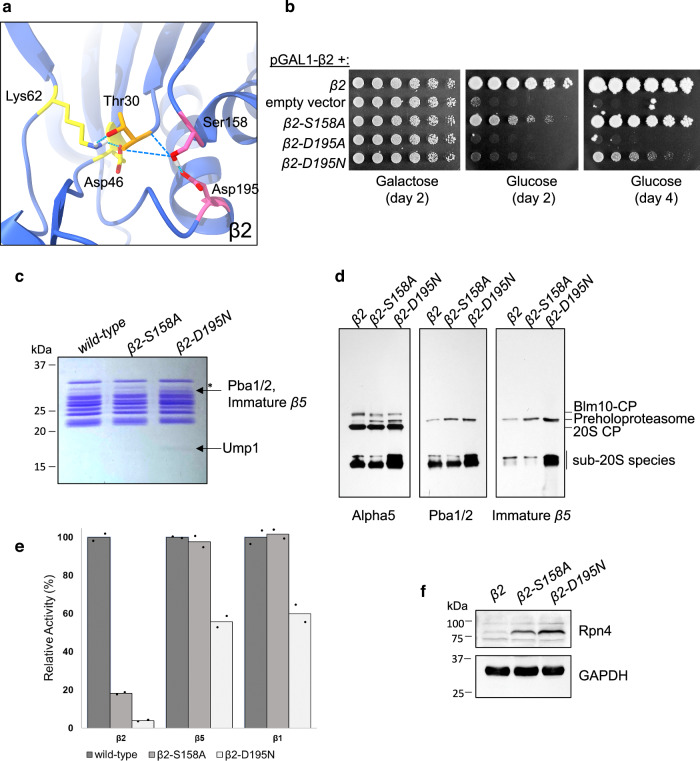
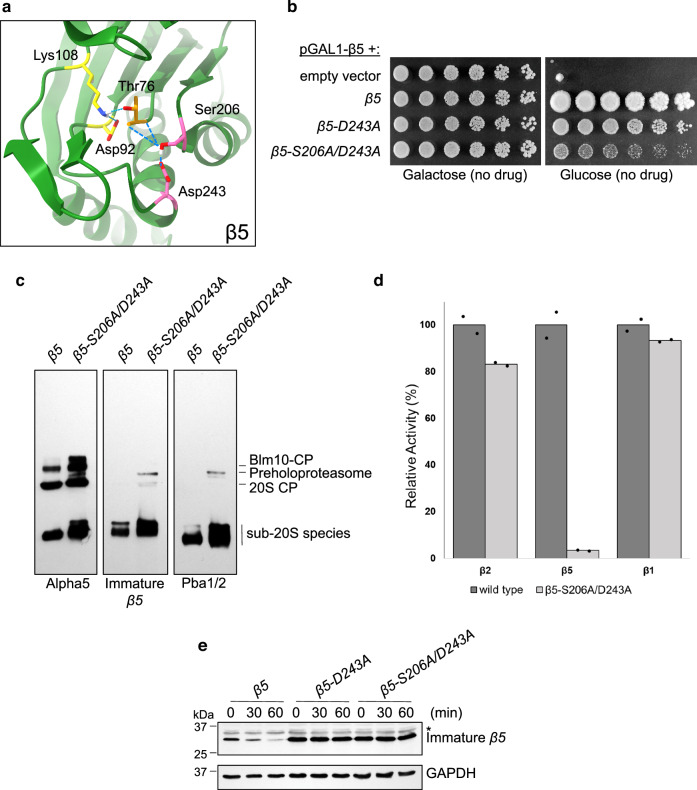
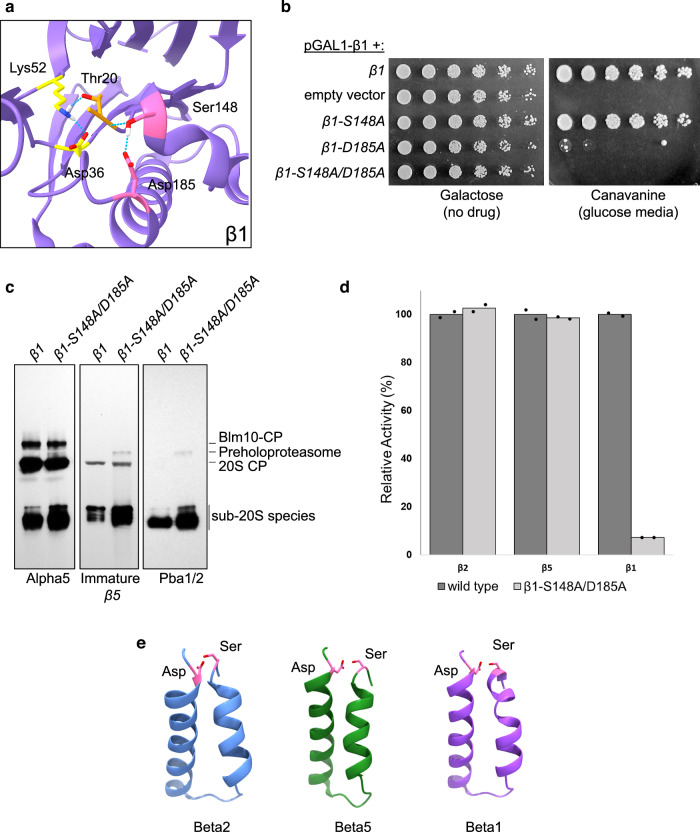
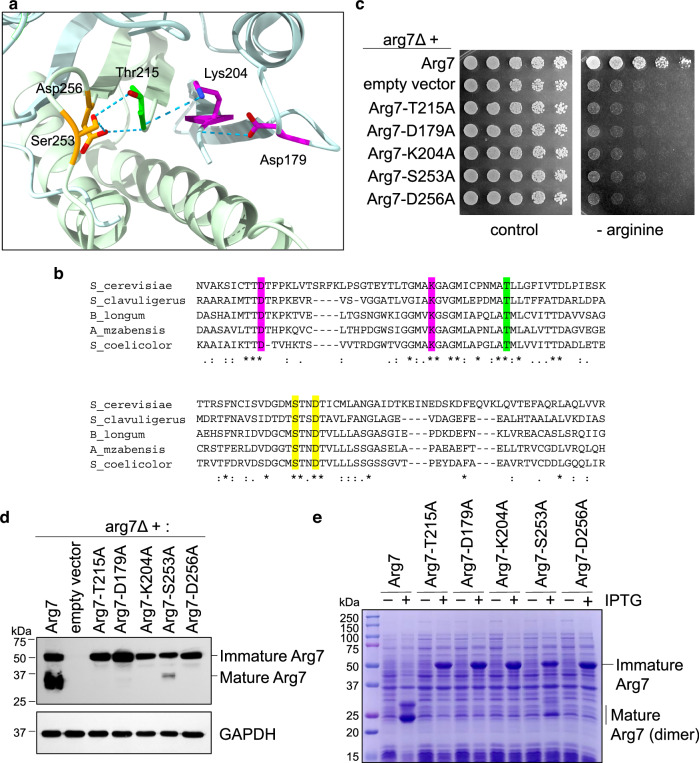
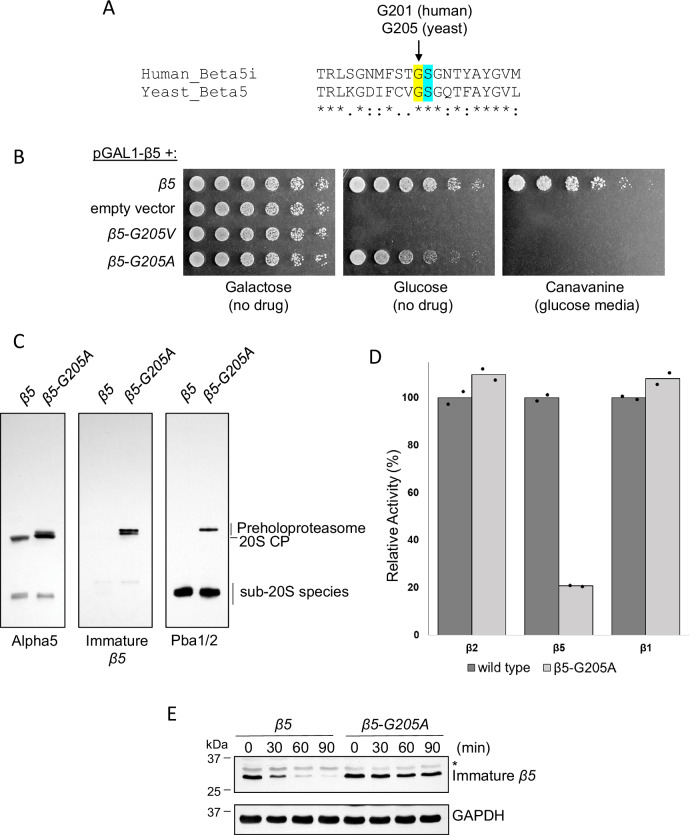
Proteases are defined by their nucleophile but require additional residues to regulate their active sites, most often arranged as catalytic triads that control the generation and resolution of acyl-enzyme intermediates. Threonine N-terminal nucleophiles represent a diverse family of proteases and transferases that possess two active site nucleophiles, the side chain hydroxyl and the free amino-terminus, and require autocatalytic cleavage of their N-terminal propeptides. Here we provide evidence that the proteasome, which mediates intracellular protein degradation and contains three different threonine protease subunits, utilizes a unique catalytic pentad mechanism. In addition to the previously defined lysine/aspartate pair which regulates threonine's side chain, a second serine/aspartate pair appears to regulate threonine's amino-terminus. The pentad is required for substrate proteolysis and assembly-coupled autocatalytic cleavage, the latter triggered by alignment of the full pentad upon fusion of two half-proteasome precursors. A similar pentad mechanism was required by the ornithine acetyltransferase Arg7, suggesting that this may be a general property of threonine N-terminal nucleophiles. Finally, we show that two patient-derived proteasome mutations compromise function of the serine/aspartate unit in yeast, suggesting that defective pentad function may underlie some human proteasomopathies.
蛋白酶由其亲核试剂定义,但需要额外的残基来调节其活性位点,这些残基通常排列成催化三联体,控制酰基酶中间体的生成和分解。苏氨酸N端亲核试剂代表了一类多样的蛋白酶和转移酶家族,它们拥有两个活性位点亲核试剂,即侧链羟基和游离氨基末端,并且需要对其N端前肽进行自催化切割。在这里,我们提供证据表明,介导细胞内蛋白质降解并包含三种不同苏氨酸蛋白酶亚基的蛋白酶体利用了一种独特的催化五元机制。除了先前定义的调节苏氨酸侧链的赖氨酸/天冬氨酸对之外,第二个丝氨酸/天冬氨酸对似乎调节苏氨酸的氨基末端。该五元组是底物蛋白水解和组装偶联自催化切割所必需的,后者由两个半蛋白酶体前体融合时完整五元组的排列触发。鸟氨酸乙酰转移酶Arg7也需要类似的五元机制,这表明这可能是苏氨酸N端亲核试剂的普遍特性。最后,我们表明,两个患者来源的蛋白酶体突变损害了酵母中丝氨酸/天冬氨酸单元的功能,这表明有缺陷的五元组功能可能是一些人类蛋白酶体病的基础。