Tao Kai-Shan, Yang Zhao-Xu, Zhang Xuan, Zhang Hong-Tao, Yue Shu-Qiang, Yang Yan-Ling, Song Wen-Jie, Wang De-Sheng, Liu Zheng-Cai, Li Hai-Min, Chen Yong, Ding Rui, Sun Shi-Ren, Yu Ming, Li Ji-Peng, Duan Wei-Xun, Wang Zhe, Wang Jing-Wen, Liu Jia-Yun, Zheng Min-Wen, Zhang Xi-Jing, Yin Wen, Qin Wei-Jun, Bian Dong-Mei, Li Lin, Li Min, Lin Zhi-Bin, Xu Hao, Wei Dan, Zhang Hong, Duan Juan-Li, Pan Deng-Ke, Dong Hai-Long, Wang Lin, Dou Ke-Feng
Department of Hepatobiliary Surgery, Xijing Hospital, Fourth Military Medical University, Xi'an, China.
Department of Nephrology, Xijing Hospital, Fourth Military Medical University, Xi'an, China.
Nature. 2025 May;641(8064):1029-1036. doi: 10.1038/s41586-025-08799-1. Epub 2025 Mar 26.
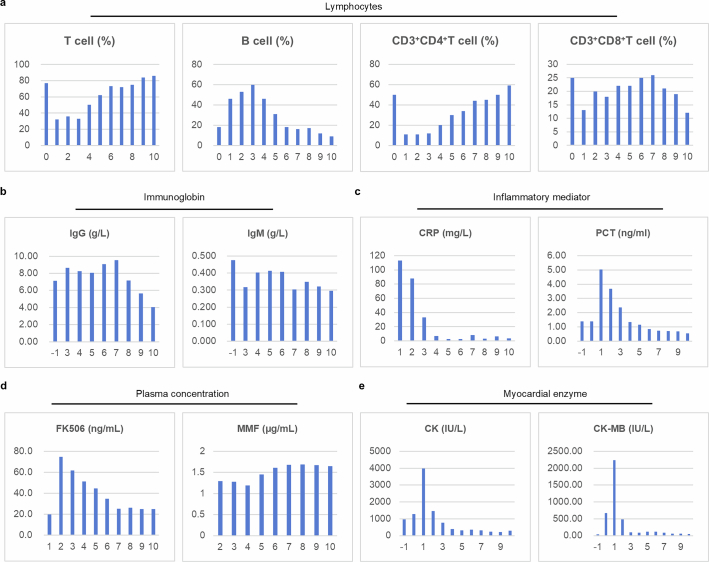
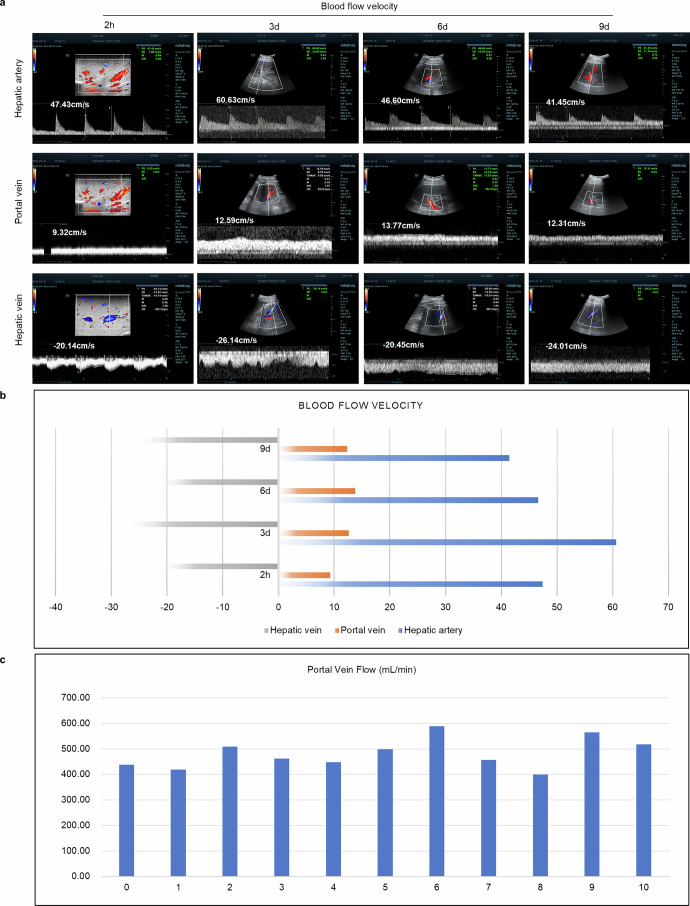
The shortage of donors is a major challenge for transplantation; however, organs from genetically modified pigs can serve as ideal supplements. Until now, porcine hearts and kidneys have been successively transplanted into humans. In this study, heterotopic auxiliary transplantation was used to donate a six-gene-edited pig liver to a brain-dead recipient. The graft function, haemodynamics, and immune and inflammatory responses of the recipient were monitored over the subsequent 10 days. Two hours after portal vein reperfusion of the xenograft, goldish bile was produced, increasing to 66.5 ml by postoperative day 10. Porcine liver-derived albumin also increased after surgery. Alanine aminotransferase levels remained in the normal range, while aspartate aminotransferase levels increased on postoperative day 1 and then rapidly declined. Blood flow velocity in the porcine hepatic artery and portal and hepatic veins remained at an acceptable level. Although platelet numbers decreased early after surgery, they ultimately returned to normal levels. Histological analyses showed that the porcine liver regenerated capably with no signs of rejection. T cell activity was inhibited by anti-thymocyte globulin administration, and B cell activation increased 3 days after surgery and was then inhibited by rituximab. There were no significant peri-operative changes in immunoglobulin G or immunoglobulin M levels. C-reactive protein and procalcitonin levels were initially elevated and then quickly declined. The xenograft remained functional until study completion.
供体短缺是移植领域的一项重大挑战;然而,基因编辑猪的器官可作为理想的补充。到目前为止,猪心脏和肾脏已相继移植到人类体内。在本研究中,采用异位辅助移植将经过六基因编辑的猪肝移植给脑死亡受体。在随后的10天内监测受体的移植物功能、血流动力学以及免疫和炎症反应。异种移植物门静脉再灌注两小时后产生金黄色胆汁,到术后第10天增加至66.5毫升。术后猪肝脏来源的白蛋白也有所增加。丙氨酸转氨酶水平保持在正常范围内,而天冬氨酸转氨酶水平在术后第1天升高,随后迅速下降。猪肝动脉以及门静脉和肝静脉中的血流速度保持在可接受水平。虽然术后早期血小板数量减少,但最终恢复到正常水平。组织学分析表明,猪肝脏能够再生,且无排斥迹象。抗胸腺细胞球蛋白抑制了T细胞活性,术后3天B细胞活化增加,随后利妥昔单抗抑制了B细胞活化。免疫球蛋白G或免疫球蛋白M水平在围手术期无显著变化。C反应蛋白和降钙素原水平最初升高,随后迅速下降。异种移植物在研究结束前一直保持功能。