Bai Raoxian, Guo Wenting, Zhang Ting, Ren Shuaiwei, Liu Jie, Xiao Puhao, Zhang Junyu, Sun Wenjie, Yang Jiao, Ma Yue, Liu Siyu, Zhou Chaoran, Li Shangang, Wang Hong, Zhang Shu, Ji Weizhi, Wu Shiwen, Chen Yongchang
State Key Laboratory of Primate Biomedical Research, Institute of Primate Translational Medicine, Kunming University of Science and Technology, Kunming 650500, China; Faculty of Life Science and Technology, Kunming University of Science and Technology, Kunming 650500, China; Yunnan Key Laboratory of Primate Biomedical Research, Kunming 650500, China.
State Key Laboratory of Primate Biomedical Research, Institute of Primate Translational Medicine, Kunming University of Science and Technology, Kunming 650500, China; Yunnan Key Laboratory of Primate Biomedical Research, Kunming 650500, China.
Cell Rep Med. 2025 Apr 15;6(4):102037. doi: 10.1016/j.xcrm.2025.102037. Epub 2025 Mar 26.
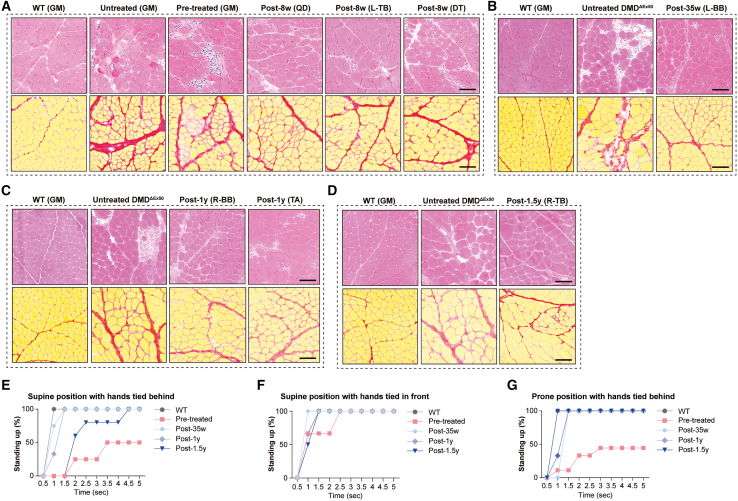
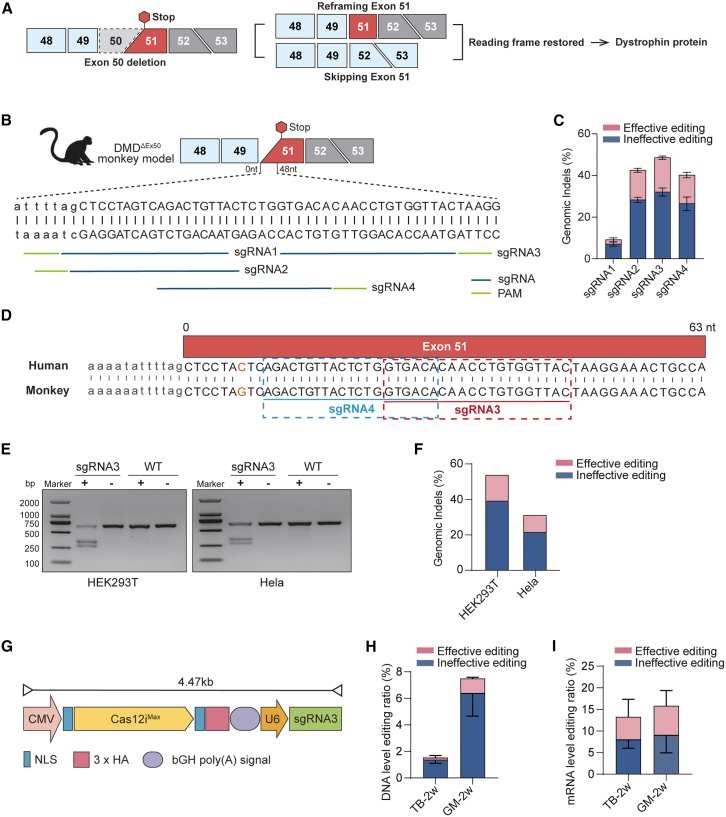
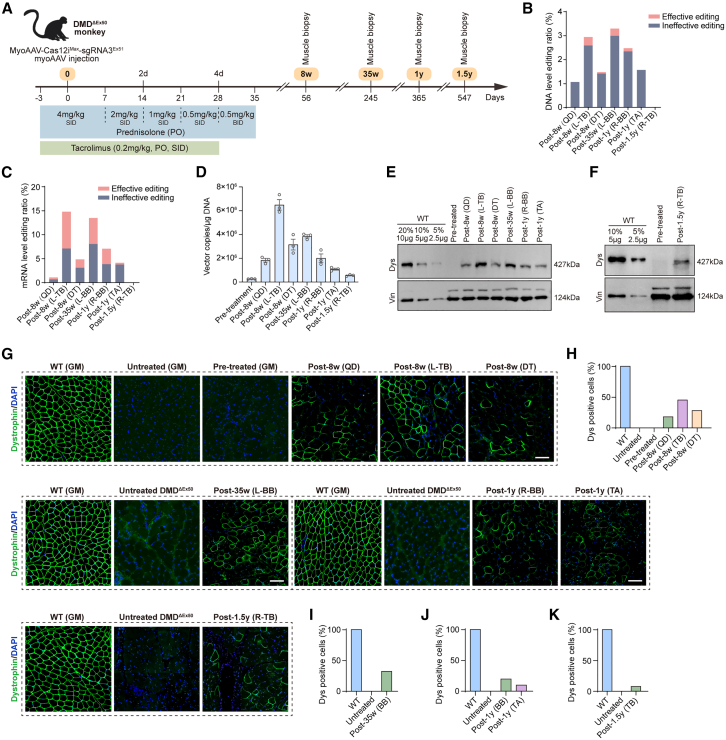
Progress in Duchenne muscular dystrophy (DMD) treatment is hindered by the lack of animal models that closely replicate human pathology and enable the evaluation of therapy efficacy and safety based on these models. To address this need, we optimize the generation of nonhuman primate DMD models, reducing the development time from 6 to 7 years to under 1 year, enabling the rapid generation of DMD monkey models. These models closely mimic human DMD pathology and motor dysfunction, making them suitable for testing gene therapies. Using these models, we develop a single-cut gene therapy strategy that can be directly applied to humans. This treatment restores dystrophin expression, improves pathological features, and enhances motor abilities in DMD monkeys, with effects lasting at least 1.5 years. In conclusion, we achieve the rapid generation of DMD monkey models and demonstrate that our gene therapy approach is effective and holds significant potential for clinical application.
杜氏肌营养不良症(DMD)治疗的进展受到缺乏动物模型的阻碍,这些模型无法紧密复制人类病理情况,也无法基于这些模型评估治疗效果和安全性。为满足这一需求,我们优化了非人灵长类DMD模型的构建,将其开发时间从6至7年缩短至不到1年,从而能够快速生成DMD猴模型。这些模型紧密模拟人类DMD病理和运动功能障碍,适用于测试基因疗法。利用这些模型,我们开发了一种可直接应用于人类的单切口基因治疗策略。这种治疗方法可恢复肌营养不良蛋白的表达,改善病理特征,并增强DMD猴的运动能力,效果至少持续1.5年。总之,我们实现了DMD猴模型的快速构建,并证明我们的基因治疗方法有效,具有显著的临床应用潜力。