Andersson Nystedt Tanya, Herder Tobias, Agardh Anette, Asamoah Benedict Oppong
Department of Clinical Sciences Malmö Social Medicine and Global Health, Lund University, Jan Waldenströms gata 35, Malmö, 214 28, Sweden.
Int J Equity Health. 2025 Mar 27;24(1):86. doi: 10.1186/s12939-025-02454-x.
Young migrants are increasingly recognised as being particularly vulnerable to sexual violence. This vulnerability is largely structural, due to the different laws and policies impacting their access to rights and services. Post-structural approaches to policy argue that policies are not responses to existing problems, but rather that social issues are constructed through policy. They define both whether something is a problem and how that problem is to be addressed. The aim of this study was to understand how sexual violence is conceived of in the Swedish policy environment and how this interacts with the migration regime to affect young migrants' vulnerability to sexual violence.
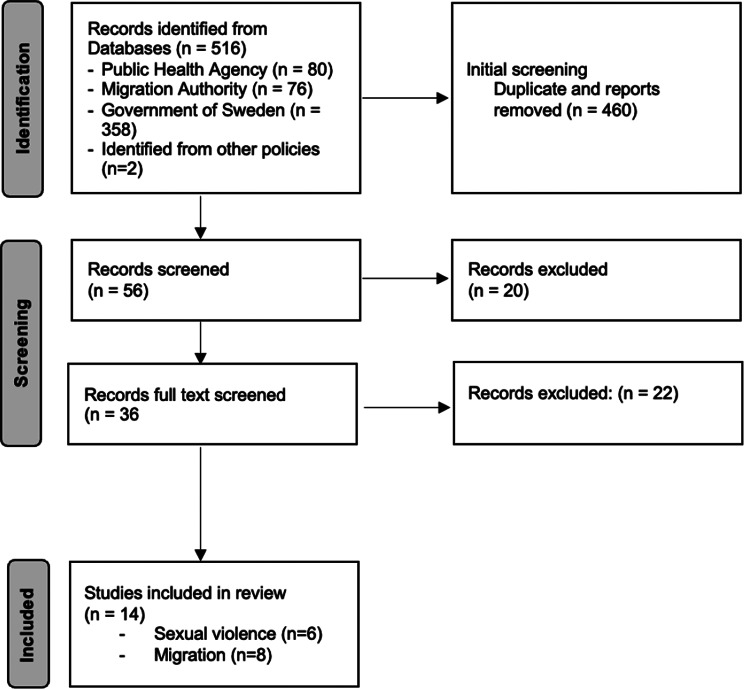
A systematic search was conducted to identify Swedish national-level policies: (1) addressing sexual violence; and (2) relating to the migration regime. 14 documents were included in the analysis: 6 addressed sexual violence, and 8 were related to migration. An intersectionality-based policy analysis was conducted by applying three questions to the relevant policies: (1) How is sexual violence conceived of in the policies? (2) How are young migrants represented in the policies? (3) How does the conception of sexual violence interact with the migration regime to impact young migrants' vulnerability?
Power is central to how sexual violence is conceived of in Swedish policies, as is access to human right and services. Young persons and migrants are both identified as vulnerable groups in these policies but as separate categories. Structural sources of vulnerability are recognised but not addressed in policies addressing sexual violence. The migration regime works largely to restrict migrants' access to rights and services, thereby contributing to young migrants' vulnerability to sexual violence.
Although migrants and youth are included separately in policies addressing sexual violence, the migration regime largely works to exclude different groups of young migrants from access to rights and services and thereby increases their vulnerability to sexual violence.
年轻移民越来越被认为特别容易遭受性暴力。这种脆弱性在很大程度上是结构性的,因为不同的法律和政策影响着他们获得权利和服务的机会。后结构主义的政策方法认为,政策不是对现有问题的回应,而是社会问题是通过政策构建的。政策既界定了某事物是否是一个问题,也界定了该问题应如何解决。本研究的目的是了解在瑞典的政策环境中,性暴力是如何被构想的,以及这与移民制度如何相互作用,从而影响年轻移民遭受性暴力的脆弱性。
进行了系统的搜索,以确定瑞典国家层面的政策:(1)涉及性暴力;(2)与移民制度相关。14份文件被纳入分析:6份涉及性暴力,8份与移民相关。通过对相关政策应用三个问题进行基于交叉性的政策分析:(1)政策中如何构想性暴力?(2)政策中如何呈现年轻移民?(3)性暴力的构想如何与移民制度相互作用,以影响年轻移民的脆弱性?
权力是瑞典政策中构想性暴力方式的核心,获得人权和服务也是如此。年轻人和移民在这些政策中都被确定为弱势群体,但属于不同类别。在涉及性暴力的政策中,认识到了脆弱性的结构性根源,但并未加以解决。移民制度在很大程度上限制了移民获得权利和服务的机会,从而导致年轻移民更容易遭受性暴力。
尽管在涉及性暴力的政策中分别纳入了移民和年轻人,但移民制度在很大程度上使不同群体的年轻移民无法获得权利和服务,从而增加了他们遭受性暴力的脆弱性。