• 文献检索
  • 文档翻译
  • 深度研究
  • 学术资讯
  • Suppr Zotero 插件Zotero 插件
  • 邀请有礼
  • 套餐&价格
  • 历史记录
应用&插件
Suppr Zotero 插件Zotero 插件浏览器插件Mac 客户端Windows 客户端微信小程序
定价
高级版会员购买积分包购买API积分包
服务
文献检索文档翻译深度研究API 文档MCP 服务
关于我们
关于 Suppr公司介绍联系我们用户协议隐私条款
关注我们

Suppr 超能文献

核心技术专利:CN118964589B侵权必究
粤ICP备2023148730 号-1Suppr @ 2026

文献检索

告别复杂PubMed语法,用中文像聊天一样搜索,搜遍4000万医学文献。AI智能推荐,让科研检索更轻松。

立即免费搜索

文件翻译

保留排版,准确专业,支持PDF/Word/PPT等文件格式,支持 12+语言互译。

免费翻译文档

深度研究

AI帮你快速写综述,25分钟生成高质量综述,智能提取关键信息,辅助科研写作。

立即免费体验

食品广告的影响力:简短的正念指导无法预防食品广告引发的心理生理反应。

The Power of Food Advertisements: A Brief Mindfulness Instruction Does Not Prevent Psychophysiological Responses Triggered by Food Ads.

作者信息

Baquedano Constanza, Martinez-Pernia David, Soto Vicente, Rivera-Rei Álvaro, Zepeda Antonia, Vasquez-Rosati Alejandra, Guzmán-Lavín Eugenio J, Ugarte Carla, Cepeda-Benito Antonio, Lopez Vladimir, Silva Jaime R

机构信息

Center for Social and Cognitive Neuroscience (CSCN), School of Psychology, Universidad Adolfo Ibañez, Santiago 7941169, Chile.

Laboratorio de Fenomenología Corporal, Villarrica 4930000, Chile.

出版信息

Brain Sci. 2025 Feb 25;15(3):240. doi: 10.3390/brainsci15030240.

DOI:10.3390/brainsci15030240
PMID:40149762
原文链接:https://pmc.ncbi.nlm.nih.gov/articles/PMC11940382/
Abstract

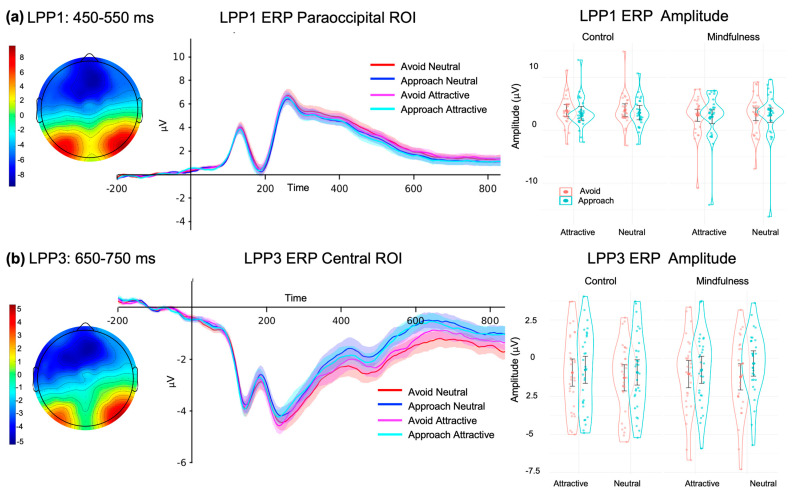
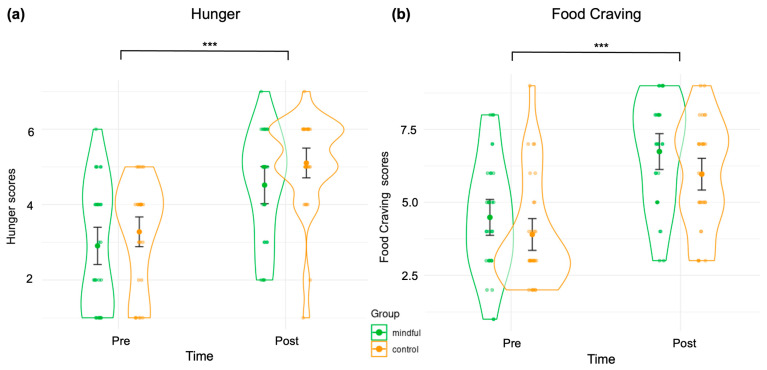
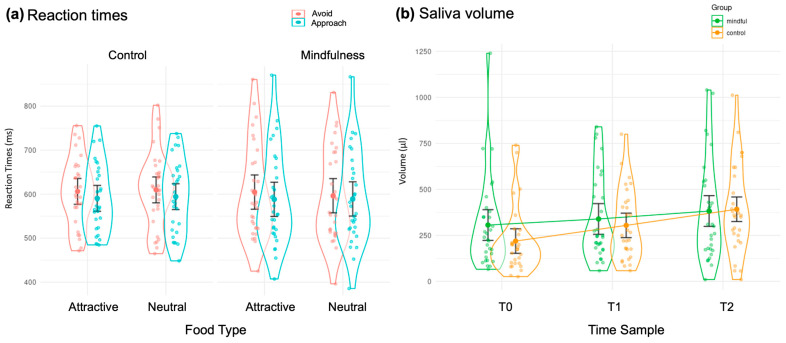
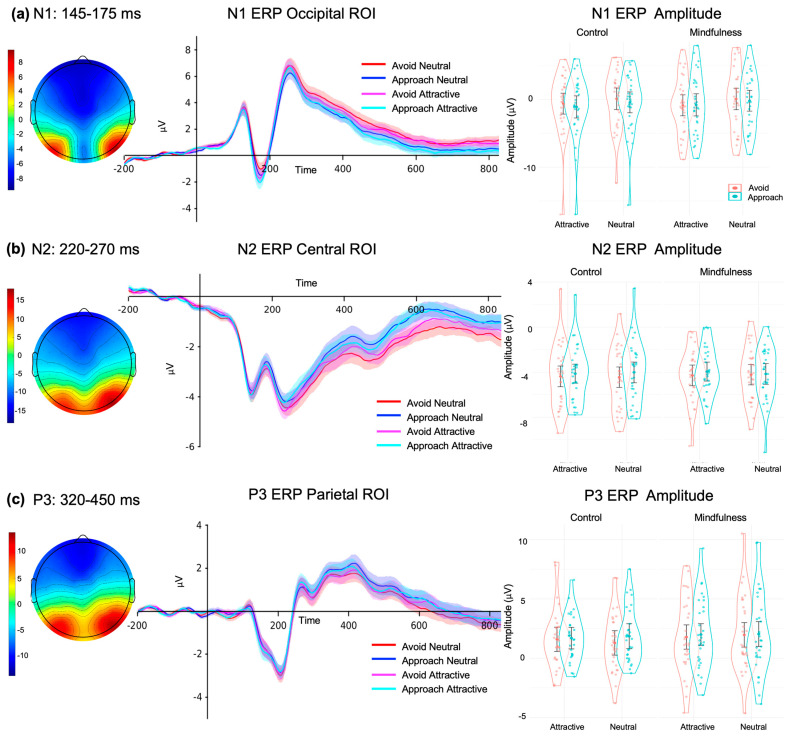
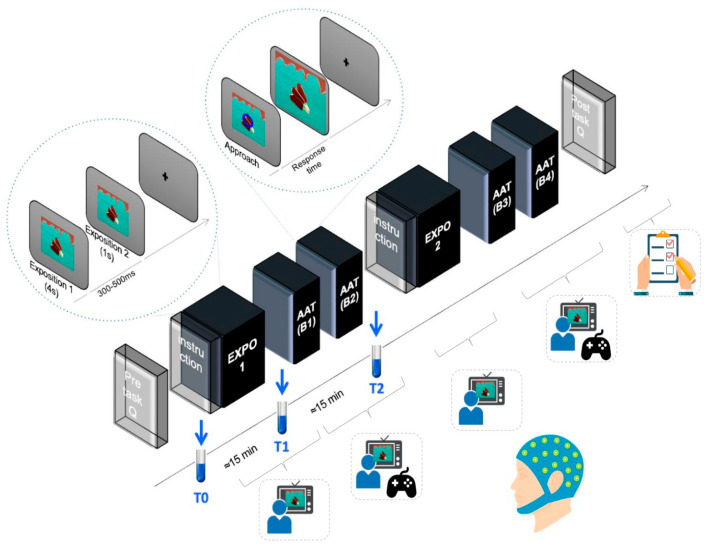
Exposure to visually appealing food items can enhance their subjective realism, leading to increased cravings, salivation, and automatic approach tendencies. Prior research suggests that brief mindfulness instructions promoting dereification-recognizing stimuli as transient mental events-can mitigate these automatic reactions. : This study assesses whether brief mindfulness instruction can mitigate automatic consumption tendencies induced by food advertisements, exploring the corresponding behavioral, physiological, and neurophysiological mechanisms. : Sixty participants were randomly assigned to two groups: one receiving brief mindfulness instruction and the other a non-dereifying control instruction while exposed to advertised foods. This was followed by an approach-avoidance task (AAT), during which behavioral data, salivary volume, event-related potentials (ERPs) from electroencephalogram recordings, and self-reports were collected. : The results showed no significant differences in approach behaviors between the groups. Hunger, food craving, and salivation levels increased uniformly in response to food cues for both groups. The N1, N2, P3, and late positive potential (LPP) ERPs remained unaltered by the instructions and consistent with the established AAT literature. Advertising heightened the appeal of neutral foods, as evidenced by increased N2, P3, and LPP responses. The brief mindfulness instruction failed to shield participants from the automatic responses elicited by food advertising, contrasting with the effects seen with non-advertised food.

摘要

接触视觉上吸引人的食物会增强其主观真实感,导致食欲增加、唾液分泌增多以及产生自动趋近倾向。先前的研究表明,促进去实体化(将刺激视为短暂的心理事件)的简短正念指导可以减轻这些自动反应。本研究评估简短的正念指导是否能减轻食品广告引发的自动消费倾向,并探究相应的行为、生理和神经生理机制。60名参与者被随机分为两组:一组接受简短的正念指导,另一组在接触广告食品时接受非去实体化的对照指导。随后进行趋近-回避任务(AAT),在此期间收集行为数据、唾液量、脑电图记录中的事件相关电位(ERP)以及自我报告。结果显示,两组之间的趋近行为没有显著差异。两组对食物线索的反应中,饥饿感、食物渴望和唾液分泌水平均一致增加。指导并未改变N1、N2、P3和晚期正电位(LPP)ERP,这与已有的AAT文献一致。广告增强了中性食物的吸引力,N2、P3和LPP反应增加证明了这一点。简短的正念指导未能使参与者免受食品广告引发的自动反应影响,这与非广告食品的效果形成对比。
https://cdn.ncbi.nlm.nih.gov/pmc/blobs/0f5d/11940382/a10b0df0cfbc/brainsci-15-00240-g005.jpg
https://cdn.ncbi.nlm.nih.gov/pmc/blobs/0f5d/11940382/56f75ab18925/brainsci-15-00240-g001.jpg
https://cdn.ncbi.nlm.nih.gov/pmc/blobs/0f5d/11940382/c3b0601b6f8b/brainsci-15-00240-g002.jpg
https://cdn.ncbi.nlm.nih.gov/pmc/blobs/0f5d/11940382/a2a843326e65/brainsci-15-00240-g003.jpg
https://cdn.ncbi.nlm.nih.gov/pmc/blobs/0f5d/11940382/4b1ac1c21b7b/brainsci-15-00240-g004.jpg
https://cdn.ncbi.nlm.nih.gov/pmc/blobs/0f5d/11940382/a10b0df0cfbc/brainsci-15-00240-g005.jpg
https://cdn.ncbi.nlm.nih.gov/pmc/blobs/0f5d/11940382/56f75ab18925/brainsci-15-00240-g001.jpg
https://cdn.ncbi.nlm.nih.gov/pmc/blobs/0f5d/11940382/c3b0601b6f8b/brainsci-15-00240-g002.jpg
https://cdn.ncbi.nlm.nih.gov/pmc/blobs/0f5d/11940382/a2a843326e65/brainsci-15-00240-g003.jpg
https://cdn.ncbi.nlm.nih.gov/pmc/blobs/0f5d/11940382/4b1ac1c21b7b/brainsci-15-00240-g004.jpg
https://cdn.ncbi.nlm.nih.gov/pmc/blobs/0f5d/11940382/a10b0df0cfbc/brainsci-15-00240-g005.jpg

相似文献

1
The Power of Food Advertisements: A Brief Mindfulness Instruction Does Not Prevent Psychophysiological Responses Triggered by Food Ads.食品广告的影响力:简短的正念指导无法预防食品广告引发的心理生理反应。
Brain Sci. 2025 Feb 25;15(3):240. doi: 10.3390/brainsci15030240.
2
Electrophysiological evidence of the differential modulation of approach-related processes toward attractive foods by immersive or mindful viewing conditions.沉浸式或正念观看条件对与接近诱人食物相关过程的差异调节的电生理证据。
Eur J Neurosci. 2020 May;51(9):1971-1986. doi: 10.1111/ejn.14632. Epub 2019 Dec 18.
3
Compared to self-immersion, mindful attention reduces salivation and automatic food bias.与自我沉浸相比,正念注意减少唾液分泌和自动食物偏向。
Sci Rep. 2017 Oct 23;7(1):13839. doi: 10.1038/s41598-017-13662-z.
4
"The thought is gonna come and the thought is gonna go": A qualitative study on how non-meditators learn and apply brief mindfulness-based instructions for food cravings.“想法来了又会走”:一项关于非冥想者如何学习和应用简短基于正念的食物渴望指导的定性研究。
Appetite. 2021 Nov 1;166:105482. doi: 10.1016/j.appet.2021.105482. Epub 2021 Jul 1.
5
The effect of cognitive reappraisal on food craving and consumption: Does working memory capacity influence reappraisal ability? An event-related potential study.认知重评对食物渴望和消费的影响:工作记忆容量是否影响重评能力?一项事件相关电位研究。
Appetite. 2024 Feb 1;193:107112. doi: 10.1016/j.appet.2023.107112. Epub 2023 Nov 3.
6
Food cue-elicited brain potentials in obese and healthy-weight individuals.肥胖个体与健康体重个体中食物线索诱发的脑电活动
Eat Behav. 2008 Dec;9(4):462-70. doi: 10.1016/j.eatbeh.2008.07.009. Epub 2008 Aug 15.
7
Mindfulness and equanimity moderate approach/avoidance motor responses.正念和平衡调节趋近/回避运动反应。
Cogn Emot. 2021 Sep;35(6):1085-1098. doi: 10.1080/02699931.2021.1927674. Epub 2021 May 19.
8
Neurophysiological evidences of the transient effects of mindfulness induction on emotional processing in children: An ERP study.正念诱导对儿童情绪加工的瞬态影响的神经生理证据:一项 ERP 研究。
Int J Psychophysiol. 2019 Sep;143:36-43. doi: 10.1016/j.ijpsycho.2019.06.014. Epub 2019 Jun 30.
9
Enjoying food without caloric cost: The impact of brief mindfulness on laboratory eating outcomes.享受无热量成本的食物:短暂正念对实验室饮食结果的影响。
Behav Res Ther. 2016 Apr;79:23-34. doi: 10.1016/j.brat.2016.02.002. Epub 2016 Feb 22.
10
Deconstructing the Emotion Regulatory Properties of Mindfulness: An Electrophysiological Investigation.解构正念的情绪调节特性:一项电生理研究。
Front Hum Neurosci. 2016 Sep 7;10:451. doi: 10.3389/fnhum.2016.00451. eCollection 2016.

本文引用的文献

1
Approach bias in individuals with Internet gaming disorder: Evidence from an event-related potential-based approach-avoid task.网络赌博障碍个体的趋近偏差:基于事件相关电位的趋近回避任务的证据。
Int J Psychophysiol. 2024 Aug;202:112376. doi: 10.1016/j.ijpsycho.2024.112376. Epub 2024 Jun 4.
2
This is no "ICA bug": response to the article, "ICA's bug: how ghost ICs emerge from effective rank deficiency caused by EEG electrode interpolation and incorrect re-referencing".这并非“独立成分分析(ICA)错误”:对《ICA的错误:脑电电极插值和错误重参考导致的有效秩亏缺如何产生虚假独立成分》一文的回应
Front Neuroimaging. 2023 Dec 21;2:1331404. doi: 10.3389/fnimg.2023.1331404. eCollection 2023.
3
Behavioral response bias and event-related brain potentials implicate elevated incentive salience attribution to alcohol cues in emerging adults with lower sensitivity to alcohol.
行为反应偏差和事件相关脑电位表明,对酒精线索的激励显著性归因增加,与对酒精敏感性较低的成年早期人群有关。
Addiction. 2022 Apr;117(4):892-904. doi: 10.1111/add.15728. Epub 2021 Nov 11.
4
Electrophysiological evidence of the differential modulation of approach-related processes toward attractive foods by immersive or mindful viewing conditions.沉浸式或正念观看条件对与接近诱人食物相关过程的差异调节的电生理证据。
Eur J Neurosci. 2020 May;51(9):1971-1986. doi: 10.1111/ejn.14632. Epub 2019 Dec 18.
5
Food cue reactivity in food addiction: A functional magnetic resonance imaging study.食物线索反应性与食物成瘾:一项功能磁共振成像研究。
Physiol Behav. 2019 Sep 1;208:112574. doi: 10.1016/j.physbeh.2019.112574. Epub 2019 Jun 7.
6
ICLabel: An automated electroencephalographic independent component classifier, dataset, and website.ICLabel:一种自动化的脑电图独立成分分类器、数据集和网站。
Neuroimage. 2019 Sep;198:181-197. doi: 10.1016/j.neuroimage.2019.05.026. Epub 2019 May 16.
7
Neuromarketing empirical approaches and food choice: A systematic review.神经营销实证方法与食品选择:系统综述。
Food Res Int. 2018 Jun;108:650-664. doi: 10.1016/j.foodres.2017.11.049. Epub 2017 Nov 22.
8
MATLAB Toolboxes for Reference Electrode Standardization Technique (REST) of Scalp EEG.用于头皮脑电图参考电极标准化技术(REST)的MATLAB工具箱。
Front Neurosci. 2017 Oct 30;11:601. doi: 10.3389/fnins.2017.00601. eCollection 2017.
9
Compared to self-immersion, mindful attention reduces salivation and automatic food bias.与自我沉浸相比,正念注意减少唾液分泌和自动食物偏向。
Sci Rep. 2017 Oct 23;7(1):13839. doi: 10.1038/s41598-017-13662-z.
10
Responding to emotional scenes: effects of response outcome and picture repetition on reaction times and the late positive potential.对情感场景的反应:反应结果和图片重复对反应时间及晚期正电位的影响
Cogn Emot. 2018 Feb;32(1):24-36. doi: 10.1080/02699931.2016.1266305. Epub 2016 Dec 6.