Khalil Mohamed Hesham
Department of Architecture, University of Cambridge, Cambridge CB2 1PX, UK.
Brain Sci. 2025 Feb 27;15(3):254. doi: 10.3390/brainsci15030254.
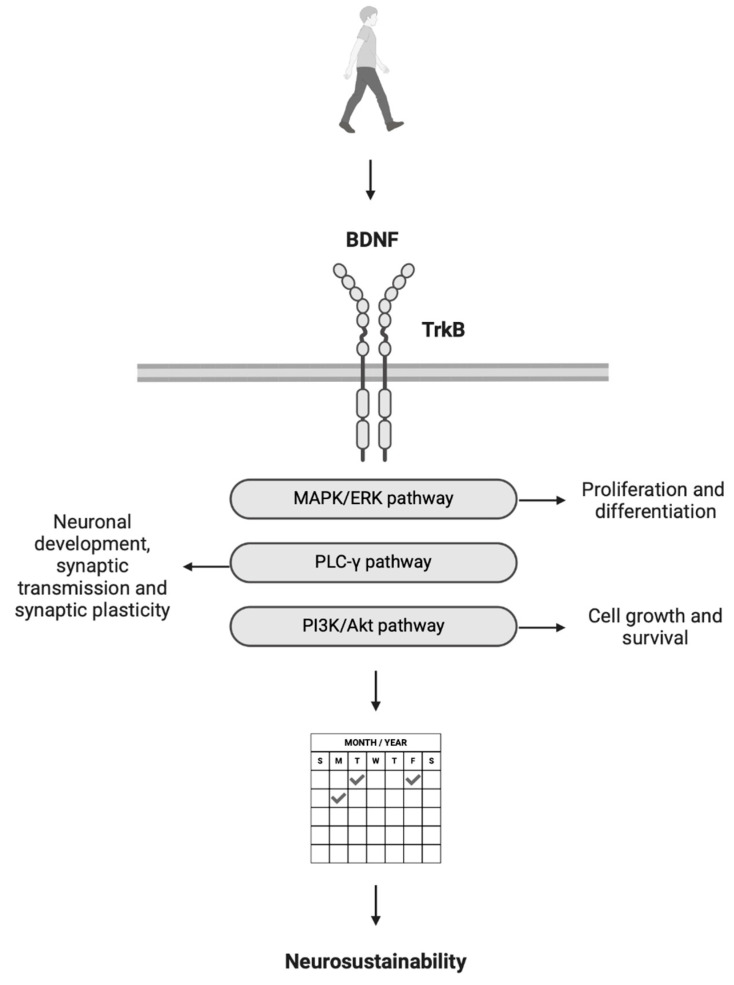
BACKGROUND/OBJECTIVES: The brain-derived neurotrophic factor (BDNF) is a critical exercise-induced modulator of various neuroplasticity processes, including adult hippocampal neurogenesis. Environmental affordance for physical activity is a novel theory that aims to increase the BDNF through walking or climbing stairs, stimulated by the urban and interior environment. In a systematic review, this paper explores the association between walking, as a structured or free-living form of physical activity, and changes in the BDNF in humans with healthy locomotion.
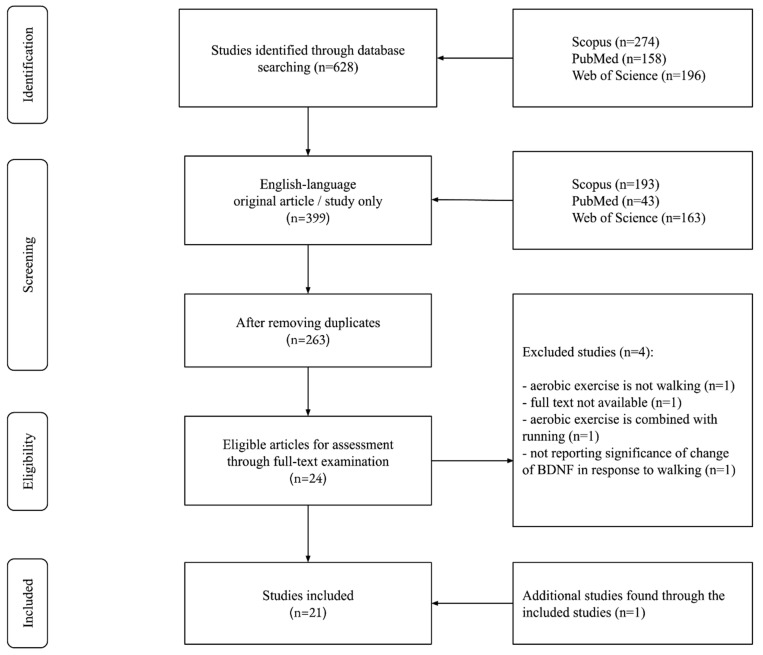
A systematic review with a registered protocol, INPLASY2024110093, and following the PRISMA guidelines, includes English-language original research articles on adult and older adult human subjects who are locomotor-healthy, studies on walking as a structured exercise or free-living physical activity that is presented in a non-combined intervention, and must report changes in the BDNF as a dependent variable. The search was conducted using three databases: PubMed, Web of Science, and Scopus, resulting in 21 eligible studies.
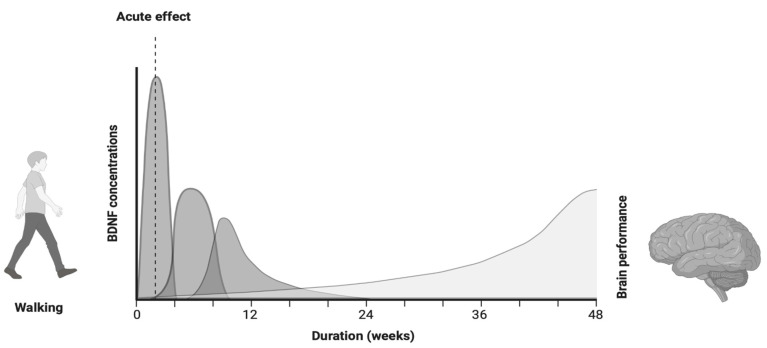
This systematic review finds that the impact of walking on the BDNF is evidenced, but subject to moderate to high intensities in single bouts. At the same time, the long-term effects are yet to be fully understood, potentially due to the uptake of the BDNF for functional brain improvements, neuroplasticity processes, or muscle repair, instead of an accumulation of the BDNF itself, yet still confirm the important role of the BDNF for neurosustainability. Age and environmental factors such as heat are also found to affect the increase in the BDNF. The narrative synthesis provides elaborate explanations for understanding those complex dynamics before reaching future conclusions on the impact of walking or environmental affordance for physical activity on the changes in the BDNF concentrations.
This systematic review highlights the potential role played by moderate- and high-intensity walking as a lifestyle intervention that can be utilised through the built environment to promote adaptive brain changes, through the sustainable regulation of the BDNF.
背景/目的:脑源性神经营养因子(BDNF)是运动诱导的多种神经可塑性过程的关键调节因子,包括成体海马神经发生。身体活动的环境可供性是一种新理论,旨在通过城市和室内环境刺激的步行或爬楼梯来增加BDNF。在一项系统评价中,本文探讨了作为结构化或自由生活形式的身体活动的步行与健康运动的人类BDNF变化之间的关联。
一项遵循注册方案INPLASY2024110093并遵循PRISMA指南的系统评价,纳入关于运动健康的成年和老年人类受试者的英文原创研究文章,关于作为结构化运动或自由生活身体活动的步行的研究,该研究以非联合干预形式呈现,并且必须报告作为因变量的BDNF变化。使用三个数据库进行检索:PubMed、科学网和Scopus,共获得21项符合条件的研究。
该系统评价发现,步行对BDNF的影响是有证据的,但单次发作需达到中等到高强度。同时,长期影响尚未完全了解,这可能是由于BDNF被用于功能性脑改善、神经可塑性过程或肌肉修复,而不是BDNF本身的积累,但仍证实了BDNF对神经可持续性的重要作用。还发现年龄和热等环境因素会影响BDNF的增加。叙述性综合为理解这些复杂动态提供了详细解释,然后才能就步行或身体活动的环境可供性对BDNF浓度变化的影响得出未来结论。
该系统评价强调了中高强度步行作为一种生活方式干预的潜在作用,可通过建筑环境利用这种干预来促进适应性脑变化,通过BDNF的可持续调节来实现。