Sakamoto Kana, Takeuchi Kengo
Pathology Project for Molecular Targets, Cancer Institute, Japanese Foundation for Cancer Research, Tokyo, Japan.
Division of Pathology, Cancer Institute, Japanese Foundation for Cancer Research, Tokyo, Japan.
J Clin Exp Hematop. 2025;65(1):1-16. doi: 10.3960/jslrt.24069.
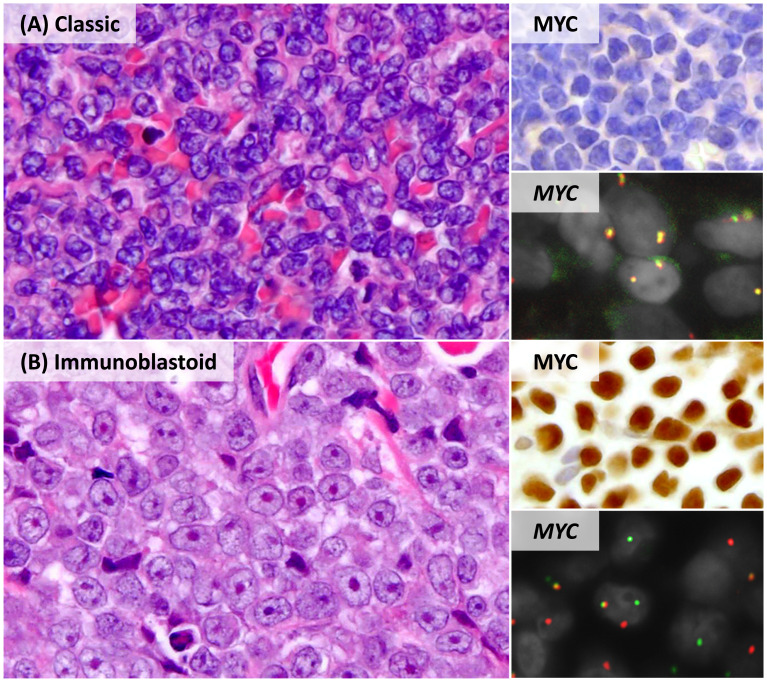
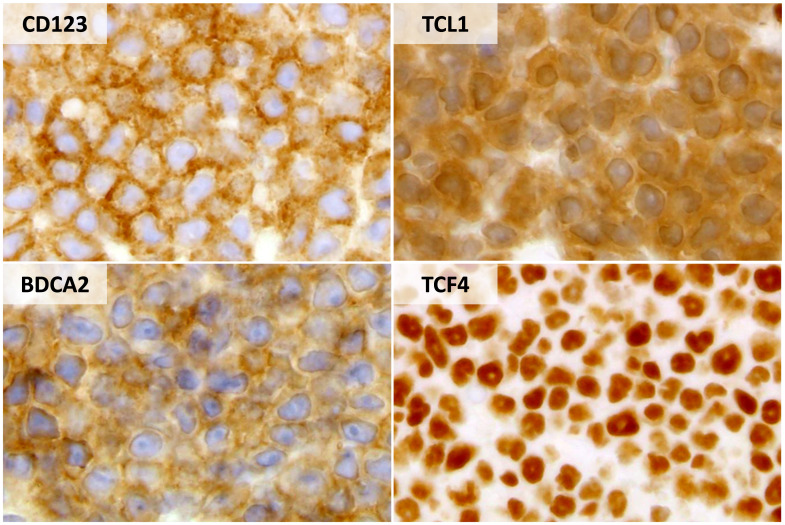
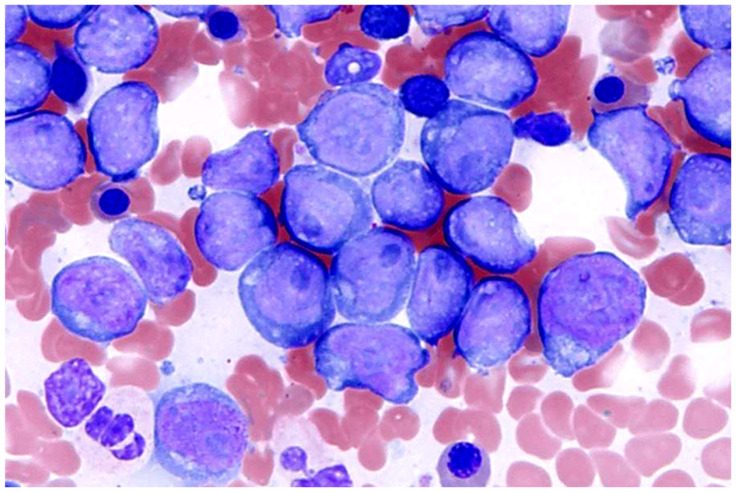
Blastic plasmacytoid dendritic cell neoplasm (BPDCN) is a rare hematologic malignancy composed of immature cells that exhibit plasmacytoid dendritic cell (pDC) differentiation. The diagnosis of BPDCN is often challenging due to its rarity and morphologic and phenotypic overlap with other hematologic malignancies, such as acute myeloid leukemia (AML). The emergence of tagraxofusp, a CD123-directed cytotoxin, and other novel therapies has underscored the importance of accurately diagnosing BPDCN. This review initially outlined the clinical and histopathological features of BPDCN, including patients with immunoblastoid morphology. Various proposed diagnostic criteria based on flow cytometry and immunohistochemistry findings were presented, highlighting critical points of caution in the diagnostic process. Strategies for detecting minimal residual disease or microinvasion in BPDCN, a significant clinical issue, were also discussed. Additionally, we reviewed the recurrent 8q24 (MYC) and MYB rearrangements observed in BPDCN, which can aid in diagnosis. Furthermore, we explored mature plasmacytoid dendritic cell proliferation (MPDCP) associated with myeloid neoplasm, which is characterized by a clonal proliferation of pDCs in cases with a defined myeloid neoplasm and may also serve as a potential differential diagnosis for BPDCN. Lastly, we discussed pDC-AML, characterized by pDC proliferation in AML cases, which can also be part of MPDCP and is often associated with frequent RUNX1 mutations. Overall, this review provides insights into BPDCN diagnosis and highlights the current challenges in its detection and differential diagnosis.
母细胞样浆细胞样树突状细胞肿瘤(BPDCN)是一种罕见的血液系统恶性肿瘤,由表现出浆细胞样树突状细胞(pDC)分化的未成熟细胞组成。由于其罕见性以及与其他血液系统恶性肿瘤(如急性髓系白血病(AML))在形态学和表型上的重叠,BPDCN的诊断往往具有挑战性。靶向CD123的细胞毒素tagraxofusp及其他新型疗法的出现凸显了准确诊断BPDCN的重要性。本综述首先概述了BPDCN的临床和组织病理学特征,包括具有免疫母细胞样形态的患者。介绍了基于流式细胞术和免疫组化结果提出的各种诊断标准,强调了诊断过程中的关键注意事项。还讨论了检测BPDCN微小残留病或微侵袭的策略,这是一个重要的临床问题。此外,我们回顾了在BPDCN中观察到的复发性8q24(MYC)和MYB重排,这有助于诊断。此外,我们探讨了与髓系肿瘤相关的成熟浆细胞样树突状细胞增殖(MPDCP),其特征是在明确的髓系肿瘤病例中pDC的克隆性增殖,也可能作为BPDCN的潜在鉴别诊断。最后,我们讨论了pDC-AML,其特征是AML病例中pDC增殖,这也可能是MPDCP的一部分,且常与频繁的RUNX1突变相关。总体而言,本综述为BPDCN的诊断提供了见解,并突出了其检测和鉴别诊断中的当前挑战。