Dalin Dagmar Abelone, Holst Sara Sommer, Dalin Lucif Søemosegaard, Vermehren Charlotte
Department of Clinical Pharmacology, Copenhagen University Hospital Bispebjerg, 2400 Copenhagen, Denmark.
Capital Region Pharmacy, Copenhagen University Hospital Bispebjerg, 2400 Copenhagen, Denmark.
Explor Res Clin Soc Pharm. 2025 Mar 2;18:100584. doi: 10.1016/j.rcsop.2025.100584. eCollection 2025 Jun.
Patients at psychiatric homes are a vulnerable group with several factors complicating their pharmacological treatment. Psychiatric patients in stable treatment are transferred from specialist care to primary care, which presents new challenges as general practitioners (GPs) may feel that they are not sufficiently trained in prescribing and tapering psychiatric drugs. Medication reviews (MRs) have been seen to improve the appropriateness of pharmacological treatment - especially when performed in interdisciplinary teams.
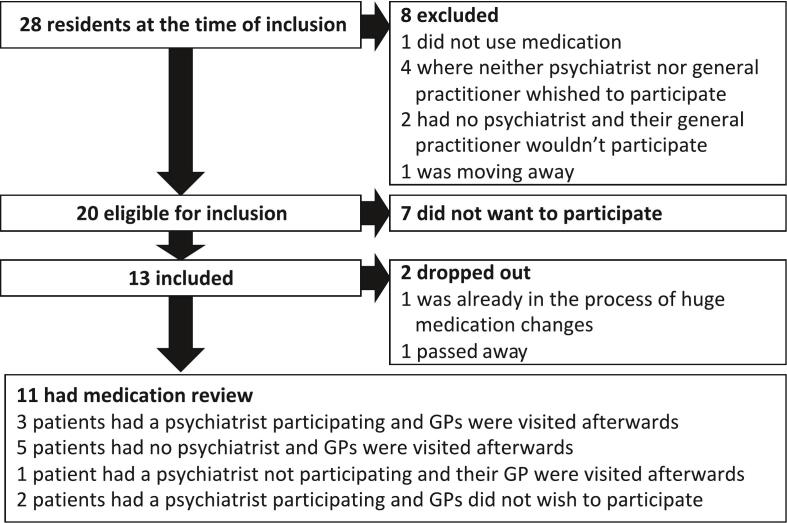
Thus, the aim of this study was to examine to which extent it was possible to conduct interdisciplinary MRs at a psychiatric home and with patient involvement. The study was a mixed-method evaluation study that included 11 quantitative MRs analyzed by descriptive analysis and 5 qualitative semi-structured interviews analyzed by thematic coding analysis.
The MR performance formed the basis of an interview study. The patients' GPs and psychiatrist accepted 32 of the 37 (86 %) recommended changes to the current medication. At six months follow-up, 75 % of changes had been implemented. Three main interview themes and seven sub-themes were identified, covering collaboration between healthcare professionals, patient involvement, and the MR method. Conduction of interdisciplinary MRs was affected by e.g. challenges in the collaboration between GP and psychiatrists and patient involvement.
Interdisciplinary MRs for psychiatric patients were seen as beneficial by healthcare professionals and had a high implementation rate of medication changes. In future use of the MR model, the involvement of patients and GPs should be ensured and include a psychiatrist in the MR team.
精神病院的患者是弱势群体,其药物治疗存在多种复杂因素。处于稳定治疗阶段的精神科患者从专科护理转至初级护理,这带来了新的挑战,因为全科医生(GP)可能觉得自己在开具和逐渐减少精神科药物方面未得到充分培训。药物评估(MR)已被证明可提高药物治疗的合理性,尤其是在跨学科团队中进行时。
因此,本研究的目的是考察在多大程度上能够在精神病院开展跨学科的、有患者参与的药物评估。该研究是一项混合方法评估研究,包括11次通过描述性分析进行分析的定量药物评估以及5次通过主题编码分析进行分析的定性半结构化访谈。
药物评估表现构成了一项访谈研究的基础。患者的全科医生和精神科医生接受了37项针对当前用药建议更改中的32项(86%)。在六个月的随访中,75%的更改已得到实施。确定了三个主要访谈主题和七个子主题,涵盖医疗保健专业人员之间的协作、患者参与以及药物评估方法。跨学科药物评估的开展受到例如全科医生与精神科医生之间协作的挑战以及患者参与等因素的影响。
医疗保健专业人员认为针对精神科患者的跨学科药物评估是有益的,并且药物更改的实施率很高。在未来使用药物评估模型时,应确保患者和全科医生的参与,并在药物评估团队中纳入一名精神科医生。