
通过在阿尔茨海默病、糖尿病和精神分裂症中估计脑龄差距来揭示病理性衰老
Unravelling pathological ageing with brain age gap estimation in Alzheimer's disease, diabetes and schizophrenia.
作者信息
Dias Maria Fátima, Duarte João Valente, de Carvalho Paulo, Castelo-Branco Miguel
机构信息
CIBIT (Coimbra Institute for Biomedical Imaging and Translational Research), ICNAS, University of Coimbra, 3000-548 Coimbra, Portugal.
Institute of Physiology, Faculty of Medicine, University of Coimbra, 3000-548 Coimbra, Portugal.
出版信息
Brain Commun. 2025 Mar 11;7(2):fcaf109. doi: 10.1093/braincomms/fcaf109. eCollection 2025.
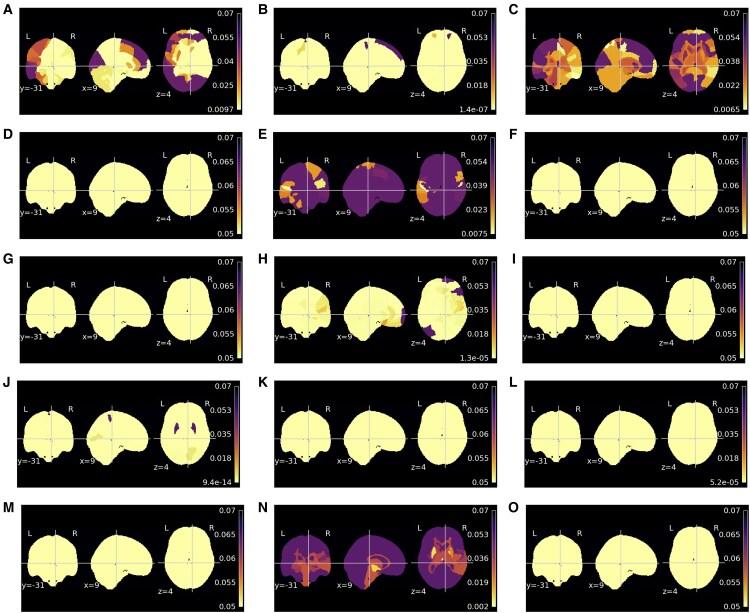
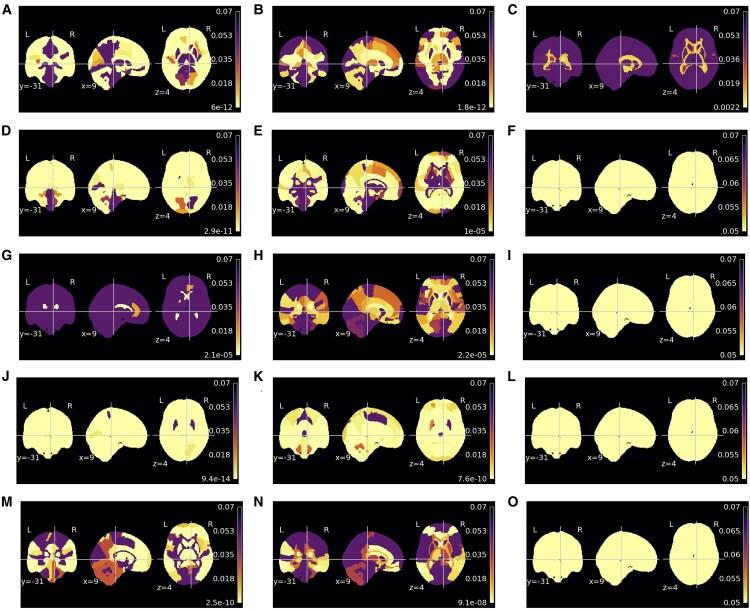
Brain age gap estimation (BrainAGE), the difference between predicted brain age and chronological age, might be a putative biomarker aiming to detect the transition from healthy to pathological brain ageing. The biomarker primarily models healthy ageing with machine learning models trained with structural magnetic resonance imaging (MRI) data. BrainAGE is expected to translate the deviations in neural ageing trajectory and has been shown to be increased in multiple pathologies, such as Alzheimer's disease (AD), schizophrenia and Type 2 diabetes (T2D). Thus, accelerated ageing seems to be a general feature of neuropathological processes. However, neurobiological constraints remain to be identified to provide specificity to this biomarker. Explainability might be the key to uncovering age predictions and understanding which brain regions lead to an elevated predicted age on a given pathology compared to healthy controls. This is highly relevant to understanding the similarities and differences in neurodegeneration in AD and T2D, which remains an outstanding biological question. Sensitivity maps explain models by computing the importance of each voxel on the final prediction, thereby contributing to the interpretability of deep learning approaches. This paper assesses whether sensitivity maps yield different results across three conditions related to pathological neural ageing: AD, schizophrenia and T2D. Five deep learning models were considered, each model trained with different MRI data types: minimally processed T-weighted brain scans, and corresponding grey matter, white matter, cerebrospinal fluid tissue segmentation and deformation fields (after spatial normalization). Our results revealed an increased BrainAGE in all pathologies, with a different mean, which is the smallest in schizophrenia; this is in line with the observation that neural loss is secondary in this early-onset condition. Importantly, our findings suggest that the sensitivity, indexing regional weights, for all models varies with age. A set of regions were shown to yield statistical differences across conditions. These sensitivity results suggest that mechanisms of neurodegeneration are quite distinct in AD and T2D. For further validation, the sensitivity and the morphometric maps were compared. The findings outlined a high congruence between the sensitivity and morphometry maps for age and clinical group conditions. Our evidence outlines that the biological explanation of model predictions is vital in adding specificity to the BrainAGE and understanding the pathophysiology of chronic conditions affecting the brain.
脑龄差距估计(BrainAGE),即预测脑龄与实际年龄之间的差异,可能是一种旨在检测从健康脑老化向病理性脑老化转变的潜在生物标志物。该生物标志物主要通过使用结构磁共振成像(MRI)数据训练的机器学习模型来模拟健康老化。BrainAGE有望转化神经老化轨迹中的偏差,并且已被证明在多种疾病中会增加,如阿尔茨海默病(AD)、精神分裂症和2型糖尿病(T2D)。因此,加速老化似乎是神经病理过程的一个普遍特征。然而,仍有待确定神经生物学限制因素,以便为该生物标志物提供特异性。可解释性可能是揭示年龄预测以及理解与健康对照相比,在特定病理情况下哪些脑区导致预测年龄升高的关键。这对于理解AD和T2D中神经退行性变的异同至关重要,这仍然是一个悬而未决的生物学问题。敏感性图通过计算每个体素对最终预测的重要性来解释模型,从而有助于深度学习方法的可解释性。本文评估了敏感性图在与病理性神经老化相关的三种情况下(AD、精神分裂症和T2D)是否会产生不同的结果。考虑了五个深度学习模型,每个模型使用不同的MRI数据类型进行训练:最少处理的T加权脑扫描,以及相应的灰质、白质、脑脊液组织分割和变形场(空间归一化后)。我们的结果显示,在所有疾病中BrainAGE均增加,但其平均值不同,在精神分裂症中最小;这与在这种早发性疾病中神经损失是次要的这一观察结果一致。重要的是,我们的研究结果表明,所有模型的敏感性(即区域权重指标)随年龄而变化。一组区域在不同情况下显示出统计学差异。这些敏感性结果表明,AD和T2D中的神经退行性变机制截然不同。为了进一步验证,比较了敏感性图和形态测量图。研究结果表明,年龄和临床组条件下的敏感性图与形态测量图高度一致。我们的证据表明,模型预测的生物学解释对于增强BrainAGE的特异性以及理解影响大脑的慢性疾病的病理生理学至关重要。




 Zotero 插件