Band Victor I, Gribonika Inta, Stacy Apollo, Bouladoux Nicolas, Mistry Shreni, Burns Andrew, Perez-Chaparro P Juliana, Chau Joanna, Enamorado Michel, Nagai Motoyoshi, Bhushan Vanya, Golec Dominic P, Schwartzberg Pamela L, Hourigan Suchitra K, Nita-Lazar Aleksandra, Belkaid Yasmine
Metaorganism Immunity Section, Laboratory of Host Immunity and Microbiome, National Institute of Allergy and Infectious Diseases, National Institutes of Health; Bethesda, MD 20892, USA.
NIAID Microbiome Program, National Institute of Allergy and Infectious Diseases, National Institutes of Health; Bethesda, MD 20892, USA.
bioRxiv. 2025 Mar 10:2025.03.06.641928. doi: 10.1101/2025.03.06.641928.
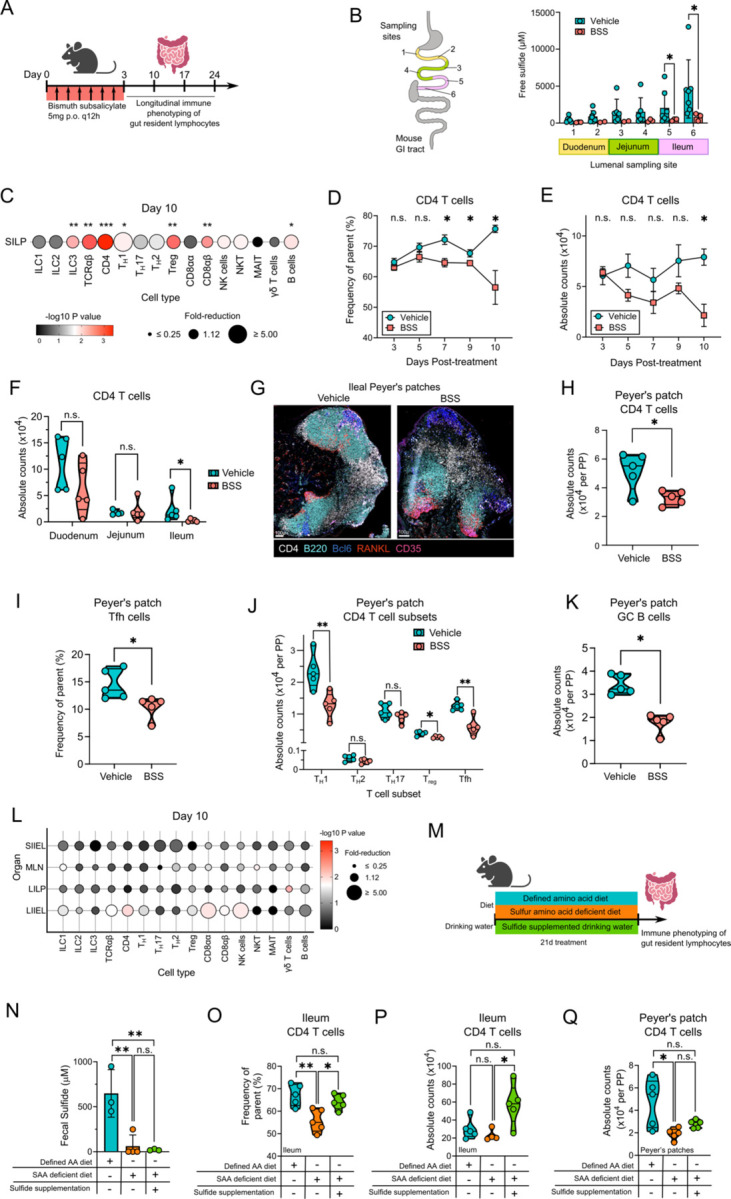
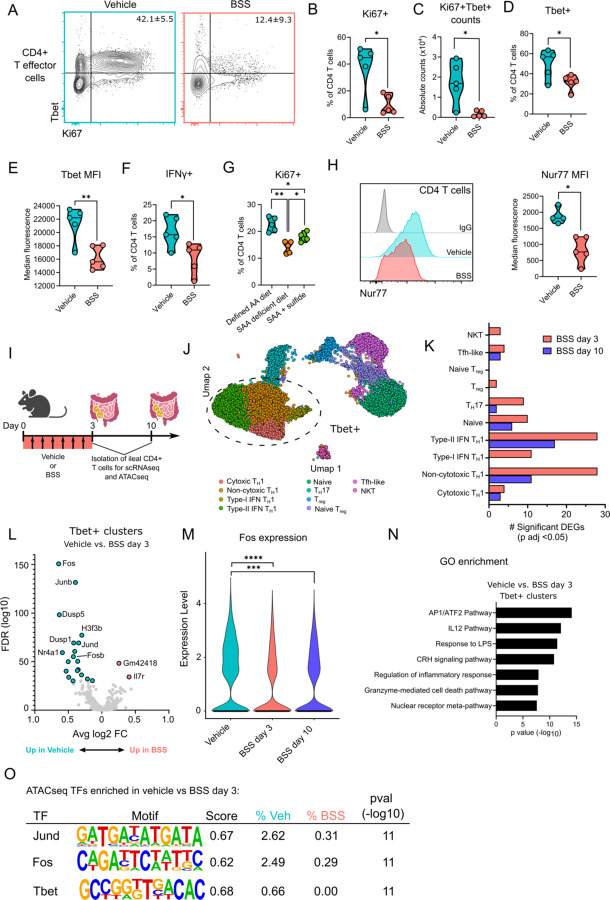
Hydrogen sulfide is a gaseous, reactive molecule specifically enriched in the gastrointestinal tract. Here, we uncover a non-redundant role for sulfide in the control of both microbial and immune homeostasis of the gut. Notably, depletion of sulfide via both pharmaceutical and dietary interventions led to a profound collapse of CD4 T cells in the ileum of the small intestine lamina propria and significant impact on microbial ecology. As a result, mice with reduced sulfide within the gut were deficient in their ability to mount T cell dependent antibody responses to oral vaccine. Mechanistically, our results support the idea that sulfide could act directly on CD4 T cells via enhanced AP-1 activation, leading to heightened proliferation and cytokine production. This study uncovers sulfides as keystone components in gut ecology and provides mechanistic insight between diet, gut sulfide production and mucosal immunity.
硫化氢是一种气态的、具有反应活性的分子,在胃肠道中特异性富集。在此,我们揭示了硫化物在控制肠道微生物和免疫稳态方面的非冗余作用。值得注意的是,通过药物和饮食干预耗尽硫化物会导致小肠固有层回肠中CD4 T细胞严重减少,并对微生物生态产生重大影响。因此,肠道内硫化物减少的小鼠对口服疫苗产生T细胞依赖性抗体反应的能力不足。从机制上讲,我们的结果支持这样一种观点,即硫化物可通过增强AP-1激活直接作用于CD4 T细胞,从而导致增殖和细胞因子产生增加。这项研究揭示了硫化物是肠道生态中的关键成分,并提供了饮食、肠道硫化物产生和黏膜免疫之间的机制性见解。