Kumar Arun, Agarwal Radhika, Kumar Kanhaiya, Chayal Nirmal Kumar, Kumar Govind, Kumar Rajiv, Ali Mohammad, Srivastava Abhinav, Aryal Siddhant, Pandey Tejasvi, Verma Kumar Sambhav, Kumar Dhruv, Gajbhiye Rahul Laxman, Dhingra Sameer, Pothuraju Naresh, Peraman Ramalingam, Bishwapriya Akhouri, Nandan Ranbir, Sharma Ashok, Singh Manisha, Ghosh Ashok Kumar
Mahavir Cancer Sansthan and Research Centre, Patna, Bihar, 801505, India.
Lovely Professional University, Phagwara, Punjab, India.
BMC Public Health. 2025 Apr 4;25(1):1275. doi: 10.1186/s12889-025-22336-9.
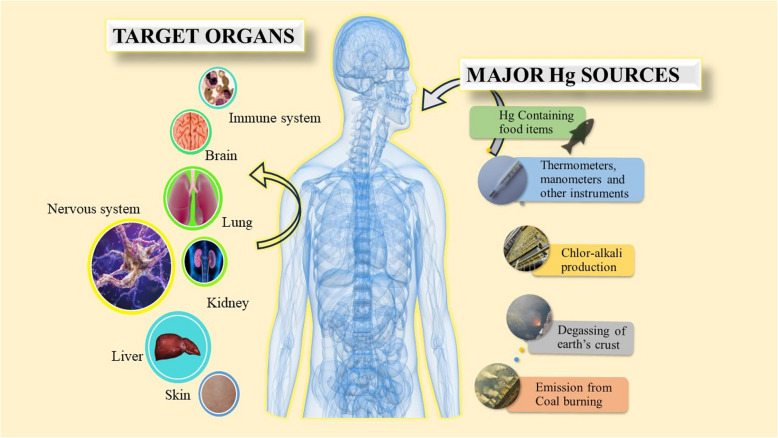
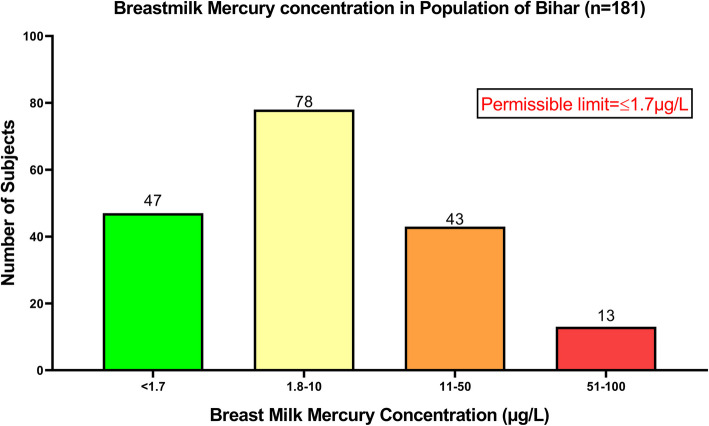
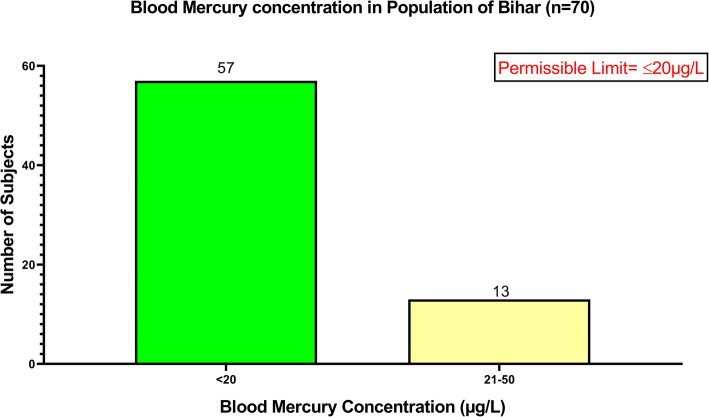
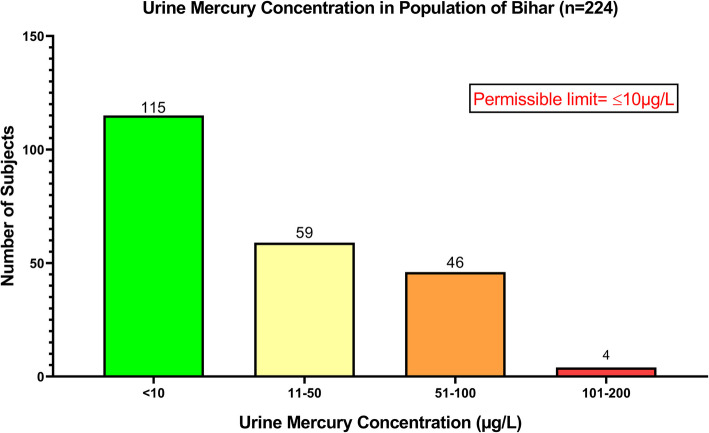
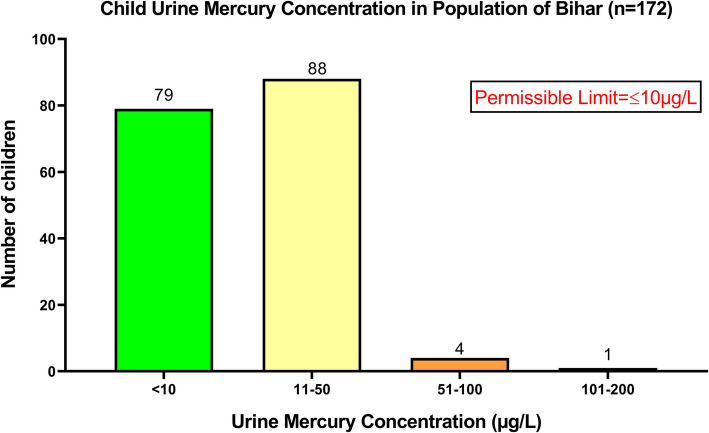
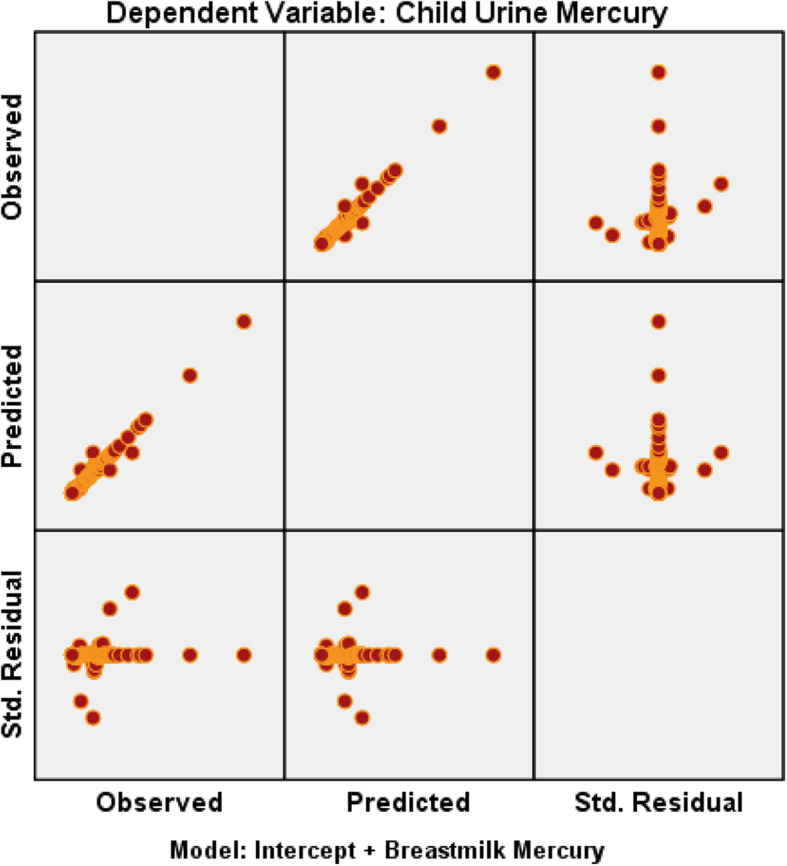
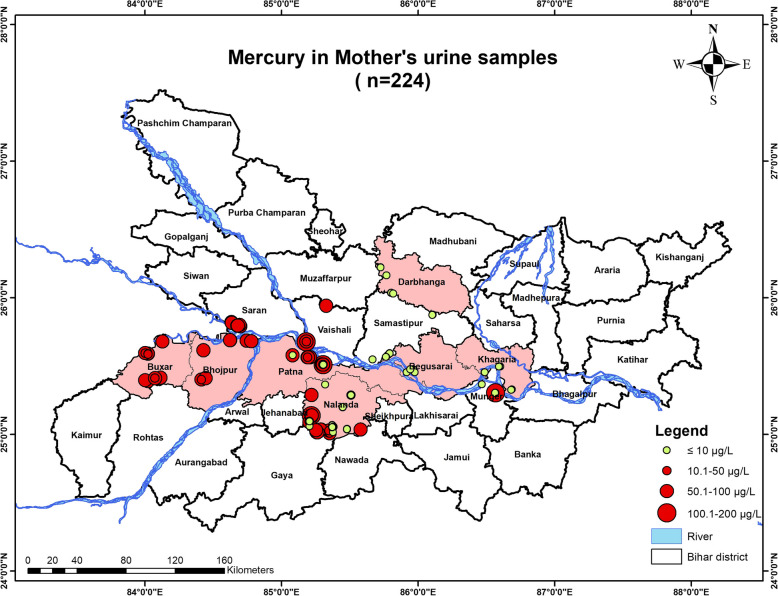
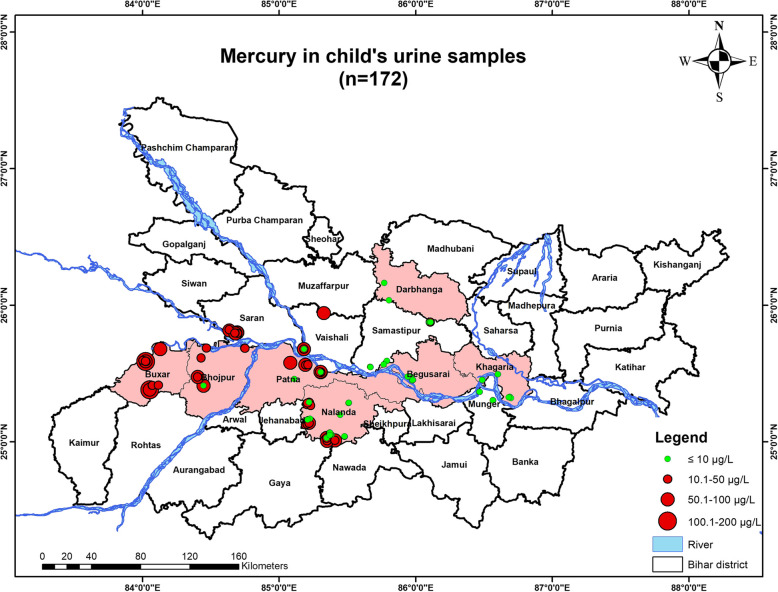
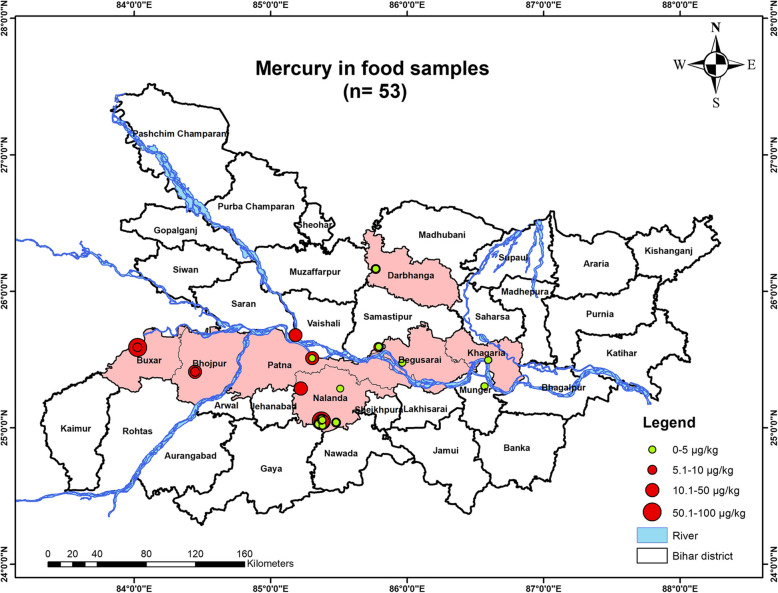
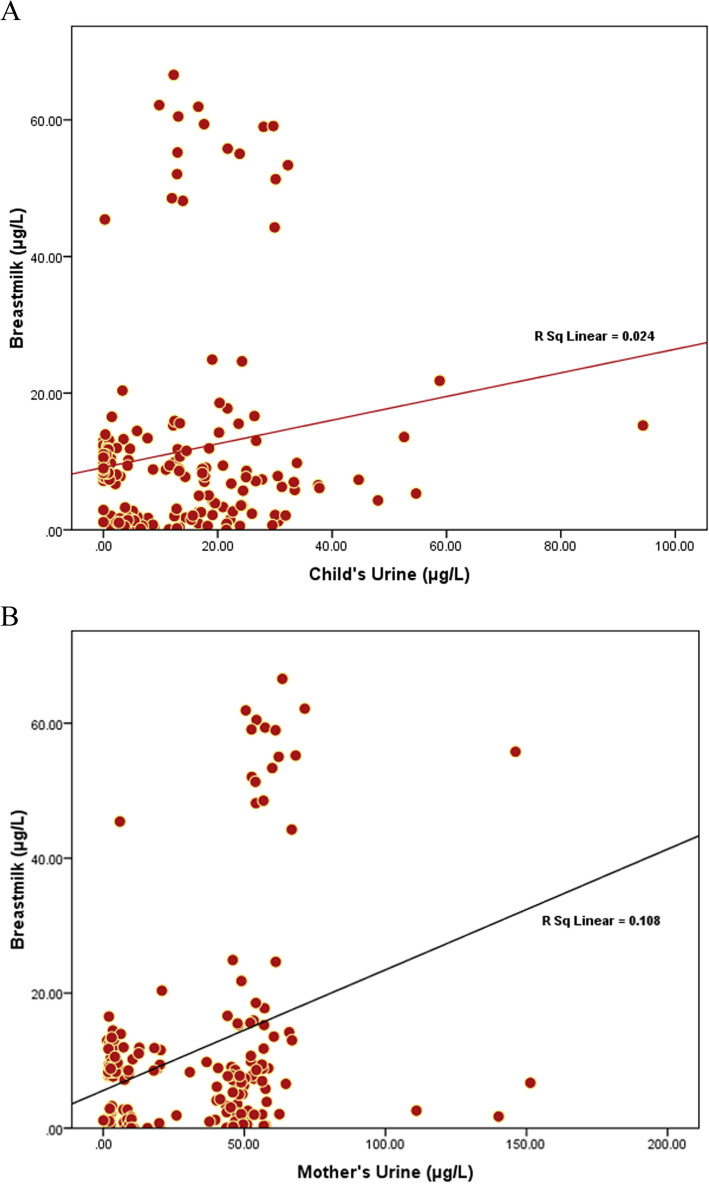
Mercury is a persistent, bio-accumulative, and hazardous contaminant. When released into the environment, it accumulates in water sediments, converting it to poisonous methylmercury that enters the food chain. The present study was carried out in habitations from the 11 districts of Bihar (India). In the study, n = 224 lactating women and their infants n = 172 infants participated. After obtaining the written informed consent, their breast milk, urine, and blood were collected for mercury estimation. The breastmilk content was measured in n = 181 subjects, in which 74% women had their breastmilk higher than the WHO permissible limit (< 1.7 μg/L), while 26% of the women had their breast milk below the permissible limit. The blood mercury content showed that 19% subjects had mercury content above the permissible limit [20 μg/L]. In urine mercury estimation, 49% women had mercury content above the permissible limit [10 μg/L], while, 51% women had the mercury content below the permissible limit. In the child's urine, 54% infants had their mercury content in urine above the permissible limit [10 μg/L] while 46% infants had content below the permissible limit. The study indicates that 20% of infants had the complete accumulation of mercury in their body which is highly toxic for them. However, the mercury content in the food (wheat) had the contamination with in the permissible limit [100 μg/kg]. There was a significant correlation found between the breastmilk and child's urine and mother's urine. The HQ study also correlates the mercury poisoning effect with 100% of the mother's and 66% of the infants exceeding the limit of non-carcinogenic risk. The Monte Carlo and multivariate study correlates the high health risk in the studied population due to mercury poisoning. The entire study concludes that population inhabitation in the Gangetic plains of Bihar are exposed to mercury poisoning which may be due to geogenic or anthropogenic sources. But, the levels of mercury contamination above the permissible limit could lead to neurogenerative changes in the lactating mothers and their infants. To control the present problem medical intervention is immediately required.
汞是一种持久性、生物累积性且有害的污染物。当释放到环境中时,它会在水沉积物中积累,转化为有毒的甲基汞,进而进入食物链。本研究在印度比哈尔邦11个地区的居民区开展。研究中,224名哺乳期妇女及其172名婴儿参与其中。在获得书面知情同意后,采集她们的母乳、尿液和血液用于汞含量测定。对181名受试者的母乳含量进行了测量,其中74%的女性母乳中汞含量高于世界卫生组织的允许限值(<1.7μg/L),而26%的女性母乳中汞含量低于允许限值。血液汞含量显示,19%的受试者汞含量高于允许限值[20μg/L]。在尿液汞含量测定中,49%的女性汞含量高于允许限值[10μg/L],而51%的女性汞含量低于允许限值。在儿童尿液中,54%的婴儿尿液汞含量高于允许限值[10μg/L],46%的婴儿汞含量低于允许限值。研究表明,20%的婴儿体内汞完全积累,这对他们具有高毒性。然而,食物(小麦)中的汞含量在允许限值[100μg/kg]范围内受到污染。在母乳与儿童尿液以及母亲尿液之间发现了显著相关性。危害商研究还将汞中毒效应与100%的母亲和66%的婴儿超过非致癌风险限值相关联。蒙特卡洛和多变量研究将所研究人群中因汞中毒导致的高健康风险相关联。整个研究得出结论,比哈尔邦恒河平原的居民面临汞中毒风险,这可能源于地质或人为来源。但是,汞污染水平高于允许限值可能会导致哺乳期母亲及其婴儿出现神经退行性变化。为控制当前问题,立即需要进行医学干预。