Deng Qian, Li Shan, Zhang Yuxiang, Jia Yuanyuan, Yang Yanhui
Luoyang Central Hospital Affiliated of Zhengzhou University, Henan, China.
Department of Urology, Children's Hospital of Chongqing Medical University, Chongqing, China.
Sci Rep. 2025 Apr 6;15(1):11795. doi: 10.1038/s41598-025-96089-1.
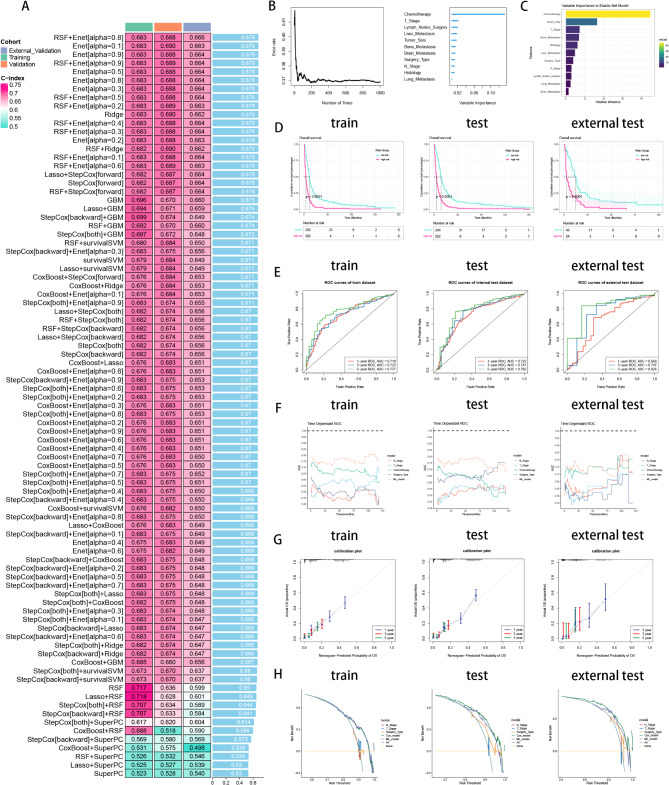
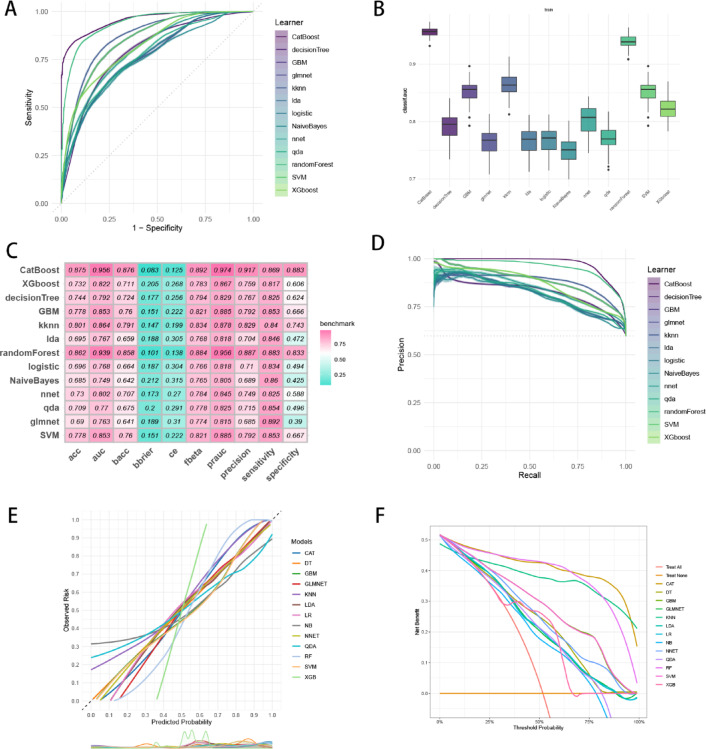
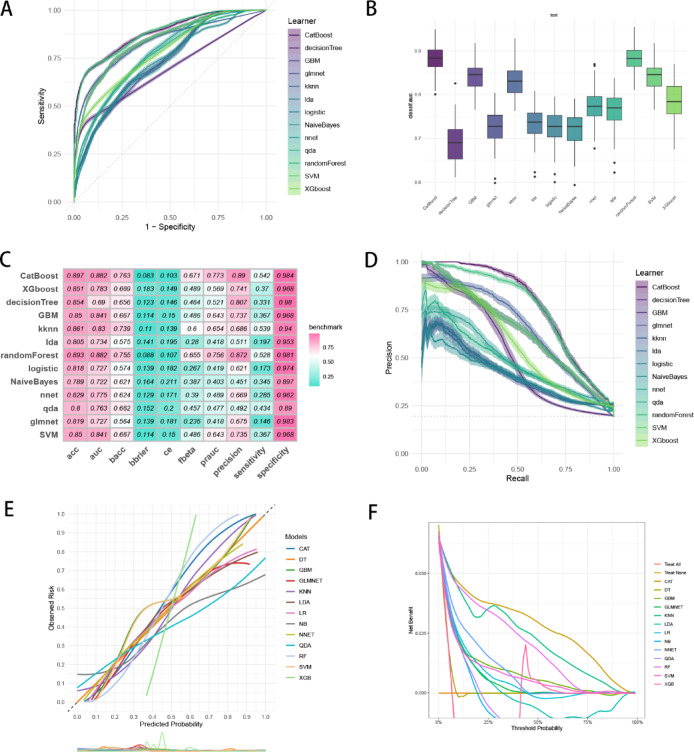
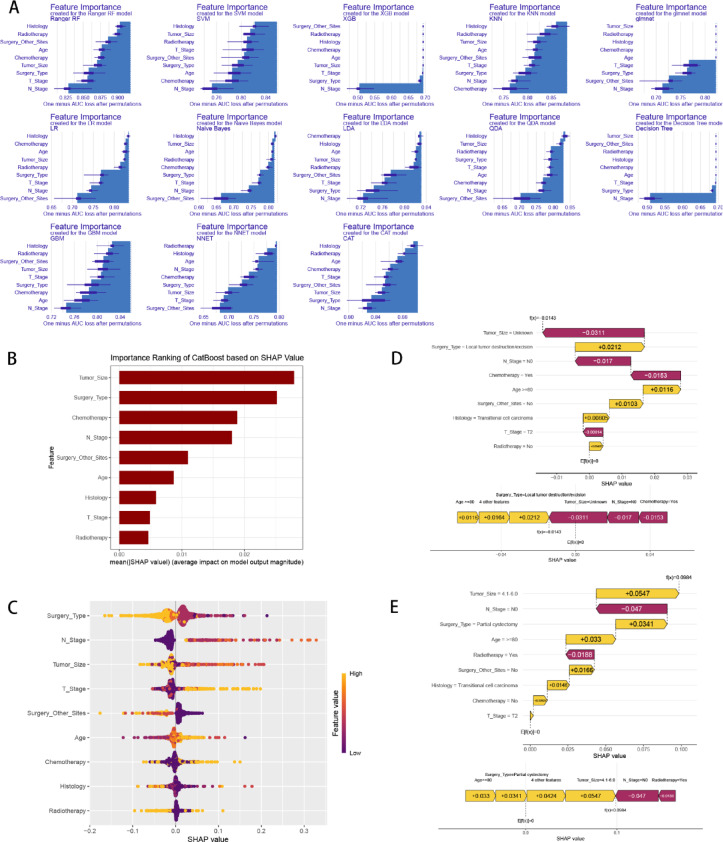
Muscle-Invasive Bladder Cancer (MIBC) is a more aggressive disease than non-muscle-invasive bladder cancer (NMIBC), with greater chances of metastasis. We sought to develop machine learning (ML) models to predict metastasis and prognosis in MIBC patients. Clinical data of MIBC cases from 2000 to 2020 were sourced from the Surveillance, Epidemiology, and End Results (SEER) database. Clinical variables used to predict DM were identified through univariate and multivariate logistic regression, and Recursive Feature Elimination (RFE). Thirteen ML models predicting DM were evaluated based on AUC, PRAUC, accuracy, sensitivity, specificity, precision, cross-entropy, Brier score, balanced accuracy, and F-beta score. SHapley Additive exPlanations (SHAP) framework helped interpret the best model. Additionally, we utilized ML algorithm combinations to predict prognosis in MIBC patients with metastasis. A total of 43,951 T2-T4 MIBC patients aged over 18 years old from the SEER database were enrolled consecutively. Nine clinical variables were selected to predict DM. The CatBoost model was identified as the optimal predictor, with AUC values of 0.956 [0.933, 0.969] for the training set, 0.882 [0.857, 0.919] for the internal test set, and 0.839 [0.723, 0.936] for the external test set. The model achieved an accuracy of 0.875 [0.854, 0.896], sensitivity of 0.869 [0.851, 0.889], specificity of 0.883 [0.823, 0.912], and precision of 0.917 [0.885, 0.944]. SHAP analysis revealed that tumor size was the most influential factor in predicting distant metastasis. For prognosis, the "RSF + Enet[alpha = 0.8]" model emerged as the top performer, with C-index values of 0.683 in training, 0.688 in the internal test, and 0.666 in the external test sets. Our ML models provide high accuracy and dependability, delivering refined, individualized predictions for metastasis risk and prognosis in MIBC patients.
肌肉浸润性膀胱癌(MIBC)是一种比非肌肉浸润性膀胱癌(NMIBC)更具侵袭性的疾病,转移几率更高。我们试图开发机器学习(ML)模型来预测MIBC患者的转移和预后。2000年至2020年MIBC病例的临床数据来自监测、流行病学和最终结果(SEER)数据库。通过单变量和多变量逻辑回归以及递归特征消除(RFE)确定用于预测远处转移(DM)的临床变量。基于曲线下面积(AUC)、阳性预测值曲线下面积(PRAUC)、准确率、敏感性、特异性、精确度、交叉熵、布里尔评分、平衡准确率和F-β评分对13个预测DM的ML模型进行评估。夏普利加性解释(SHAP)框架有助于解释最佳模型。此外,我们利用ML算法组合来预测有转移的MIBC患者的预后。连续纳入了SEER数据库中43951名年龄超过18岁的T2 - T4期MIBC患者。选择了9个临床变量来预测DM。CatBoost模型被确定为最佳预测模型,训练集的AUC值为0.956[0.933, 0.969],内部测试集为0.882[0.857, 0.919],外部测试集为0.839[0.723, 0.936]。该模型的准确率为0.875[0.854, 0.896],敏感性为0.869[0.851, 0.889],特异性为0.883[0.823, 0.912],精确度为0.917[0.885, 0.944]。SHAP分析显示肿瘤大小是预测远处转移最有影响的因素。对于预后,“RSF + Enet[α = 0.8]”模型表现最佳,训练集的C指数值为0.683,内部测试为0.688,外部测试集为0.666。我们的ML模型提供了高精度和可靠性,为MIBC患者的转移风险和预后提供了精确的个性化预测。