Choo Silvana X, Yong Joshua, Bin Mohamed Rafi Shaikh Abdullah, Lo Chen Ju, Tong Jun Bin, Lum Elaine, Thumboo Julian
Department of Occupational Therapy, Singapore General Hospital, Singapore, Singapore.
Department of Occupational Therapy, Sengkang General Hospital, Singapore, Singapore.
BMC Health Serv Res. 2025 Apr 9;25(1):515. doi: 10.1186/s12913-025-12593-0.
Stroke rehabilitation guidelines recommend using outcome measures like the Fugl-Meyer Assessment for Upper Extremity (FMA-UE) to assess post-stroke upper extremity function. However, integrating such outcome measures into routine clinical practice remains challenging, highlighting the need to understand factors affecting their implementation in evolving healthcare models.
Our study aimed to identify the barriers and facilitators to sustain the routine use of the FMA-UE among hospital-based occupational therapists (OTs) using a theory-driven approach.
Employing a mixed-method sequential exploratory study design rooted in Normalisation Process Theory (NPT), we gathered quantitative data through a validated survey followed by qualitative insights analysed with directed content analysis from focus group discussions involving occupational therapists from four hospitals.
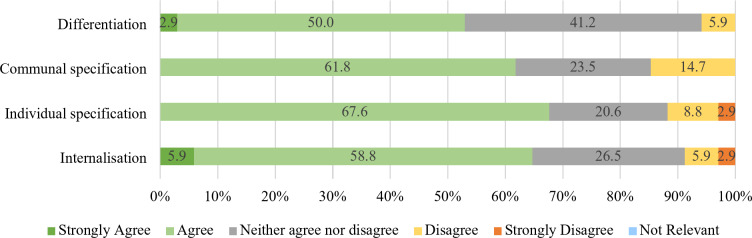
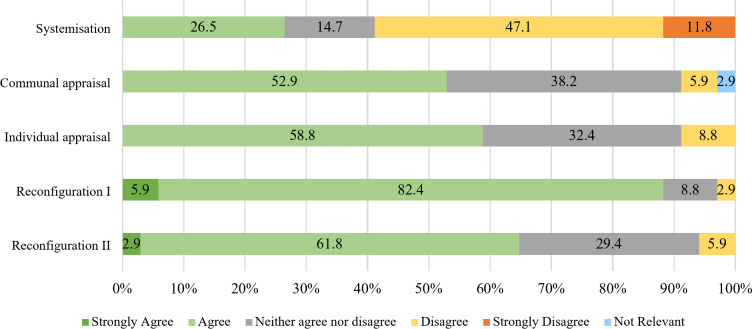
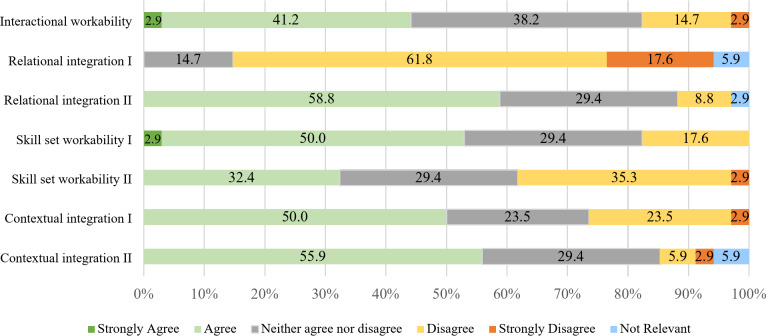
Survey findings (n = 34) revealed barriers primarily associated with NPT constructs of collective action and coherence. Facilitators were linked to the cognitive participation construct. Key barriers identified in focus groups included insufficient coaching, competing priorities, and perceived limited value of the FMA-UE. Facilitators included legitimation of therapists' role in outcome measurements and an open learning culture.
Through a theory-based approach, we identified barriers and facilitators to sustain the routine of the FMA-UE. Our findings offer insights for designing implementation strategies to embed the FMA-UE into routine practice, supporting its sustained use in stroke rehabilitation.
中风康复指南建议使用诸如上肢Fugl-Meyer评估(FMA-UE)等结果测量工具来评估中风后的上肢功能。然而,将此类结果测量工具纳入常规临床实践仍具有挑战性,这凸显了了解影响其在不断发展的医疗模式中实施的因素的必要性。
我们的研究旨在采用理论驱动的方法,确定在医院工作的职业治疗师(OT)中维持FMA-UE常规使用的障碍和促进因素。
采用基于正常化过程理论(NPT)的混合方法顺序探索性研究设计,我们通过一项经过验证的调查收集定量数据,随后对来自四家医院的职业治疗师进行焦点小组讨论,并采用定向内容分析法对定性见解进行分析。
调查结果(n = 34)显示,障碍主要与NPT的集体行动和连贯性结构相关。促进因素与认知参与结构相关。焦点小组中确定的主要障碍包括指导不足、相互竞争的优先事项以及认为FMA-UE价值有限。促进因素包括认可治疗师在结果测量中的作用以及开放的学习文化。
通过基于理论的方法,我们确定了维持FMA-UE常规使用的障碍和促进因素。我们的研究结果为设计实施策略提供了见解,以便将FMA-UE纳入常规实践,支持其在中风康复中的持续使用。