Van Obberghen E K, Fabre R, Lanteri-Minet M
Pain Department and FHU InovPain, CHU Nice and Côte d'Azur University, Hôpital Cimiez, 4 rue Reine Victoria, Nice, France.
Public Health Department, CHU Nice and Côte d' Azur University, Nice, France.
J Headache Pain. 2025 Apr 9;26(1):71. doi: 10.1186/s10194-025-02001-7.
Despite its characteristic clinical expression, cluster headache (CH) often remains unrecognized in clinical practice, with patients suffering from CH having to wait a long time before receiving a correct diagnosis and benefit from appropriate treatment.
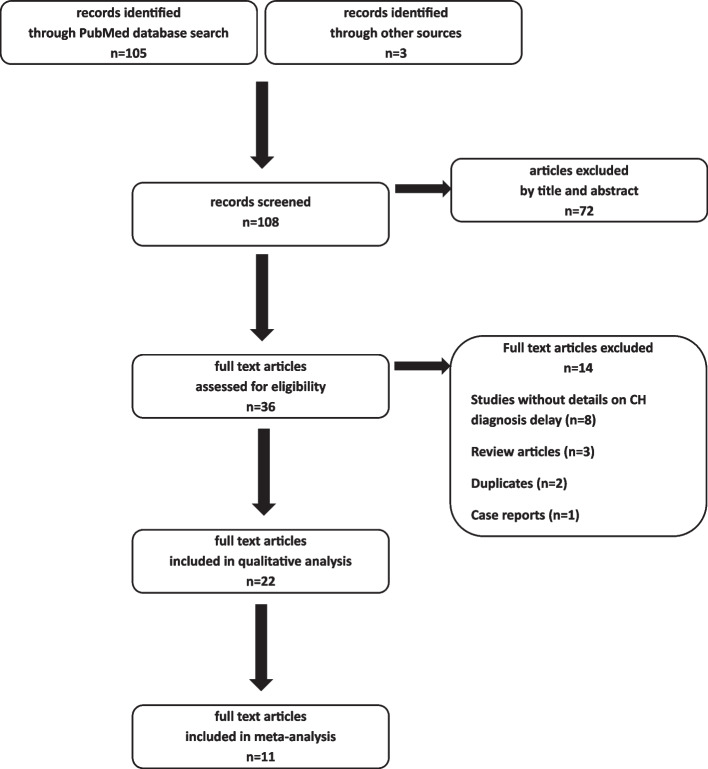
This work is a systematic review of data accessible through PubMed and published up to December 2024, focusing on the delay in CH diagnosis and its predictors. A meta-analysis was performed to estimate the mean CH diagnostic delay using the inverse of variance as the weight. A qualitative analysis was performed to identify predictors of this delay.
Among the 108 studies identified, 22 and 11 were selected for the qualitative analysis and meta-analysis respectively. These selected studies included a total of 8654 subjects (range 23-1604). This whole population was composed of 6383 men, 2180 women and 91 subjects with sex not specified. CH form was indicated for 7177 subjects with 5808, 1182 and 187 with episodic CH, chronic CH and undetermined form respectively. Meta-analysis estimated the overall CH diagnostic delay at 10,43 years (95% CI [9.09; 11.77]) with a reduction in the CH diagnostic delay over time since the sixties and the continuation of such a reduction every decade since 2000. Qualitative analyses identified several predictors of this diagnostic delay. Autonomic symptoms were associated with a decrease in the delay of diagnosis, whereas lower age of CH onset, alternating attack side and nocturnal headaches were associated with an increase in the delay of diagnosis.
This systematic review including meta-analysis confirms an important unmet need in terms of CH diagnosis. Further work is needed to identify more precisely the predictors of this delay for better management of patients suffering from CH. TRIAL REGISTRATION: The systematic review protocol was registered with the International Prospective Register of Systematic Reviews (PROSPERO) on 01/10/2025 (registration number: CRD42025630779).
尽管丛集性头痛(CH)有其典型的临床表现,但在临床实践中往往仍未得到识别,丛集性头痛患者要等待很长时间才能得到正确诊断并受益于适当治疗。
这项工作是对通过PubMed可获取的截至2024年12月发表的数据进行的系统评价,重点关注丛集性头痛诊断的延迟及其预测因素。进行荟萃分析以使用方差倒数作为权重来估计丛集性头痛诊断的平均延迟。进行定性分析以确定这种延迟的预测因素。
在确定的108项研究中,分别有22项和11项被选入定性分析和荟萃分析。这些入选研究共纳入8654名受试者(范围为23 - 1604)。总体人群包括6383名男性、2180名女性和91名未指明性别的受试者。7177名受试者指明了丛集性头痛类型,其中发作性丛集性头痛、慢性丛集性头痛和未确定类型分别为5808例、1182例和187例。荟萃分析估计丛集性头痛的总体诊断延迟为10.43年(95%置信区间[9.09;11.77]),自60年代以来丛集性头痛诊断延迟有所减少,并且自2000年以来每十年持续减少。定性分析确定了这种诊断延迟的几个预测因素。自主神经症状与诊断延迟的减少相关,而丛集性头痛发病年龄较小、发作侧交替和夜间头痛与诊断延迟的增加相关。
这项包括荟萃分析的系统评价证实了丛集性头痛诊断方面存在重要的未满足需求。需要进一步开展工作以更精确地确定这种延迟的预测因素,以便更好地管理丛集性头痛患者。试验注册:该系统评价方案于2025年10月1日在国际前瞻性系统评价注册库(PROSPERO)注册(注册号:CRD42025630779)。