Wang Yanping, Wei Min, Wang Peng, Gao Yiran, Yu Tian, Meng Nan, Liu Huan, Zhang Xin, Wang Kexin, Wu Qunhong
School of Health Management, Harbin Medical University, No 157 Bao Jian Road, Harbin, 150081, China.
School of Public Health, Harbin Medical University, No 157 Bao Jian Road, Harbin, 150081, China.
BMC Public Health. 2025 Apr 10;25(1):1349. doi: 10.1186/s12889-025-22553-2.
During the COVID-19 pandemic, public sentiment and demands have been prominently reflected on social media platforms like Weibo. Understanding these sentiments and demands is crucial for governments, health officials, and policymakers to make effective responses and adjustments.
The study aims to analyze public sentiment and identify key demands concerning COVID-19 policies and social issues using Weibo data, providing insights to improve China's policies and legal systems in public health emergencies.
The study used Python tools to collect public opinion data from Weibo regarding policy adjustments, social issues, and livelihood concerns. A total of 50,249 valid comments on 100 blog posts were collected from December 2019 to October 2023 in China. The SnowNLP algorithm was employed for sentiment analysis, Latent Dirichlet Allocation was used for topic clustering, and sampling coding was applied to further explore public demands by condensing the comment texts.
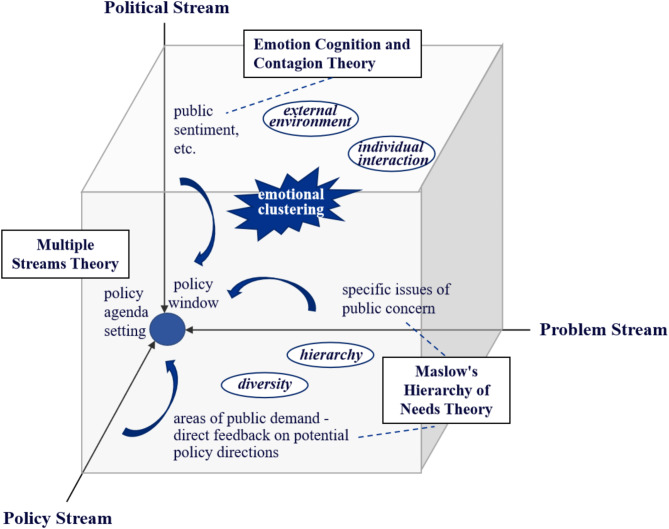
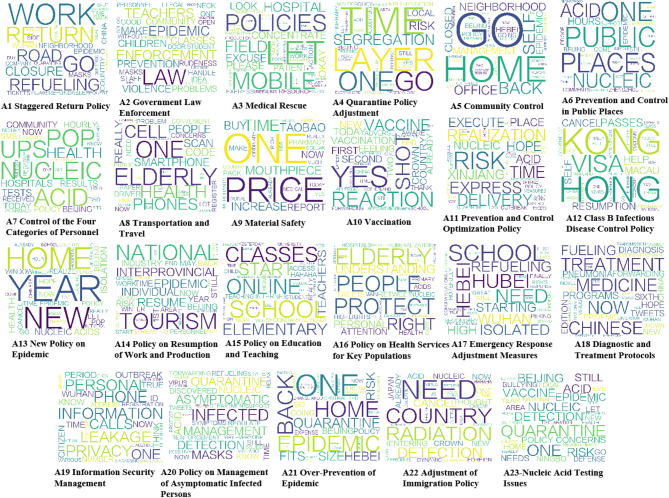
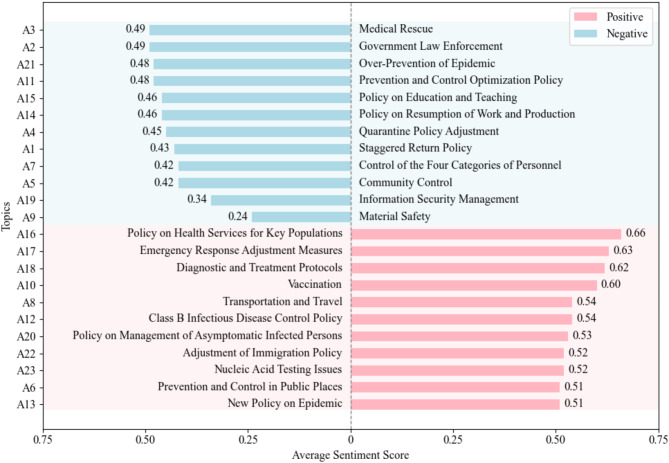
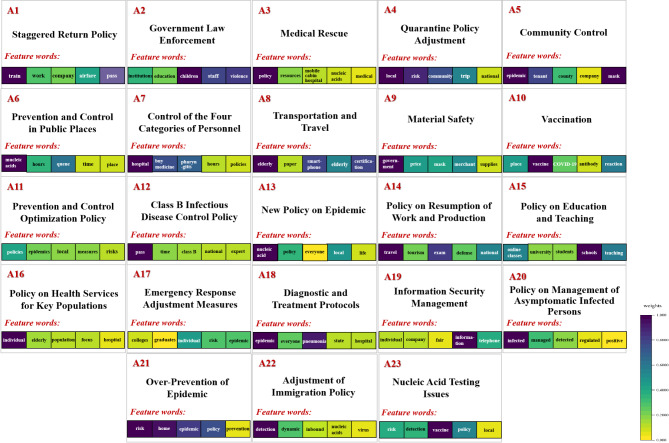
The study categorized 100 blog posts into 23 important topics, with average sentiment scores ranging from 0.24 to 0.66. These scores ranging from 0 to 1 reflect sentiment polarity, where lower values indicate more negative public sentiment. The topics of material safety and information security management had the lowest scores, at 0.24 and 0.34, respectively. The analysis further revealed that the 23 topics could be classified into 57 subtopics, and a total of 101 concepts were identified through coding. The study found that public demands fall into five key categories: transportation and travel security, epidemic protection and health security, law building and policy implementation, social services and public demand, and education demand.
The study underscores the complexity of public sentiment during the epidemic, with significant concerns about material safety and information security management. Public demands span basic survival needs to higher-order concerns such as education and legal protections. The findings suggest that policy-making processes must become more responsive, transparent, and equitable, incorporating real-time public feedback and ensuring comprehensive policies and legal systems are in place to address multifaceted public demands effectively.
在新冠疫情期间,公众情绪和需求在微博等社交媒体平台上得到了显著体现。了解这些情绪和需求对于政府、卫生官员和政策制定者做出有效应对和调整至关重要。
本研究旨在利用微博数据分析公众情绪,识别有关新冠疫情政策和社会问题的关键需求,为完善中国公共卫生突发事件的政策和法律体系提供见解。
本研究使用Python工具收集微博上关于政策调整、社会问题和民生关切的民意数据。2019年12月至2023年10月期间,在中国共收集了100篇博客文章的50249条有效评论。采用SnowNLP算法进行情感分析,使用潜在狄利克雷分配进行主题聚类,并应用抽样编码通过浓缩评论内容进一步探索公众需求。
该研究将100篇博客文章分为23个重要主题,平均情感得分在0.24至0.66之间。这些得分范围从0到1反映了情感极性,较低的值表明公众情绪更消极。物质安全和信息安全管理主题得分最低,分别为0.24和0.34。分析进一步表明,这23个主题可分为57个子主题,通过编码共识别出101个概念。研究发现公众需求主要分为五个关键类别:交通出行安全、疫情防护与健康安全、法治建设与政策执行、社会服务与公共需求、教育需求。
该研究强调了疫情期间公众情绪的复杂性,人们对物质安全和信息安全管理存在重大担忧。公众需求涵盖了从基本生存需求到教育和法律保护等更高层次的关切。研究结果表明,决策过程必须更加及时、透明和公平,纳入实时公众反馈,并确保有全面的政策和法律体系来有效应对多方面的公众需求。