Andrews Alicia R, Putra Juan
Department of Pathology and Laboratory Medicine, University of Saskatchewan, Saskatoon, SK S7N 0W8, Canada.
Department of Pathology, Boston Children's Hospital and Harvard Medical School, Boston, MA 02115, USA.
Diagnostics (Basel). 2025 Mar 25;15(7):831. doi: 10.3390/diagnostics15070831.
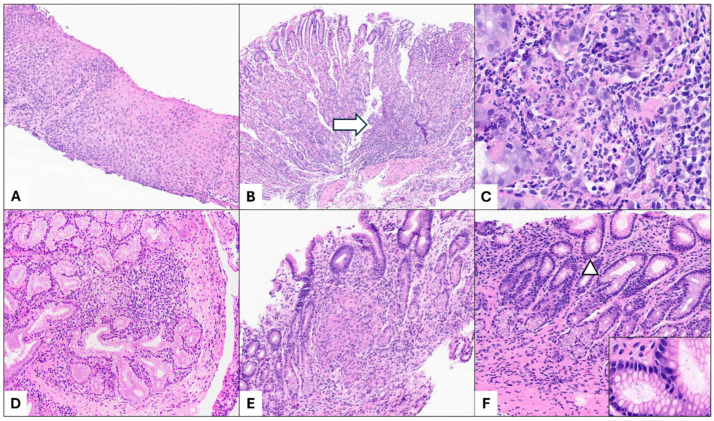
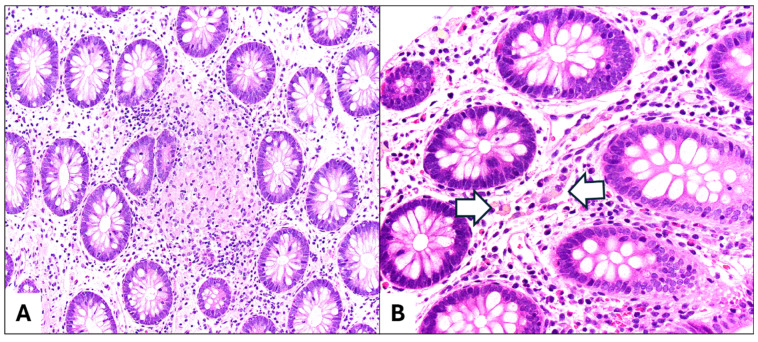
Inflammatory bowel disease (IBD) in the pediatric population presents distinct characteristics compared to adult cases. Pathology plays a critical role in its diagnosis, and this review underscores key considerations in the pathologic evaluation of pediatric IBD. Recognizing inflammatory patterns in the upper gastrointestinal tract can improve disease classification and aid in diagnosing IBD in certain scenarios, such as isolated upper gastrointestinal or small bowel involvement. Additionally, familiarity with distinctive subtypes, including IBD associated with primary sclerosing cholangitis and monogenic forms of IBD, supports early comorbidity detection, enhances patient management, and improves prognostication.
与成人病例相比,儿科人群中的炎症性肠病(IBD)具有不同的特征。病理学在其诊断中起着关键作用,本综述强调了儿科IBD病理评估中的关键考虑因素。识别上消化道的炎症模式可以改善疾病分类,并有助于在某些情况下诊断IBD,例如孤立的上消化道或小肠受累。此外,熟悉包括与原发性硬化性胆管炎相关的IBD和单基因形式的IBD等独特亚型,有助于早期发现合并症,加强患者管理并改善预后。