Zupo Roberta, Castellana Fabio, Lisco Giuseppe, Corbo Filomena, Crupi Pasquale, Sardone Rodolfo, Catino Feliciana, Perna Simone, Gesualdo Loreto, Lozupone Madia, Panza Francesco, Clodoveo Maria Lisa
Department of Interdisciplinary Medicine (DIM), University of Bari Aldo Moro, Piazza Giulio Cesare 11, 70100 Bari, Italy.
Department of Pharmacy-Drug Sciences, University of Bari Aldo Moro, 70125 Bari, Italy.
Nutrients. 2025 Mar 28;17(7):1192. doi: 10.3390/nu17071192.
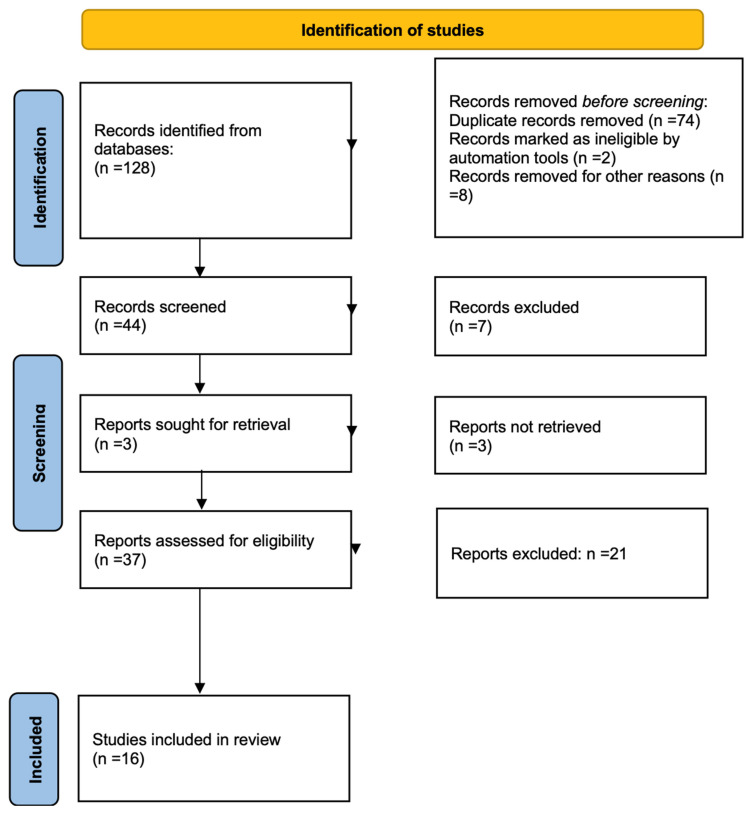
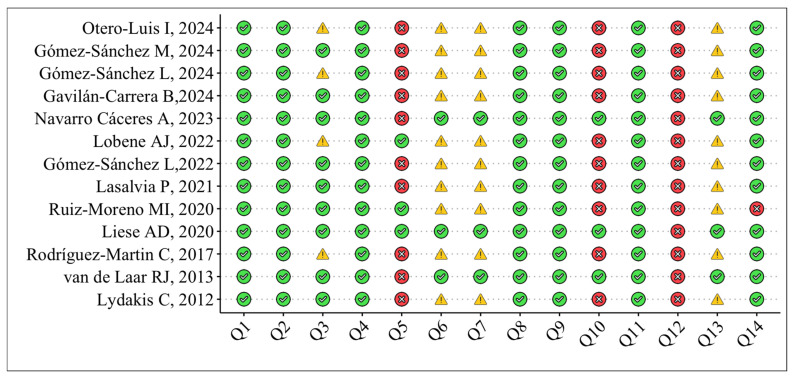
The Mediterranean diet has long been associated with better cardiovascular health, with evidence suggesting that it may play a key role in reducing arterial stiffness. This research aims to systematically review existing evidence on the association between a Mediterranean diet pattern and arterial stiffness in the general population. : The literature was examined in six electronic databases up until December 2024. The evaluation of the 128 publications based on inclusion criteria resulted in the selection of 16 observational and randomized controlled trials that aligned with the research question. Two researchers simultaneously extracted the data, employing inter-rater reliability (IRR) to assess coder agreement, followed by the κ statistic to evaluate accuracy and precision. According to the PRISMA principles and quality evaluation procedures, all data extraction phases achieved a k coefficient of no less than 0.9. All publications, with the exception of randomized controlled trials (RCTs), were evaluated for bias risk utilizing the NIH Quality Assessment Toolkit. The study protocol was registered with PROSPERO (CRD42024597173). : Most studies were observational (ten cross-sectional, three longitudinal), with three RCTs. Studies were primarily conducted in Europe (82%), followed by America (12%) and Australia (6%), with a total of 13,680 participants. The evidence showed an inverse relationship between adherence to the Mediterranean diet and arterial stiffness, with a focus on pulse wave velocity (PWV) and the Augmentation Index (AIx) as outcome measures. Lower but consistent and statistically significant evidence was also found in the cross-tabulation of adherence to the Mediterranean diet and the cardiovascular ankle index (CAVI), a proxy of the overall stiffness of the artery from the origin of the aorta to the ankle. Study quality ranged from moderate to high. : The available evidence consistently shows that people who follow a Mediterranean diet may have less stiff arteries and, therefore, a lower cardiovascular risk. However, multifactorial biological pathways still need to be corroborated.
长期以来,地中海饮食一直与更好的心血管健康相关,有证据表明它可能在降低动脉僵硬度方面发挥关键作用。本研究旨在系统回顾普通人群中地中海饮食模式与动脉僵硬度之间关联的现有证据。截至2024年12月,在六个电子数据库中对文献进行了检索。根据纳入标准对128篇出版物进行评估后,选择了16项符合研究问题的观察性和随机对照试验。两名研究人员同时提取数据,采用评分者间信度(IRR)评估编码者一致性,随后用κ统计量评估准确性和精确性。根据PRISMA原则和质量评估程序,所有数据提取阶段的k系数均不低于0.9。除随机对照试验(RCT)外,所有出版物均使用美国国立卫生研究院质量评估工具包评估偏倚风险。该研究方案已在国际前瞻性系统评价注册库(PROSPERO)注册(注册号:CRD42024597173)。大多数研究为观察性研究(十项横断面研究、三项纵向研究),三项为随机对照试验。研究主要在欧洲进行(82%),其次是美国(12%)和澳大利亚(6%),共有13680名参与者。证据表明,坚持地中海饮食与动脉僵硬度呈负相关,重点关注脉搏波速度(PWV)和增强指数(AIx)作为结局指标。在坚持地中海饮食与心血管踝臂指数(CAVI,从主动脉起点到脚踝的动脉整体僵硬度的替代指标)的交叉表中也发现了较低但一致且具有统计学意义的证据。研究质量从中等到高不等。现有证据一致表明,遵循地中海饮食的人动脉僵硬度可能较低,因此心血管风险也较低。然而,多因素生物学途径仍需进一步证实。