Xu Qingqin, Hu Mengxuan, Li Lei, Chen Shi, Liu Bo, Lu Jianwei, Chen Hemu
College of Rehabilitation Science, Shanghai University of Traditional Chinese Medicine, Shanghai, China.
Department of Rehabilitation Medicine, The First Affiliated Hospital of Anhui Medical University, Anhui, China.
Sci Rep. 2025 Apr 13;15(1):12708. doi: 10.1038/s41598-025-97953-w.
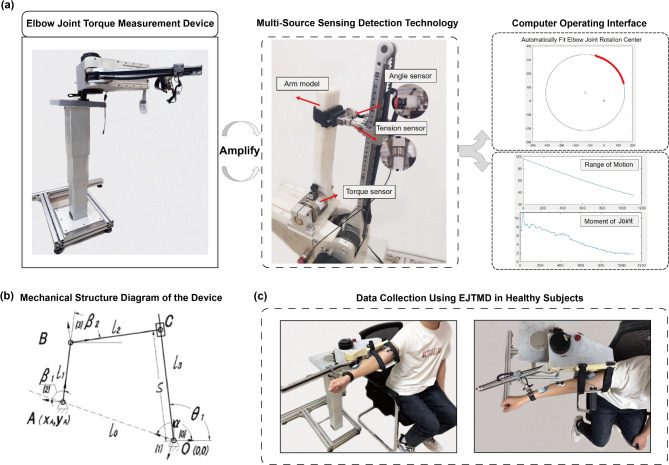
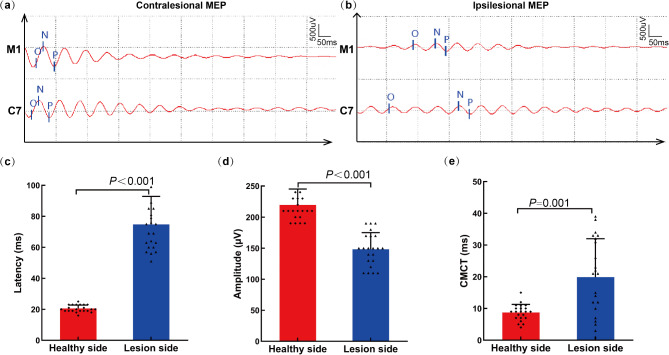
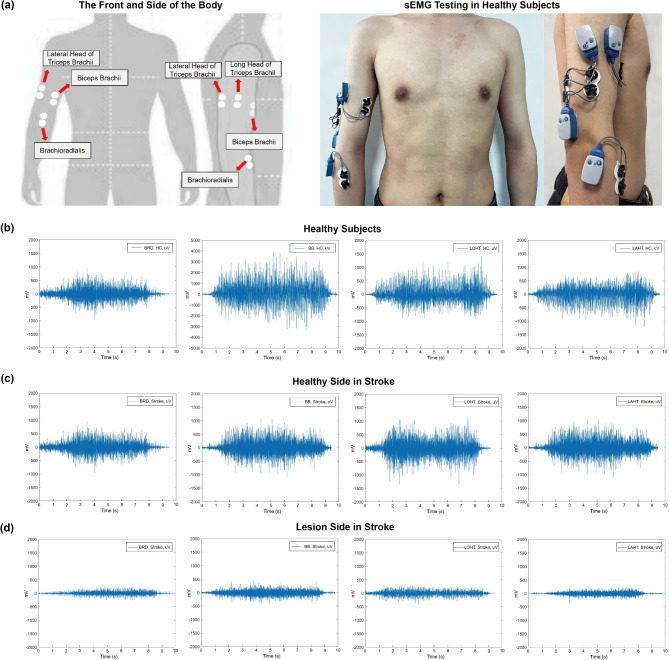
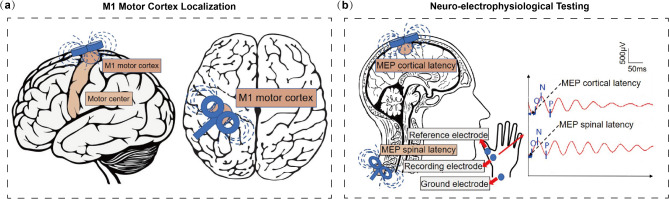
Current clinical practice lacks quantitative assessment methods for elbow joint movements. In response to existing research limitations, this study introduces the innovative elbow joint torque measurement device (EJTMD), which concurrently measures muscle strength and active range of motion (AROM) using a five-bar linkage system governed by a sliding mode control algorithm. Healthy subjects (n = 22) and stroke patients (n = 22) were recruited in a randomized trial. Each participant underwent two measurement. EJTMD or traditional tools like a protractor and a muscle strength tester. Participants were randomly allocated to EJTMD first or traditional tools first. The efficacy of EJTMD was assessed by comparing muscle strength and AROM with traditional tools. Integrated electromyography (iEMG) and root mean square (RMS) were used to assess the intensity of muscle activity during elbow movements. The peak torque (PT) and the ratio of peak torque to body weight (PT/BW) were examined to explore the differences in mechanical characteristics of bilateral elbow joints. Motor evoked potential (MEP) and central motor conduction time (CMCT) were employed to investigate the potential mechanisms underlying motor discrepancies post-stroke. EJTMD demonstrates superior muscle strength, AROM, iEMG, and RMS during elbow movements compared to traditional tools (P < 0.05). Repeated EJTMD measurement outcomes have a good correlation on the same day (r ≥ 0.999, P < 0.001). EJTMD exhibits significant differences in measurement outcomes among stroke patients before and after treatment (P < 0.05), compared to traditional tools. Stroke patients exhibit reduced PT and PT/BW on the lesion side across low, medium, and high-speed tests, with a more pronounced decline observed during low-speed testing (P < 0.001). Stroke patients show decreased iEMG and RMS on the affected side during elbow movements (P < 0.05), with prolonged MEP latency and CMCT (P < 0.001), and reduced MEP amplitude (P < 0.001). Based on the results, EJTMD demonstrates reliability and effectiveness in assessing elbow movements in both healthy subjects and stroke patients, showing sensitivity to minor joint changes. Stroke patients exhibit reduced flexor and extensor function on the lesion side, potentially resulting from impaired corticospinal tract conduction.
当前临床实践缺乏肘关节运动的定量评估方法。针对现有研究局限性,本研究引入了创新的肘关节扭矩测量装置(EJTMD),该装置使用由滑模控制算法控制的五杆联动系统同时测量肌肉力量和主动运动范围(AROM)。在一项随机试验中招募了健康受试者(n = 22)和中风患者(n = 22)。每位参与者都接受了两次测量。使用EJTMD或传统工具,如量角器和肌肉力量测试仪。参与者被随机分配为先使用EJTMD或先使用传统工具。通过将肌肉力量和AROM与传统工具进行比较来评估EJTMD的有效性。使用表面肌电图(iEMG)和均方根(RMS)来评估肘关节运动期间肌肉活动的强度。检查峰值扭矩(PT)和峰值扭矩与体重之比(PT/BW),以探索双侧肘关节力学特性的差异。采用运动诱发电位(MEP)和中枢运动传导时间(CMCT)来研究中风后运动差异的潜在机制。与传统工具相比,EJTMD在肘关节运动期间表现出更高的肌肉力量、AROM、iEMG和RMS(P < 0.05)。同一天重复进行EJTMD测量的结果具有良好的相关性(r≥0.999,P < 0.001)。与传统工具相比,EJTMD在中风患者治疗前后的测量结果存在显著差异(P < 0.05)。在低、中、高速测试中,中风患者患侧的PT和PT/BW均降低,在低速测试中下降更为明显(P < 0.001)。中风患者在肘关节运动期间患侧的iEMG和RMS降低(P < 0.05),MEP潜伏期和CMCT延长(P < 0.001),MEP波幅降低(P < 0.001)。基于这些结果,EJTMD在评估健康受试者和中风患者的肘关节运动方面表现出可靠性和有效性,对微小的关节变化具有敏感性。中风患者患侧的屈肌和伸肌功能降低,可能是由于皮质脊髓束传导受损所致。