Aziz-Zadeh Lisa, Ringold Sofronia M, Jayashankar Aditya, Kilroy Emily, Butera Christiana, Jacobs Jonathan P, Tanartkit Skylar, Mahurkar-Joshi Swapna, Bhatt Ravi R, Dapretto Mirella, Labus Jennifer S, Mayer Emeran A
Mrs. T.H. Chan Division of Occupational Science and Occupational Therapy, University of Southern California, Los Angeles, CA, USA.
Brain and Creativity Institute, Dornsife College of Letters, Arts and Sciences, University of Southern California, Los Angeles, CA, USA.
Nat Commun. 2025 Apr 14;16(1):3465. doi: 10.1038/s41467-025-58459-1.
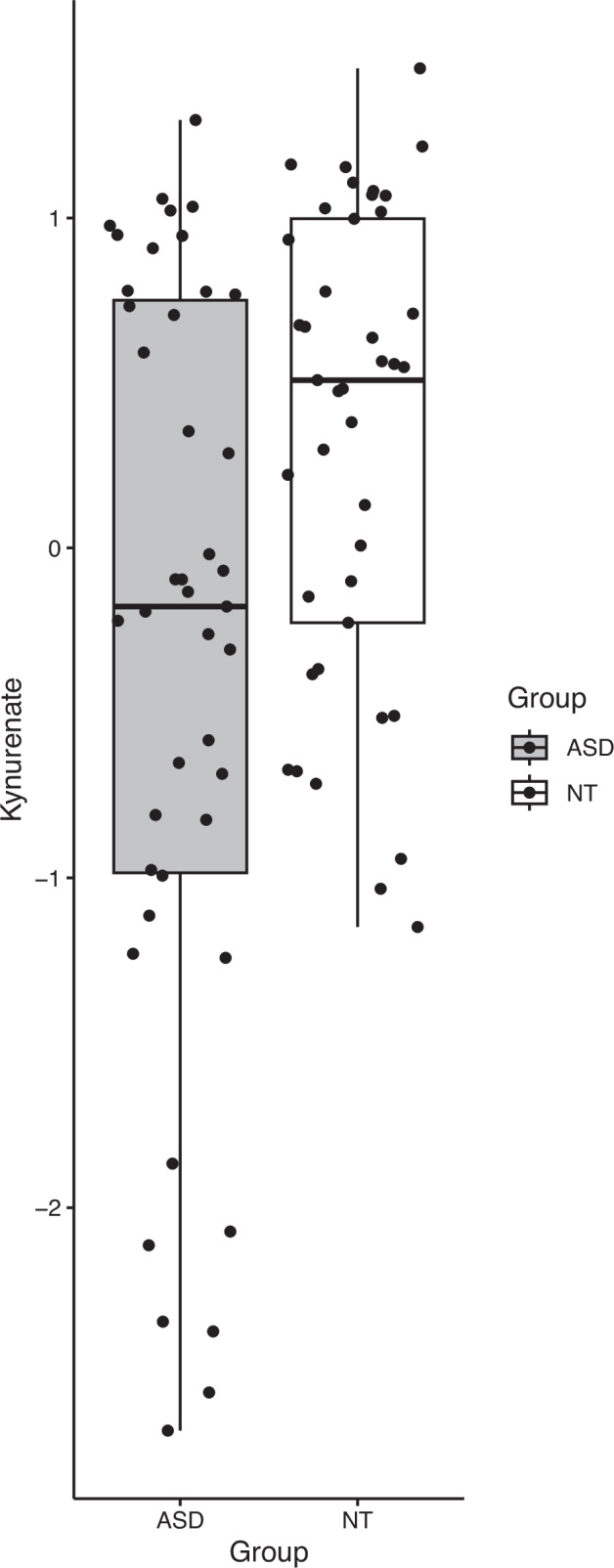
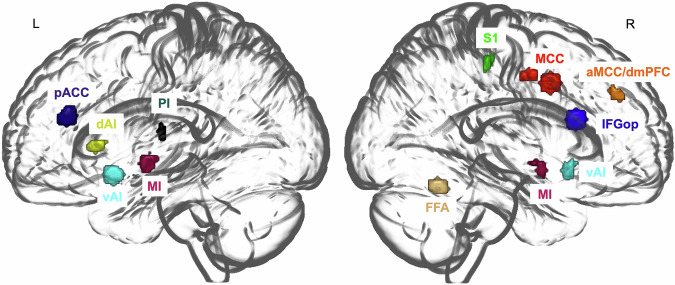
While it has been suggested that alterations in the composition of gut microbial metabolites may play a causative role in the pathophysiology of autism spectrum disorder (ASD), it is not known how gut microbial metabolites are associated with ASD-specific brain alterations. In this cross-sectional, case-control observational study, (i) fecal metabolomics, (ii) task-based functional magnetic resonance imaging (fMRI), and (iii) behavioral assessments were obtained from 43 ASD and 41 neurotypical (NT) children, aged 8-17. The fMRI tasks used socio-emotional and sensory paradigms that commonly reveal strong evoked brain differences in ASD participants. Our results show that fecal levels of specific tryptophan-related metabolites, including kynurenate, were significantly lower in ASD compared to NT, and were associated with: 1) alterations in insular and cingulate cortical activity previously implicated in ASD; and 2) ASD severity and symptoms (e.g., ADOS scores, disgust propensity, and sensory sensitivities). Moreover, activity in the mid-insula and mid-cingulate significantly mediated relationships between the microbial tryptophan metabolites (indolelactate and tryptophan betaine) and ASD severity and disgust sensitivity. Thus, we identify associations between gut microbial tryptophan metabolites, ASD symptoms, and brain activity in humans, particularly in brain regions associated with interoceptive processing.
虽然有人提出肠道微生物代谢产物组成的改变可能在自闭症谱系障碍(ASD)的病理生理学中起因果作用,但尚不清楚肠道微生物代谢产物如何与ASD特异性脑改变相关联。在这项横断面病例对照观察研究中,对43名8至17岁的ASD儿童和41名神经典型(NT)儿童进行了:(i)粪便代谢组学、(ii)基于任务的功能磁共振成像(fMRI)和(iii)行为评估。fMRI任务使用了社会情感和感觉范式,这些范式通常会揭示ASD参与者大脑中强烈的诱发差异。我们的结果表明,与NT相比,ASD患者粪便中特定色氨酸相关代谢产物(包括犬尿酸盐)的水平显著降低,并且与以下因素相关:1)先前与ASD相关的岛叶和扣带回皮质活动的改变;2)ASD的严重程度和症状(例如,ADOS评分、厌恶倾向和感觉敏感性)。此外,岛叶中部和扣带回中部的活动显著介导了微生物色氨酸代谢产物(吲哚乳酸和色氨酸甜菜碱)与ASD严重程度和厌恶敏感性之间的关系。因此,我们确定了人类肠道微生物色氨酸代谢产物、ASD症状和脑活动之间的关联,特别是在与内感受处理相关的脑区。