Chattrakulchai Kitti, Pongchaikul Pisut, Wattanayingcharoenchai Rujira, Tantitham Chananya, Manonai Jittima
Department of Obstetrics & Gynaecology, Faculty of Medicine, Ramathibodi Hospital, Mahidol University, Bangkok, Thailand.
Ramathibodi Medical School, Faculty of Medicine Ramathibodi Hospital, Mahidol University, 111 Bang Pla, Bang Phli, Samut Prakan, 10540, Thailand.
Sci Rep. 2025 Apr 14;15(1):12796. doi: 10.1038/s41598-025-97725-6.
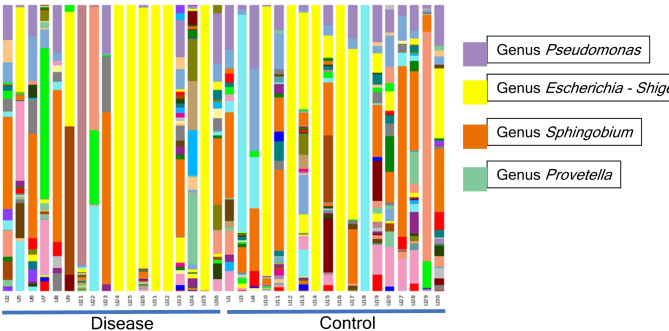
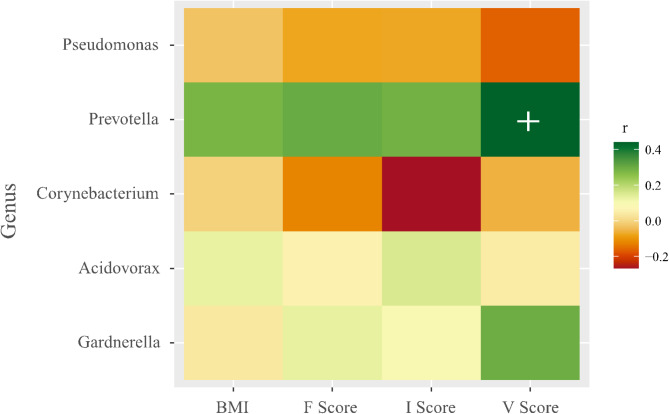
Some postmenopausal women suffer from genital and urinary symptoms, while others do not. Therefore, the hypoestrogenic status cannot entirely explain the occurrence of the genitourinary syndrome in menopause (GSM). Differences in the urinary microbiome might play a role in bladder function and vulnerability to urinary symptoms. This study aimed to compare characterization urinary microbiome in postmenopausal women who experienced GSM with urinary symptoms with that in those without urinary symptoms. Forty participants were screened for genital symptoms of GSM and then divided into the urinary symptoms group and the non-urinary symptoms group on the basis of a validated questionnaire. 16 S rRNA gene sequencing was performed to investigate microbial diversity. The alpha diversity was used to evaluate the species richness and evenness, while the beta diversity was used to estimate the differences in the urinary microbiome between the groups. Differential abundance analysis was used to investigate biomarkers in the groups by linear discriminant analysis effect size. The relationship between the urinary microbiome and urinary symptoms was assessed using Spearman's correlation analysis. The characteristics of the participants were not different between the groups. Gardnerella was found in 22.2% (4/18) and 11.1% (2/18) of participants in the urinary symptoms group and in the non-urinary symptoms group, respectively (p > 0.05). Alpha diversity was less in the urinary symptoms group than in the non-urinary symptoms group, but this was not significant. Beta diversity of the urinary microbiome was not significantly different between the two groups. A differential abundance analysis showed that the genus Prevotella was significantly dominant in postmenopausal women with GSM who reported urinary symptoms. Prevotella was marginally correlated with voiding symptoms (r = 0.44; p = 0.01). The bladder or urinary microbiome is closely related to urinary symptoms of GSM. Species richness and diversity are not significantly different between postmenopausal women with GSM with and without urinary symptoms. Prevotella is dominant in symptomatic women and slightly correlated with voiding symptoms.
一些绝经后女性会出现生殖和泌尿系统症状,而另一些则不会。因此,雌激素缺乏状态不能完全解释绝经后泌尿生殖综合征(GSM)的发生。尿液微生物群的差异可能在膀胱功能和泌尿系统症状易感性方面发挥作用。本研究旨在比较有泌尿系统症状的绝经后GSM女性与无泌尿系统症状的绝经后GSM女性的尿液微生物群特征。对40名参与者进行GSM生殖系统症状筛查,然后根据一份经过验证的问卷将其分为泌尿系统症状组和无泌尿系统症状组。进行16S rRNA基因测序以研究微生物多样性。α多样性用于评估物种丰富度和均匀度,而β多样性用于估计两组之间尿液微生物群的差异。采用线性判别分析效应大小的差异丰度分析来研究两组中的生物标志物。使用Spearman相关性分析评估尿液微生物群与泌尿系统症状之间的关系。两组参与者的特征没有差异。泌尿系统症状组和无泌尿系统症状组中分别有22.2%(4/18)和11.1%(2/18)的参与者检测到加德纳菌(p>0.05)。泌尿系统症状组的α多样性低于无泌尿系统症状组,但差异不显著。两组之间尿液微生物群的β多样性没有显著差异。差异丰度分析表明,在报告有泌尿系统症状的绝经后GSM女性中,普雷沃菌属显著占优势。普雷沃菌与排尿症状呈微弱相关(r = 0.44;p = 0.01)。膀胱或尿液微生物群与GSM的泌尿系统症状密切相关。有和无泌尿系统症状的绝经后GSM女性之间的物种丰富度和多样性没有显著差异。普雷沃菌在有症状的女性中占优势,且与排尿症状呈轻微相关。