Murray Regan M, Chiang Shawn C, Klassen Ann C, Manganello Jennifer A, Leader Amy E, Lo Wen-Juo, Massey Philip M
Department of Mental Health, Johns Hopkins Bloomberg School of Public Health, Baltimore, MD, United States.
Department of Health Behavior, Texas A&M University School of Public Health, College Station, TX, United States.
JMIR Form Res. 2025 Apr 16;9:e65986. doi: 10.2196/65986.
Social media health interventions have grown significantly in recent years. However, researchers are still developing innovative methods to meaningfully engage online communities to inform research activities. Little has been documented describing this approach of using online community advisory boards (CABs) to co-create health communication interventions on social media.
This study describes the formation, engagement, and maintenance of an online CAB focused on co-creating a health education intervention for parents regarding the human papillomavirus (HPV) vaccine. The study provides guiding principles for public health researchers implementing such CABs in future digital health interventions.
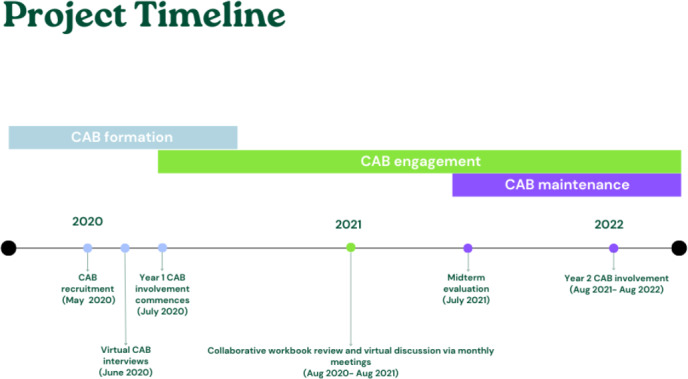
In May 2020, Twitter was used to recruit parents of children aged 9-14 years, who were active users of the platform and were interested in serving on a CAB focused on child health and online programs. The recruitment campaign included Twitter (rebranded as X in 2023) advertising tools (eg, "interests" and "audience look-a-likes"). A total of 17 parents completed a screening survey and 6 completed a follow-up phone interview. Following phone interviews, 6 parents were invited to join the CAB, where they committed to a 1-year involvement. The CAB participated in eleven 1-hour online meetings in the first year, contributing to monthly feedback through participatory workbooks. Long-term engagement was sustained through icebreakers and casual online interactions, as well as providing real-time updates to demonstrate CAB feedback integration. An anonymous midterm evaluation was conducted at the end of the project's first year to assess processes and identify future growth opportunities.
A total of 6 parents (5 females and 1 male) with children aged 9-14 years from diverse racial and ethnic backgrounds (African American, South Asian American, and White) across 6 states in the United States, representing urban, suburban, and rural areas, agreed to serve as CAB members. All 6 CAB members committed to 1 year of service beginning in July 2020 with 4 extending their participation into a second year (August 2021-August 2022). The CAB provided expert insights and feedback to co-develop the intervention, including character development, narrative content creation, study recruitment, survey development, and intervention delivery. The midterm evaluation showed 100% (6/6) satisfaction among CAB members, who valued the connections with other parents and their contribution to research. While all members felt confident discussing HPV, 83% (5/6) suggested diversifying the group and increasing informal bonding to enhance engagement and inclusivity, especially for differing vaccination views.
This study demonstrates that online CABs are a highly effective model for co-creating and informing online health communication interventions. The engagement of parents from diverse backgrounds and the structured use of online tools (eg, interactive workbooks) creates a constructive and thoughtful environment for incorporating parent contributions to research. This study highlights guiding principles to forming, engaging, and maintaining an online CAB to enhance health research and practice.

近年来,社交媒体健康干预措施显著增加。然而,研究人员仍在开发创新方法,以便有效地吸引在线社区参与,为研究活动提供信息。关于利用在线社区咨询委员会(CAB)在社交媒体上共同创建健康传播干预措施的这种方法,鲜有文献记载。
本研究描述了一个在线CAB的组建、参与情况及维持情况,该CAB专注于共同创建一项针对家长的关于人乳头瘤病毒(HPV)疫苗的健康教育干预措施。该研究为公共卫生研究人员在未来数字健康干预中实施此类CAB提供了指导原则。
2020年5月,利用推特招募9至14岁儿童的家长,这些家长是该平台的活跃用户,且有兴趣在一个专注于儿童健康和在线项目的CAB中任职。招募活动包括推特(2023年更名为X)的广告工具(如“兴趣”和“相似受众”)。共有17位家长完成了筛选调查,6位完成了后续电话访谈。电话访谈后,6位家长被邀请加入CAB,他们承诺参与为期1年的活动。CAB在第一年参加了11次1小时的在线会议,通过参与式工作手册提供月度反馈。通过破冰活动和日常在线互动,以及提供实时更新以展示CAB反馈的整合,维持了长期参与度。在项目第一年结束时进行了一次匿名中期评估,以评估流程并确定未来的发展机会。
共有6位家长(5名女性和1名男性),他们来自美国6个州不同种族和族裔背景(非裔美国人、南亚裔美国人和白人)、年龄在9至14岁的孩子,代表城市、郊区和农村地区,同意担任CAB成员。所有6位CAB成员承诺从2020年7月开始服务1年,其中4位将参与时间延长至第二年(2021年8月至2022年8月)。CAB提供了专业见解和反馈,以共同开发干预措施,包括角色塑造、叙事内容创作、研究招募、调查问卷开发和干预实施。中期评估显示CAB成员的满意度为100%(6/6),他们重视与其他家长的联系以及他们对研究的贡献。虽然所有成员对讨论HPV都感到自信,但83%(5/6)的成员建议使小组多样化并增加非正式联系,以提高参与度和包容性,特别是对于不同的疫苗接种观点。
本研究表明,在线CAB是共同创建和为在线健康传播干预措施提供信息的高效模式。来自不同背景的家长的参与以及在线工具(如交互式工作手册)的结构化使用,为纳入家长对研究的贡献创造了一个建设性且深思熟虑的环境。本研究突出了组建、吸引和维持在线CAB以加强健康研究和实践的指导原则。