Treves Isaac, Bajwa Zia, Greene Keara D, Bloom Paul A, Kim Nayoung, Wool Emma, Goldberg Simon B, Whitfield-Gabrieli Susan, Auerbach Randy P
McGovern Institute for Brain Research, Massachusetts Institute of Technology, Cambridge, MA, United States.
Department of Brain and Cognitive Sciences, Massachusetts Institute of Technology, Cambridge, MA, United States.
J Med Internet Res. 2025 Apr 17;27:e68204. doi: 10.2196/68204.
There is burgeoning interest in the application of neuroscientific technology to facilitate meditation and lead to beneficial psychological outcomes. One popular approach is using consumer-grade neurofeedback devices to deliver feedback on brain targets during meditation (mindfulness-based neurofeedback). It is hypothesized that optimizing brain targets like alpha and theta band activity may allow meditators to experience deeper mindfulness and thus beneficial outcomes.
This study aimed to systematically review and meta-analyze the impacts of consumer-grade mindfulness-based neurofeedback compared with control conditions. Included studies involved mindfulness practice operationalized as open monitoring or focused attention meditation. This study was preregistered.
A total of 16 randomized controlled training trials, as well as 5 randomized within-participant designs were included, encompassing 763 and 167 unique participants, respectively. Effects were categorized outcomes (ie, psychological distress, cognitive function, and physiological health) and process variables (ie, state mindfulness and brain measures). Study risk of bias, reporting bias, and publication bias were assessed.
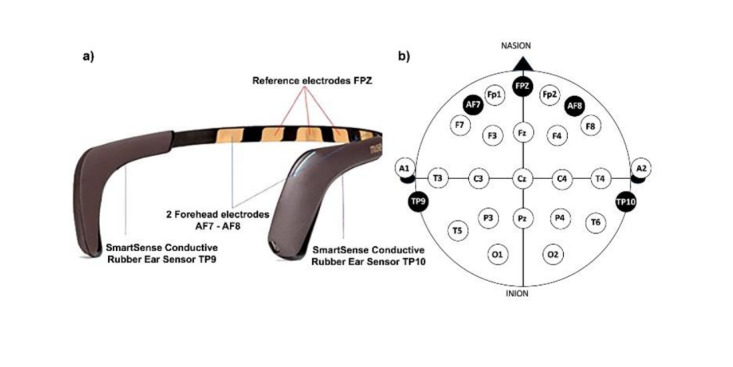
Samples were typically small (n=30-50), and the majority of studies used mindfulness apps as controls. To deliver neurofeedback, most studies used the Muse device (11/16 randomized controlled trials [RCTs]). There was a modest effect for decreases in psychological distress compared with controls (k=11, g=-0.16, P=.03), and heterogeneity was low (I< 0.25). However, there was no evidence for improvements in cognition (k=7, g=0.07, P=.48), mindfulness (k=9, g=0.02, P=.83), and physiological health (k=7, g=0.11, P=.57) compared to controls. Mechanistic modulation of brain targets was not found in RCTs or within-participant designs. Sex (male or female), age, clinical status, study quality, active or passive controls, sample size, and neurofeedback duration did not moderate effects. There was some evidence for reporting bias, but no evidence of publication bias. Adverse effects were not assessed in 19 out of 21 studies and not found in the 2 studies that assessed them.
Assertions that consumer-grade devices can allow participants to modulate their brains and deepen their meditations are not currently supported. It is possible that neurofeedback effects may rely on "neurosuggestion" (placebo effects of neurotechnology). Future research should examine more extensive calibration and individualization of devices, larger sample sizes, and gold-standard sham-controlled RCTs.
将神经科学技术应用于促进冥想并产生有益的心理结果正引发越来越多的关注。一种流行的方法是使用消费级神经反馈设备在冥想期间提供关于大脑目标的反馈(基于正念的神经反馈)。据推测,优化诸如阿尔法和西塔波段活动等大脑目标可能会让冥想者体验到更深层次的正念,从而产生有益的结果。
本研究旨在系统评价和荟萃分析消费级基于正念的神经反馈与对照条件相比的影响。纳入的研究涉及将正念练习实施为开放式监测或专注注意力冥想。本研究已预先注册。
总共纳入了16项随机对照训练试验以及5项随机参与者内设计,分别涵盖763名和167名独特的参与者。效应分为结果(即心理困扰、认知功能和生理健康)和过程变量(即状态正念和大脑测量)。评估了研究的偏倚风险、报告偏倚和发表偏倚。
样本通常较小(n = 30 - 50),并且大多数研究使用正念应用程序作为对照。为了提供神经反馈,大多数研究使用了Muse设备(11/16项随机对照试验[RCTs])。与对照组相比,心理困扰有所减轻,有适度的效应(k = 11,g = -0.16,P = 0.03),异质性较低(I < 0.25)。然而,与对照组相比,没有证据表明在认知(k = 7,g = 0.07,P = 0.48)、正念(k = 9,g = 0.02,P = 0.83)和生理健康(k = 7,g = 0.11,P = 0.57)方面有改善。在随机对照试验或参与者内设计中未发现对大脑目标的机制性调节。性别(男性或女性)、年龄、临床状态、研究质量、主动或被动对照、样本量和神经反馈持续时间均未调节效应。有一些报告偏倚的证据,但没有发表偏倚的证据。21项研究中有19项未评估不良反应,在评估不良反应的2项研究中未发现不良反应。
目前不支持消费级设备能让参与者调节大脑并深化冥想的说法。神经反馈效应可能依赖于“神经暗示”(神经技术的安慰剂效应)。未来的研究应检查设备更广泛的校准和个体化、更大的样本量以及金标准假对照随机对照试验。