Subramaniyan Bharathiraja, Falcon Emily C, Moore Andrew R, Larabee Jason L, Nimmo Susan L, Berrios-Rivera Jorge L, Reddig William J, Blewett Earl L, Papin James F, Walters Matthew S, Burgett Anthony W G
Department of Medicine, Section of Pulmonary, Critical Care & Sleep Medicine, University of Oklahoma Health Sciences Center, Oklahoma City, Oklahoma 73104, United States.
Department of Pharmaceutical Sciences, University of Oklahoma Health Sciences Center, Oklahoma City, Oklahoma 73117, United States.
ACS Infect Dis. 2025 May 9;11(5):1064-1077. doi: 10.1021/acsinfecdis.4c00631. Epub 2025 Apr 21.
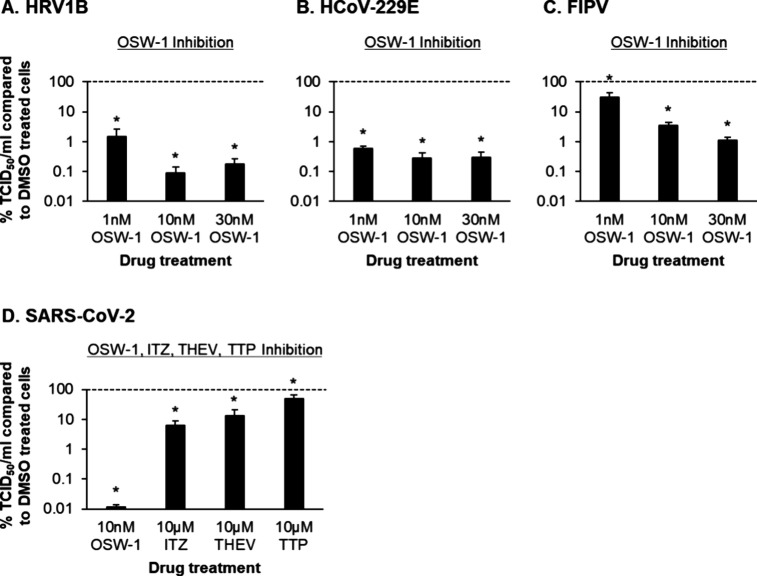
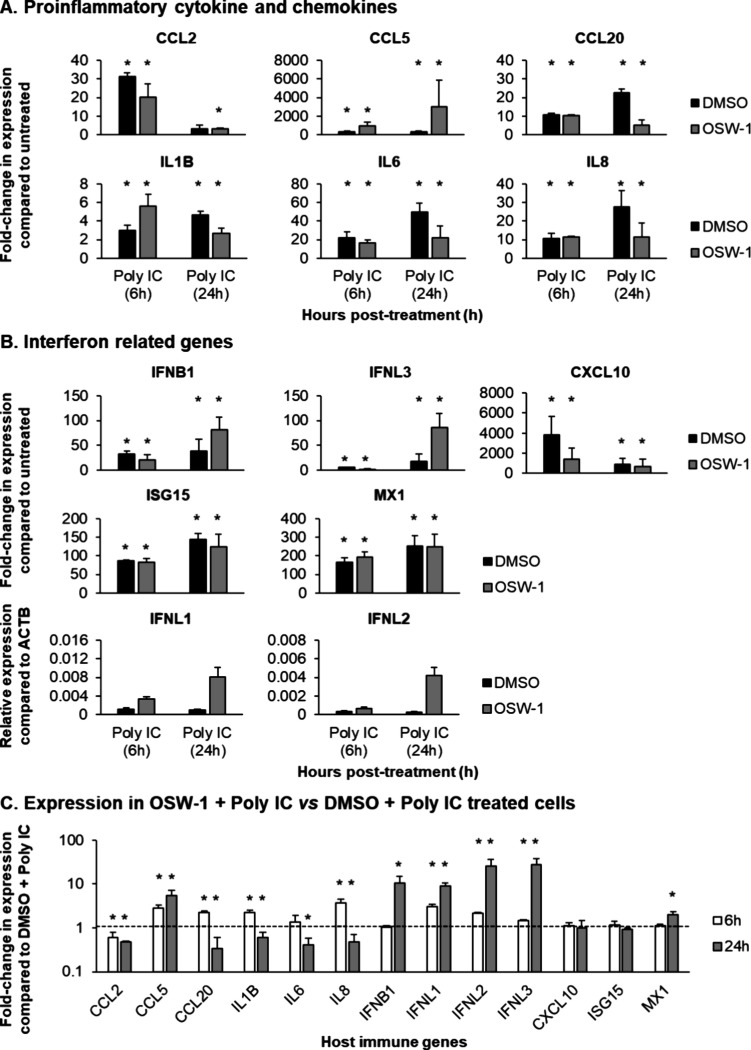
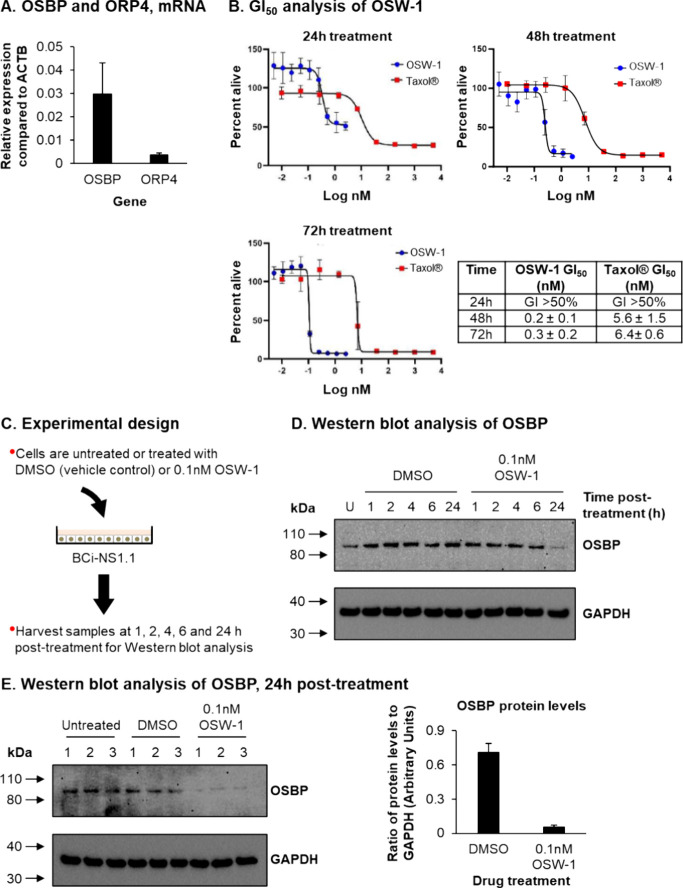
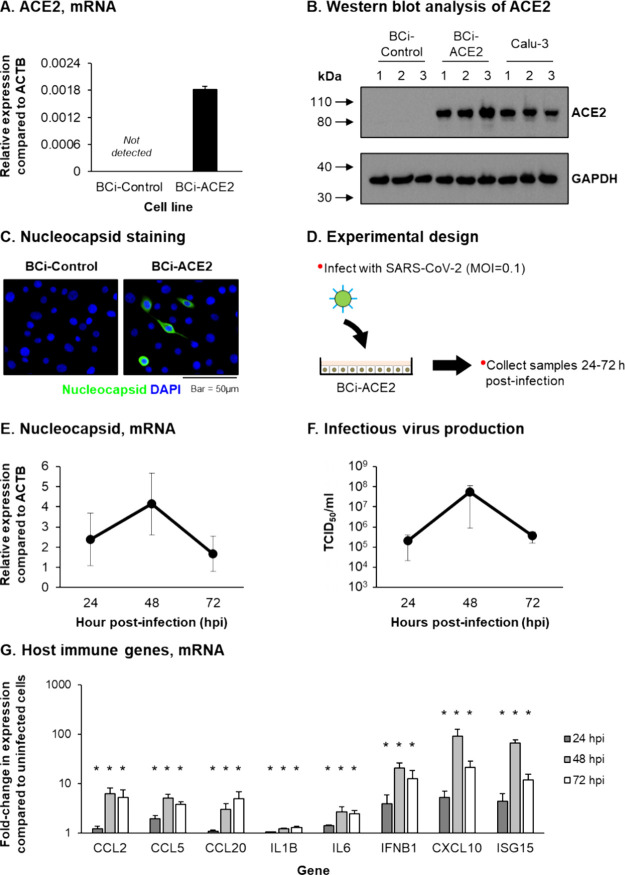
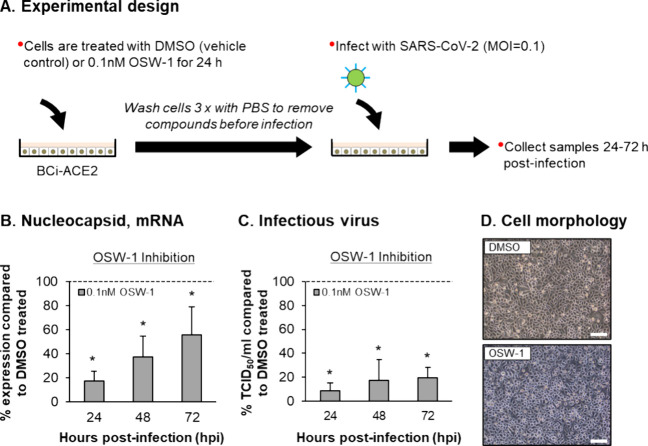
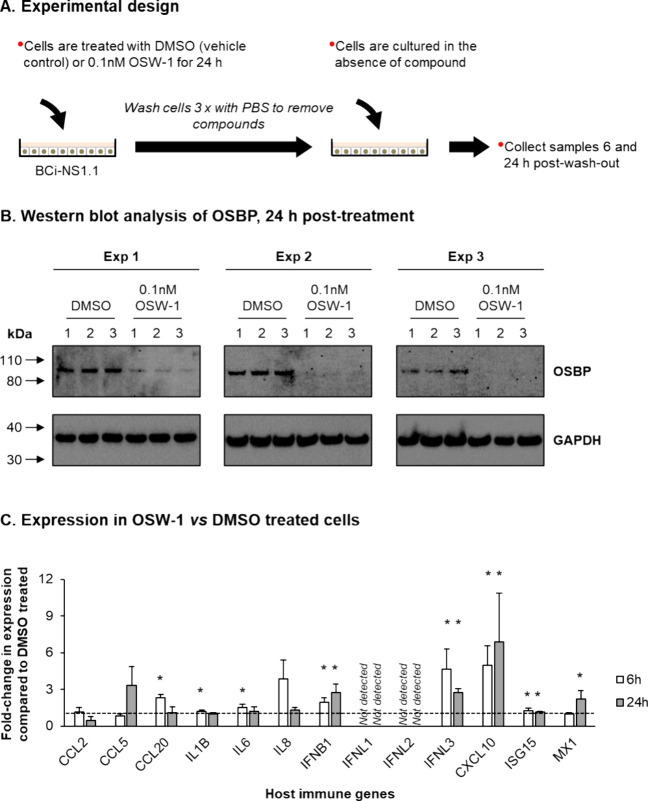
Human oxysterol-binding protein (OSBP) is a potentially druggable mediator in the replication of a broad spectrum of positive-sense (+) single-stranded RNA (ssRNA) viruses, including members of the , , and . OSBP is a cytoplasmic lipid transporting protein capable of moving cholesterol and phosphoinositides between the endoplasmic reticulum (ER) and Golgi, and the ER and lysosome. Several structurally diverse antiviral compounds have been reported to function through targeting OSBP, including the natural product compound OSW-1. Our prior work shows that transient OSW-1 treatment induces a reduction in OSBP protein levels over multiple successive cell generations (i.e., multigenerational), with no apparent cellular toxicity, and the OSW-1-induced reduction of OSBP has antiviral activity against multiple (+)ssRNA viruses. This study extends these findings and establishes that OSW-1 has in vitro antiviral activity against multiple pathogenic (+)ssRNA viruses, including human rhinovirus (HRV1B), the feline coronavirus peritonitis virus (FIPV), human coronavirus 229E (HCoV-229E), and severe acute respiratory syndrome coronavirus 2 (SARS-CoV-2). We also demonstrate that OSW-1 treatment in human airway epithelial cells alters the expression of multiple antiviral innate immune mediators, including the interferon (IFN) related genes IFNB1, IFNL3, CXCL10, ISG15, and MX1. Furthermore, OSW-1 enhances the induction of specific components of type I and III IFN antiviral responses triggered by the RNA viral mimetic polyinosinic-polycytidylic acid (Poly IC). In summary, this study further demonstrates the importance of OSBP in (+)ssRNA virus replication and presents OSBP as a potential regulator of cellular antiviral innate immune responses.
人氧化甾醇结合蛋白(OSBP)是多种正链(+)单链RNA(ssRNA)病毒复制过程中一种潜在的可成药介质,这些病毒包括、和的成员。OSBP是一种细胞质脂质转运蛋白,能够在内质网(ER)与高尔基体之间以及ER与溶酶体之间转运胆固醇和磷酸肌醇。据报道,几种结构多样的抗病毒化合物通过靶向OSBP发挥作用,包括天然产物化合物OSW-1。我们之前的研究表明,短暂的OSW-1处理会在多个连续细胞代(即多代)中导致OSBP蛋白水平降低,且无明显细胞毒性,并且OSW-1诱导的OSBP降低对多种(+)ssRNA病毒具有抗病毒活性。本研究扩展了这些发现,并证实OSW-1对多种致病性(+)ssRNA病毒具有体外抗病毒活性,包括人鼻病毒(HRV1B)、猫冠状病毒腹膜炎病毒(FIPV)、人冠状病毒229E(HCoV-229E)和严重急性呼吸综合征冠状病毒2(SARS-CoV-2)。我们还证明,在人气道上皮细胞中进行OSW-1处理会改变多种抗病毒先天免疫介质的表达,包括干扰素(IFN)相关基因IFNB1、IFNL3、CXCL10、ISG15和MX1。此外,OSW-1增强了由RNA病毒模拟物聚肌苷酸-聚胞苷酸(Poly IC)触发的I型和III型IFN抗病毒反应特定成分的诱导。总之,本研究进一步证明了OSBP在(+)ssRNA病毒复制中的重要性,并将OSBP呈现为细胞抗病毒先天免疫反应的潜在调节因子。