Brown Donya, Dattilo Martina, Rockey James
Bank of Jamaica, Kingston, Jamaica.
Department of Economics and Statistics "Cognetti de Martiis", University of Turin, Turin, Italy.
Sci Rep. 2025 Apr 22;15(1):13879. doi: 10.1038/s41598-025-92403-z.
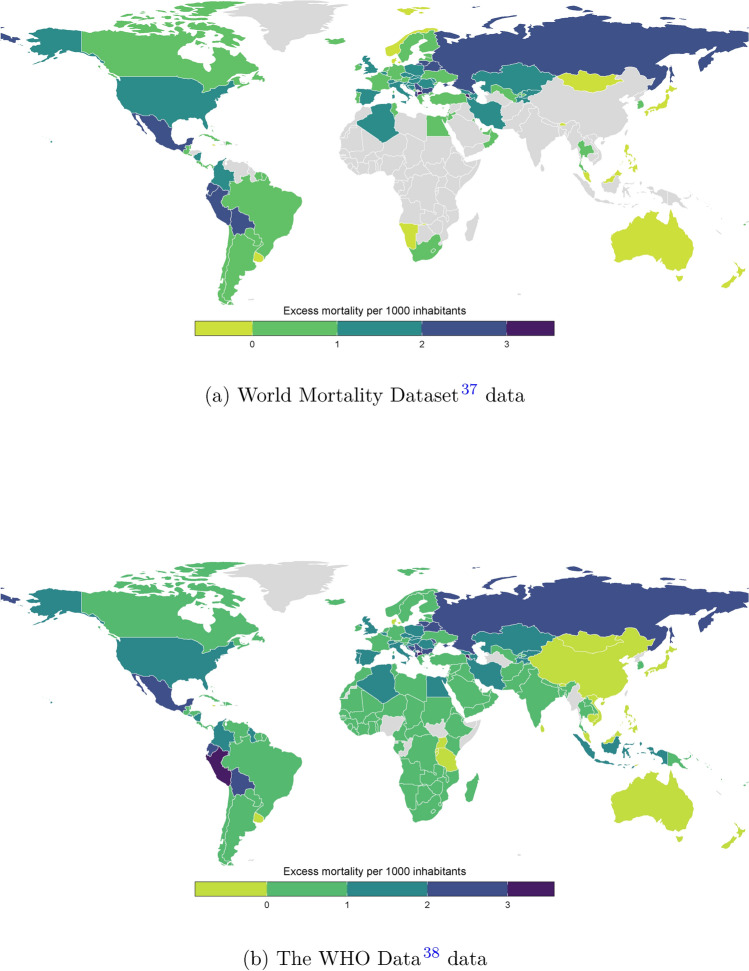
Many explanations have been advanced for why the frequency of deaths associated with Covid-19 varied so much across countries. Previous work has provided evidence that numerous social, economic, and environmental factors correlate with Covid-19 outcomes. One problem researchers face in identifying which of these explanations are best able to explain cross-country variation is that the number of these explanations is too large to be usefully included in a single regression model. This paper uses Bayesian Model Averaging (BMA) to address this problem, focusing on excess mortality to ensure meaningful comparisons across countries. The results suggest that a key determinant of countries' success in containing Covid-19 has been the strength of the Rule of Law. We also find evidence that rainfall and seaborders are key potential explanations for differences in excess mortality.
对于为何与新冠疫情相关的死亡频率在各国之间存在如此大的差异,人们已经提出了许多解释。先前的研究已经提供证据表明,众多社会、经济和环境因素与新冠疫情的结果相关。研究人员在确定这些解释中哪些最能解释国家间差异时面临的一个问题是,这些解释的数量太多,无法有效地纳入单一回归模型。本文使用贝叶斯模型平均法(BMA)来解决这一问题,重点关注超额死亡率以确保各国之间进行有意义的比较。结果表明,各国在控制新冠疫情方面取得成功的一个关键决定因素是法治的力度。我们还发现证据表明,降雨和沿海边界是超额死亡率差异的关键潜在解释因素。